





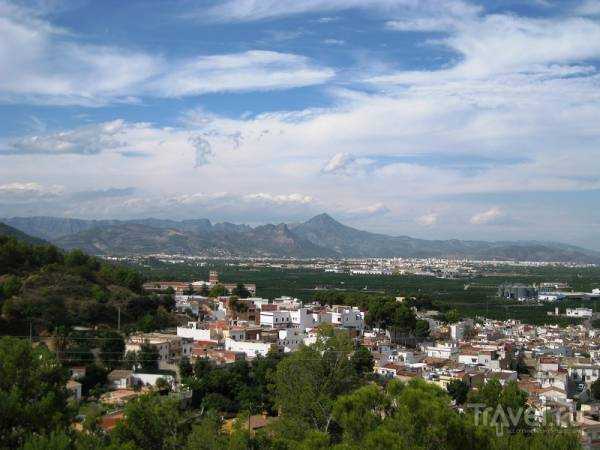
It's only 10 km from where we were staying (Denia, Les Deveses) to Oliva. You can walk along the beach; it's not fenced off anywhere. The town has a population of about 28,000. We searched and searched for attractions online, but there were very few—Santa Ana Castle and beaches. It's the beaches that Oliva is famous for.
We went there on October 10th.

We really like a lot about the seven European countries my husband and I have visited. Many of the problems I'd always complained about back home, "Why can't we just use our brains and do it this way?", have long been solved there, and they've done it exactly that way. People's attitudes toward each other, their work, nature, and children are different there, and so far, unfortunately, they're not to our advantage.
There's no need to even mention the material side of life—my readers have probably heard about high-quality roads, medical care, and much more a thousand times already. And it wasn't this aspect that struck us when we first arrived in Europe (in Paris), but rather the fact that everything is done for people, not just for show, and that the atmosphere there is completely different.
There's a lot that's unusual for us, but I can't say I don't like it, it's just unusual. For example, if we go to a city in Spain in the middle of the day, everything except restaurants is closed; siesta is from 1:00 PM to 4:00 PM or 2:00 PM to 5:00 PM. All the shops are closed, even some large supermarkets, offices, and even the tourist office. It's strange for us to see this, but it was designed to cope with the climate.
Or in France, suburban bus drivers have Sunday off, just like almost all supermarkets.
It's unusual for us, but people who work in transport companies and supermarkets are also people, and they have families, and they have the right to rest at the same time as their families.
But there is something that I don’t like at all, and I can say: “We have it better!”
The first thing is the density of buildings in old cities. I can't imagine how anyone can live here. Not only are there not a tree or a blade of grass—a concrete jungle—but from your window you can admire your neighbors across the street, listen to their conversations, and smell the aroma of their cooking. We walked down a street like this and saw raised shutters, several pairs of feet visible—a family watching TV.
There may be an explanation for this. For example, narrow streets retain shade in summer, and there's less heat loss in winter if there are fewer external walls, as houses are unheated. Winter nights can reach as low as 7 degrees Celsius. Nowadays, people heat with electric heaters; in the old days, they heated with fireplaces.
But I couldn't live like that.
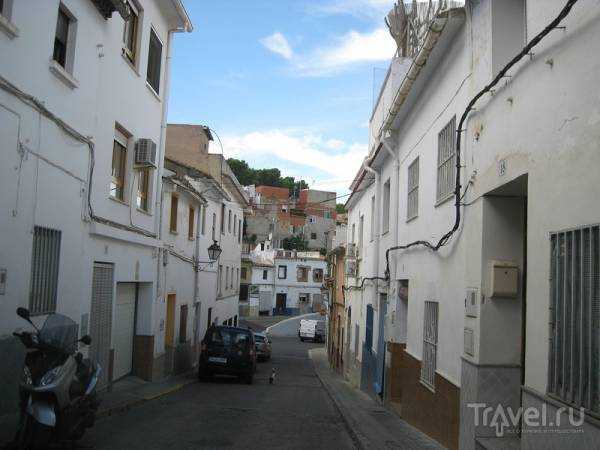
The second problem I also really dislike is parking. Even in small towns, due to the high population density and the fact that a car there isn't a luxury but a means of transportation, and almost every adult has one, it's sometimes difficult not only to park, but even just to stop for someone else to get out and continue on their way.
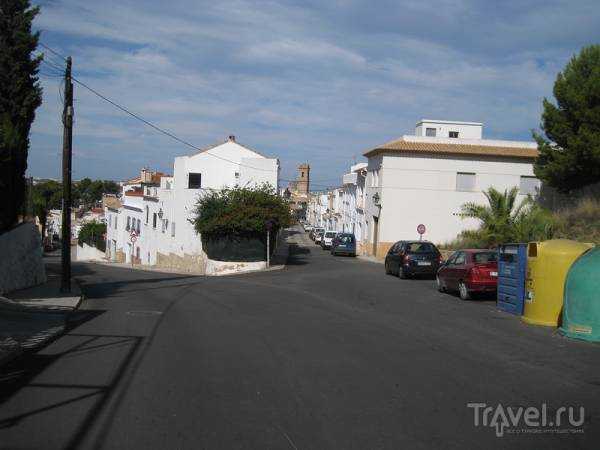
This photo shows a street where, in all likelihood, parking on the sidewalk is not prohibited; we have sometimes seen streets where the sidewalk on one side is completely impassable due to cars.
One time in Denia, we were invited over by some people living in the city center (we were 15 km away), and the city was celebrating Las Falles. We drove around and around for 40 minutes!!! and couldn't find a place to park. Several times, we passed familiar cars circling around as well. Then some friends called us and said there was a large Mercadona supermarket nearby, with a parking lot for shoppers. If we needed to buy anything, we could park there for a while. Oh, if only we'd known earlier! We needed water, of course, so we'd have a receipt to show to the machine that opened the barrier at the exit.
We encountered such problems even in very small towns, and not only in Spain.
Our guy would freak out like that! But the Spanish are such calm people that they accept this as inevitable. What's more, their driving culture is much higher than ours.
When we drive from Chernihiv to Kyiv, we immediately see how much more aggressive the driving style is there than here, while Muscovites say the drivers in Kyiv are polite. Well, in Europe, drivers behave much more politely than here in Chernihiv. No cutting off, no impatient gestures, etc.
And since the fines for violating traffic rules are high, even if they circle around like we did for forty minutes, they will never park in bicycle spaces, in disabled spaces, in front of gates (all of this is marked on the road), or on the sidewalk where it is prohibited.
But back to our Oliva. We found a parking spot without any problems and set off to look for the fortress. We asked a girl chatting with a neighbor for directions, and she gave us a rough idea of the direction. We walked uphill, turned left, and saw that we'd entered what looked like a gypsy or some kind of antisocial neighborhood—young men were sitting on the doorsteps at the entrances, just lounging, and they looked suspicious, with trash everywhere. In short, we didn't bother taking photos and quickened our pace. Especially since we already had an idea of where we were going.
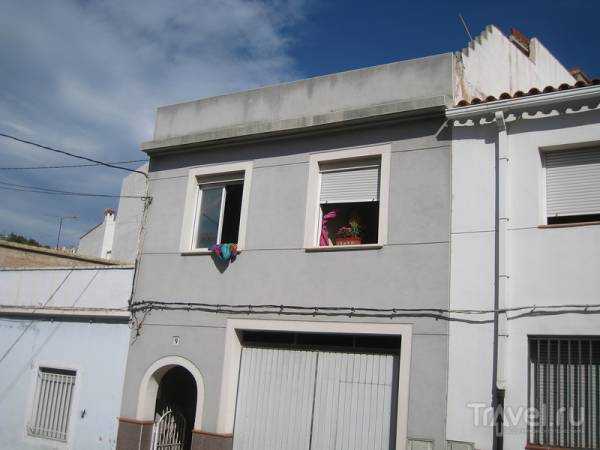
You see, in this and the previous photo, although the houses are poor and old, they are clean, but there it is not like that at all.
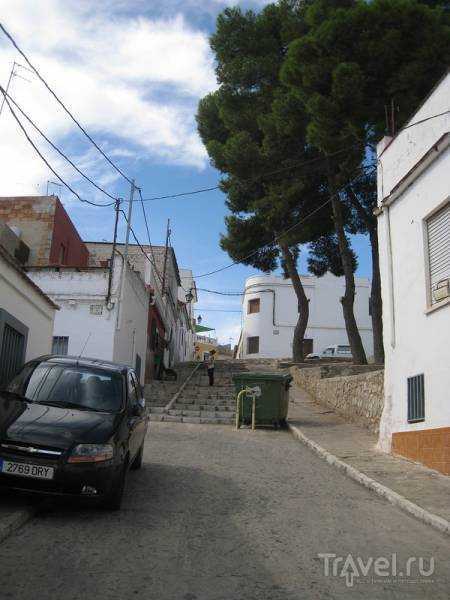
We climb through a small pine park to the fortress. The pines there don't smell like pine at all, but like flowers; their needles are bright green and soft, and their bark is gray.
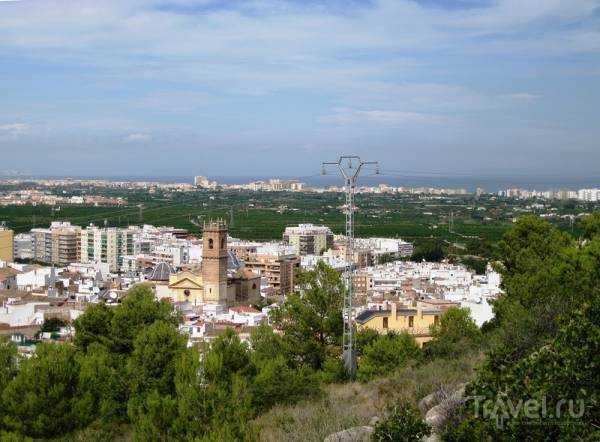
Here is the Santa Anna fortress, built in the late 16th and early 17th centuries to protect against raids by Berber pirates.
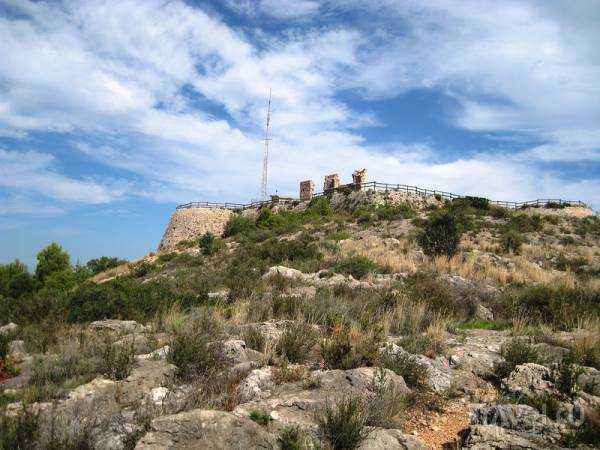
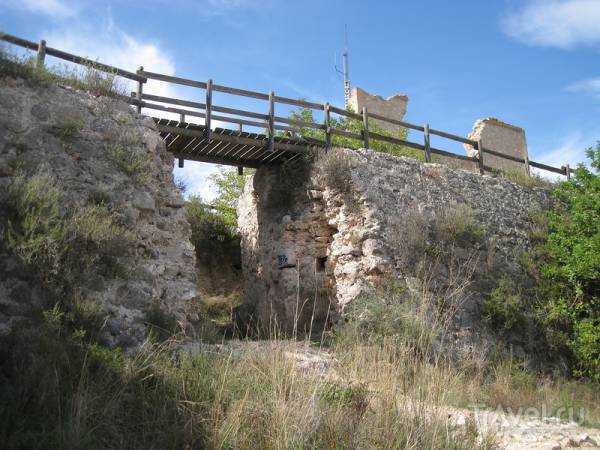
The basement is full of trash and smells like a toilet. We won't go too close.
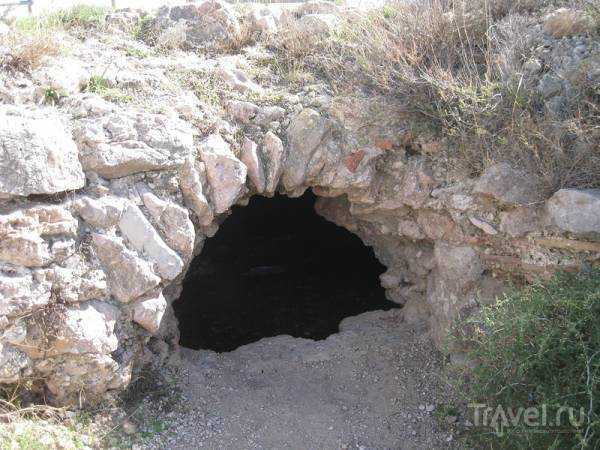
And here is all that remains of the fortress.
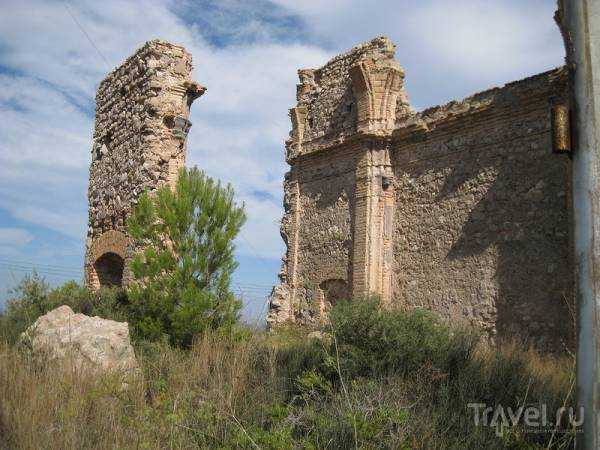
But the view from here is interesting in all directions. This is an old town. How can anyone live here?
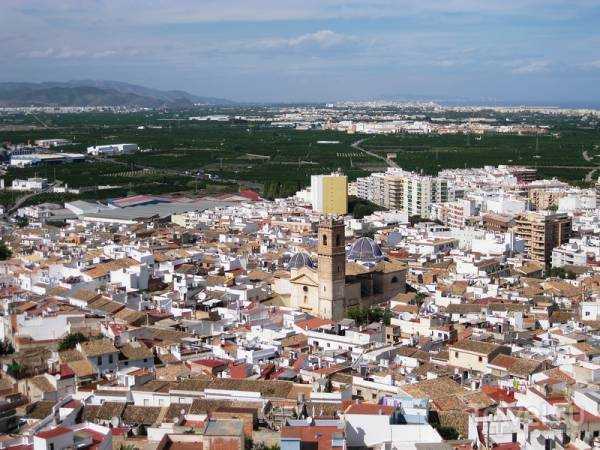
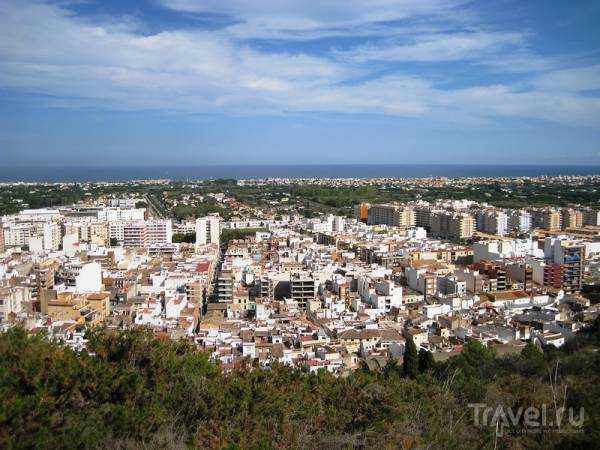
And this is a new development, and yet they still stick the houses right next to each other. It wasn't that dense in Paris, and besides, it was beautiful there, but I thought back then, "Where do mothers with strollers go for walks? And where can older children play in the courtyard? There are no courtyards."
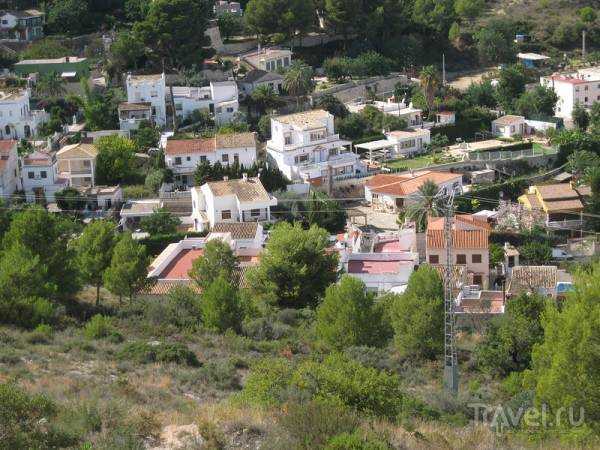
And only in this area, from where we began our climb, does the eye find a rest. But the dogs there were very barking as we passed these villas.
We returned to our (rented) car, there it is, in front of the red one.
By the way, there are four trash bins in Spain: one for paper (blue), one for glass, one for plastic (I can't remember the colors), and one for everything else—green. It's not that hard to sort household waste, and everyone does it.
Spain is gradually introducing a large brown bin for plant waste. Until now, we've seen all the trimmed branches, palm fronds, and the like piled up next to the trash bins, collected every 5-7 days.
But if conscientious citizens start throwing branches and food scraps into the container, then the planet will receive firstly compost for the fields, secondly a reduction in CO2 emissions into the atmosphere, because all this will decompose not in a landfill, but where, during the decomposition process, they will obtain a third thing – biogas, a fuel.
In Chernihiv, some courtyards have installed mesh plastic containers, and they fill up pretty quickly. We're lucky—it's in our neighboring yard, so we don't have to walk far.
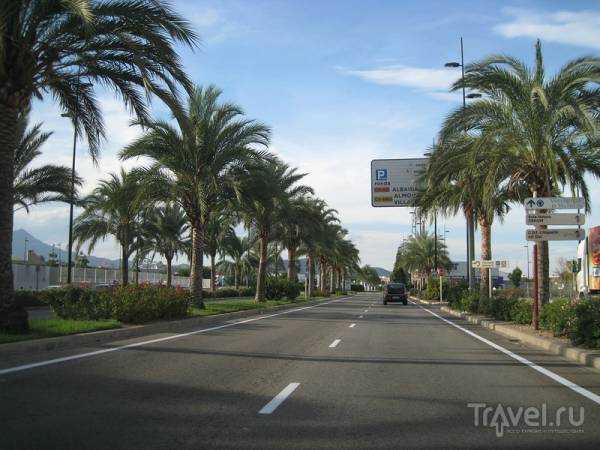
We drove through the old part of the city, then we drove through the new one…
And they got out to the area adjacent to the sea.
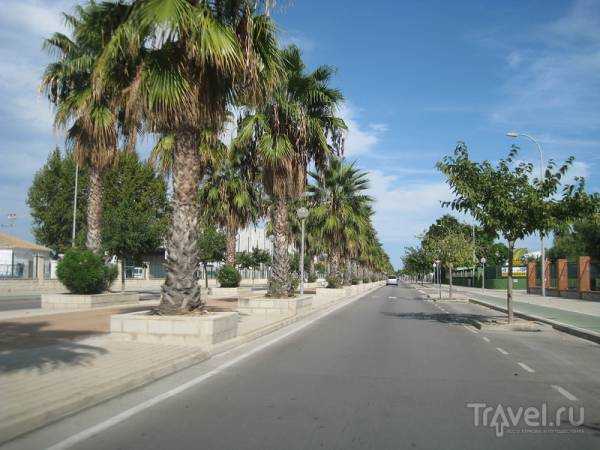
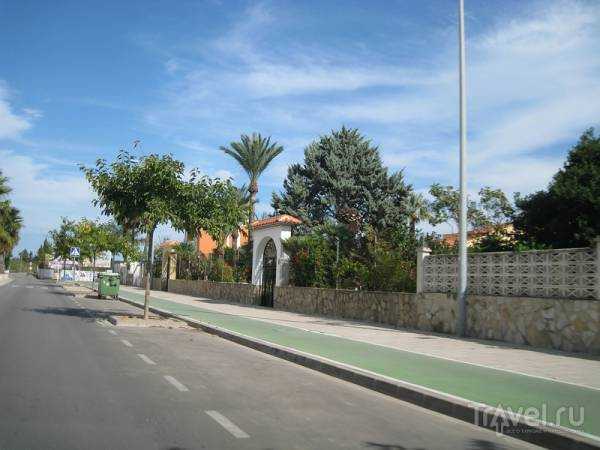
It's already beautiful and spacious here.
And here's the beach. It really is wide…
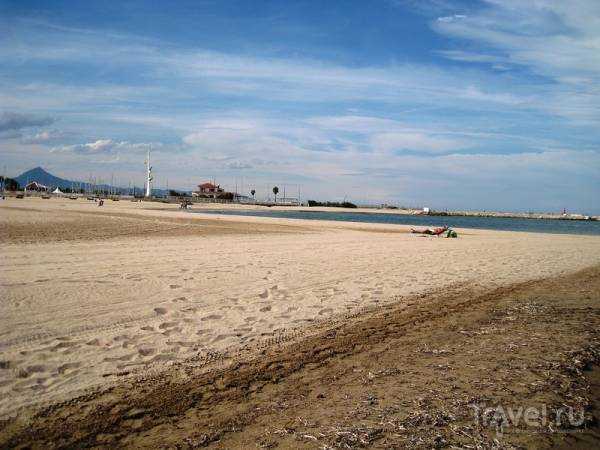
…crowded, as if it were October 10th. But for us, the water temperature of 22-24 degrees Celsius was quite pleasant, and the air temperature wasn't much warmer, around 26-27 degrees Celsius. We spent a couple of hours here. It's just as shallow here as in Denia; you have to wade a long way for the water to reach even shoulder-high.
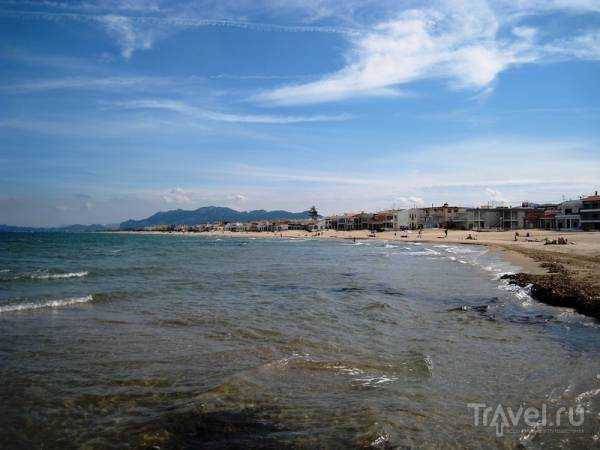
I didn't really like the houses on the beach, though. Besides, the beach is separated from the buildings by dunes, which are a local natural landmark.
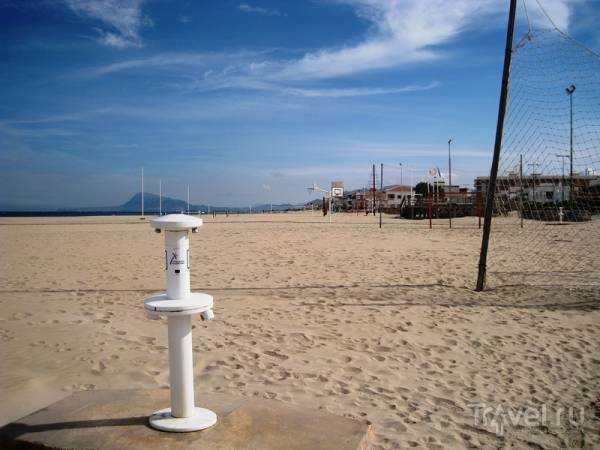
There are also foot washers on the beach…
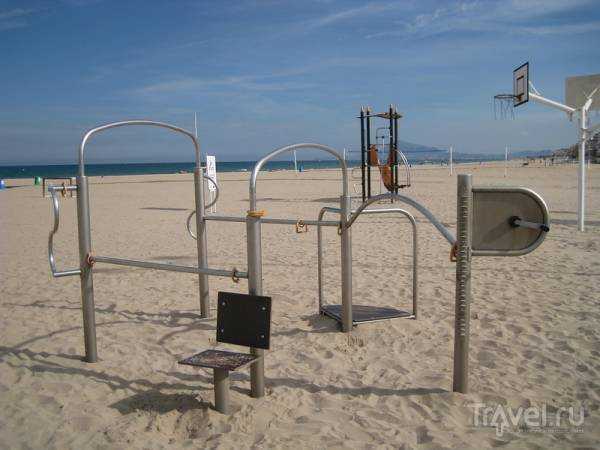
…and sports grounds.
There is a yacht club next to the beach.
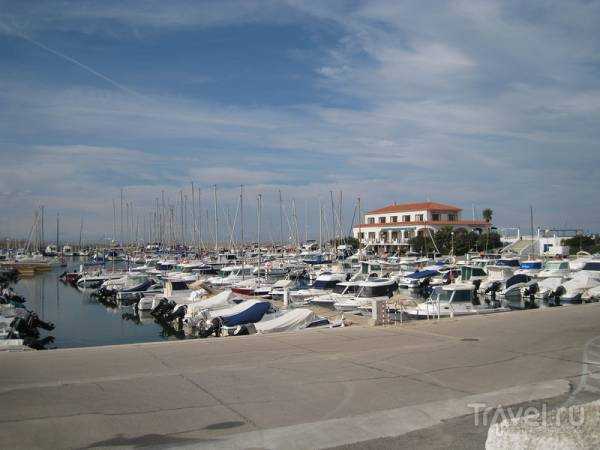
That's how we got to know Oliva a little better. In the central square, next to a large church, stands some ancient, tall monument (I spotted it in an alley), but again, parking is a problem—where to park so we can find it relatively quickly. And now it's the end of the workday, so there are even more cars in the center. So, we head back to Denia.
Source: travel.ru