





The European Association of Hoteliers and Restaurateurs HOTREC has prepared a study in which it analyzes the problem of overtourism. all over the world and offers solutions.

“Following the 5 recommendations we put forward in the document, all participants The process will allow them to more effectively manage tourism in overcrowded destinations. The global growth in travelers to Europe is, in principle, good news for the European hospitality industry and the tourism sector as a whole. However, the main problem is that demand has not yet been evenly distributed. Instead, it is concentrated in a few small cities," says Ramon Estallella, Chairman of the HOTREC Working Group.
According to forecast data, global tourist flow should increase by 250 million people over the next decade.

According to HOTREC, led to an increase in tourism five interrelated factors. Let's consider them separately.
1. Improving travel accessibility
Travel is becoming increasingly important among consumers seeking new destinations and experiences. Younger travelers, particularly members of Generation Z and millennials, prioritize travel costs and use low-cost airlines and booking systems.
2. Overall growth in international arrivals
Since the 1950s, tourism has grown steadily to 1.3 billion tourists globally. Europe recorded an 81% increase in 2017, the highest in seven years.
Previous UNWTO tourism forecasts for the EU have already been significantly exceeded. For example, the 2023 target was already achieved in 2016.
3. Use of the private sector for tourism purposes
The active implementation of private sector booking systems, such as Airbnb, has increased the percentage of tourist accommodation in city centers, and, consequently, displaced residents.
4. Increased concentration of tourist flows in the same places
The holding of traditional excursions and tours year after year, and the concentration of tourist flows in certain places, leads to discontent among the local population.
5. Self-promotion of directions on social networks
Increased tourist awareness of destinations through the internet and the use of social media has led to a particular focus on certain cities, further contributing to congestion around these places.

What does overtourism lead to?
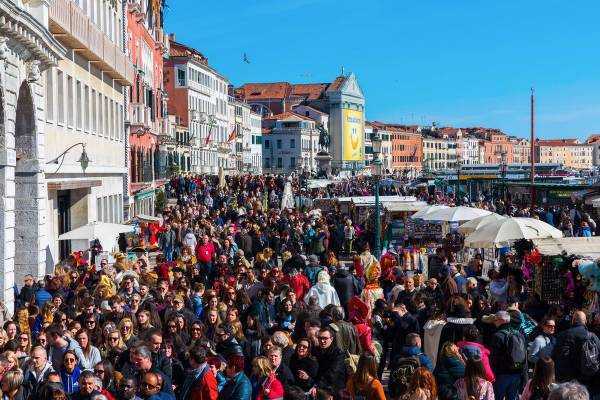
Increased tourism leads to crowds, for example, around specific landmarks and attractions, in public places, on roads
and in public transport.
As a result urban infrastructure is constantly under enormous pressure: Footpaths, bridges, roads and public transport are rapidly deteriorating, and the local ecosystem is under severe pressure, including energy and water sources.

Against the backdrop of all this, degradation of the quality of life of local residents: crowds of tourists are causing protests and outright conflict, already known as "tourismphobia".
Besides, Life in a tourist town is becoming too expensive for locals, since everything in it is subordinated to the tourist’s wallet, including housing rentals, shops, taxis... As a result, residents of some cities are forced out of the city centers.

Also, the congestion of cities with tourists can increase pollution, damaging the local ecosystem.
Where is this most felt today?
Amsterdam
The relatively small, old and densely populated city has experienced a rapid rise in inbound tourism (17 million arrivals in 2017), which has created opposition from local residents.

In 2015, the city government reached an agreement with Airbnb, legalizing short-term rentals within certain limits. However, as property prices soared, these restrictions were gradually relaxed.
The city also introduced restrictions on the construction of hotels and the placement of shops aimed only at tourists in the city center.
Barcelona
Barcelona is often mentioned in the debate about overtourism. Between 2010 and 2016, overnight stays in the city increased by 271,000 overnight stays (from 7.1 million to 9.1 million). However, these figures don't include 30 million daily visitors (tourists on busses and cruise ship passengers).

Cinque Terre
The five picturesque Italian villages, listed by UNESCO as a UNESCO World Heritage Site, that together make up Italy's Cinque Terre National Park, regularly attract visitors day and night. Currently, the area, with a population of 4,000, receives 2.4 million tourists annually. However, the region only has 3,000 beds at a time.

For this reason, the Cinque Terre Card was introduced in 2013, allowing visitors access to the trails connecting the villages. In 2017, limits were placed on the number of such cards sold per day.
Santorini
The small Greek island of Santorini welcomed nearly two million visitors last year. About 850,000 of them were cruise passengers, who spend several hours a day in the city.

The island's mayor imposed a limit of 8,000 cruise passengers per day.
Venice
This is another city that suffers most severely from the attention of tourists. The challenges associated with this phenomenon have recently come to be known locally as "Ven-exodus," as the city's population has almost halved over the past 30 years. Local residents are particularly active in protesting against cruise visitors, and the issue of moving the cruise terminal outside the city is being considered.

Dubrovnik
UNESCO has recommended that Dubrovnik impose a limit of no more than 8,000 tourists per day. Within two years, Dubrovnik must actively reduce the number of visitors to its ancient center to prevent the destruction of its historical sites.
The new limit on visitor numbers will be stricter than the UNESCO recommended limit: instead of the proposed 8,000 tourists per day, the city will set a limit of 4,000.

As the city's mayor, Mato Franković, stated, "the purpose of this step was to protect the historic center of the Croatian city from unnecessary influx of visitors."
Last year, authorities announced that CCTV cameras would be installed in the city center to monitor the situation and control incoming tourist flow. If necessary, the authorities are prepared to take action, including banning entry to the old city and blocking cruise ships.
During peak summer times, Dubrovnik is packed with tourists, especially cruise ship passengers. Lines to enter the Old Town can stretch 300 meters or more, taking up to 40 minutes.

Recommendations and solutions to the problem
HOTREC offers five recommendations for policymakers and decision-makers to combat overtourism in European countries.
1.Tourism activities must be clearly managed
Comprehensive data collection is crucial to gain a clear understanding of the scale of tourism activity in each destination and to inform tourism planning and policy management.
2. Setting restrictions
It is not practical to impose physical restrictions on the number of tourists visiting popular cities, so other methods must be used.
This includes setting a limit on the number of nights available for accommodation per year, or better coordinating the flow of cruise passengers who can only disembark in the city on a specific day.
Reasonable restrictions must be agreed upon through dialogue between all parties at each destination.
3. Distribution of tourist flows
The annual increase in tourist arrivals requires businesses, the public, and the private sector to work together to distribute tourist flows more evenly throughout the year and across the region. This requires new policies, particularly more effective promotion of less-visited destinations and the elimination of seasonality.
4. Help tourists become responsible
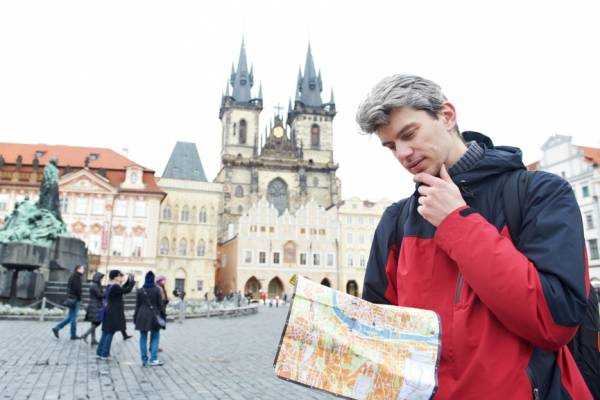
It's important to teach visitors to respect the local way of life before they visit the city. To achieve this, public and private sectors must work together.
5. Dialogue
It is particularly important that each resort establishes structures responsible for effective dialogue between local residents, professional tourism organizations, and government authorities about the impact of tourism on the region and the problems associated with it.
Source: trn-news.ru