





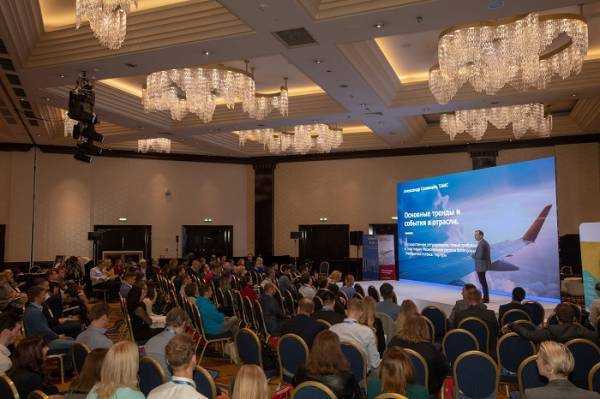
The 6th international conference, Online Travel 3.0, was held in Moscow. The event was attended by over 300 participants, including the most respected industry experts and top management from leading companies.

During the conference, experts discussed the main trends in the travel market, forecasts for its further development, the use of advanced technologies in the tourism industry, as well as the challenges that the industry will face in the future.
"According to expert estimates, airlines worldwide carried a record 4.1 billion passengers last year. According to IATA, passenger turnover increased by 6.41% compared to August of last year. In the first eight months of 2018, Russian airlines carried 77.3 million passengers. Of these, 900,000 passengers were carried by Russian airlines on routes to host cities of the 2018 FIFA World Cup. The rail and air transport markets showed roughly the same figures in terms of passenger numbers in 2017-2018, but air transport's share of passenger turnover is higher than that of rail transport by approximately 122 billion passenger kilometers," she noted. Tatyana Merkulova, Commercial Director of the Transport Clearing House (TCH)Air mobility in the Russian Federation continues to grow, although it remains lower than in Europe. The passenger load factor for Russian airlines as of August was 91.11 TP3T, compared to 85.31 TP3T globally, Tatyana Merkulova clarified.
A report on the main market trends, citing data from Dmitry Gorin, adviser to the head of Rostourism on transport, was presented by Alexander Sizintsev, Deputy General Director for Economics and Finance at Transport Automated Information Systems (TAIS)"In the first quarter of 2018, tour operators saw positive sales growth, primarily due to a large volume of early bookings. In the second quarter, there was a sharp decline, estimated at 10-20% of the previous quarter's sales, caused by a number of factors, including a 15% increase in the exchange rate. Due to the situation with several tour operators, the first half of the year saw an increase in the number of tourists planning their own trips," he said.
According to Mr. Sizintsev, Sochi and Simferopol were among the most popular domestic destinations among independent tourists in the first nine months of 2018, while Tivat and Tbilisi were the most popular international destinations. Among market trends in both organized and independent tourism, Alexander Sizintsev highlighted consolidation around major players, as well as the strengthening of the government's role in the tourism industry. This is reflected in the transition of Rostourism to the Ministry of Economic Development, the tightening of the Central Bank's policy towards travel companies, and the creation and development of technology platforms such as the Electronic Travel Package and the National Booking System. The share of tourism in GDP increased from 1.51% to 3.51%, and the government's planned increase in tourism's contribution to GDP could reach 61%.
He also shared a forecast for market development. Dmitry Migachev, Director of the Passenger Insurance Department at AlfaStrakhovanie"Future trends in the Russian tourism market will likely indicate further consolidation and increased competition among players. However, most participants will remain active, gaining new strength and momentum, taking advantage of the new benefits and technologies offered by the gradual digitalization of our surroundings. And if we see a slightly more stable global situation and a reduction in the current tension, this will be another positive step, which will positively impact both international tourist traffic and increase the flow of Russians vacationing in Russia and abroad."
The choice of a distribution strategy for tourism services and the implementation of NDC generated heated discussions. Vladimir Proskurin, Head of Passenger Transportation Programs, IATA in Russia He discussed the history of the NDC protocol standard's implementation and its goals. He noted, "More than 20 airlines have committed to increasing their sales volume via the NDC API to 20% by the end of 2020. This is a truly ambitious goal, as the industry is only just beginning. On October 19, the first such "live" transaction was completed when an agent in the UK sold an airline ticket, using a "classic" GDS as the aggregator. All transactions previously conducted were based on direct agent connections to the airline's API."
In a discussion on big data and machine learning technology as it applies to the tourism industry, Andrey Osintsev, Director of Svyaznoy Travel, And Maxim Godzi, Head of Machine Learning at App in the AirSvyaznoy Travel and App in the Air presented their joint project for a personalized email newsletter that analyzes a passenger's flight history and suggests potentially interesting destinations. Svyaznoy Travel and App in the Air envision the future of this service as a system that will be able to determine not only a traveler's preferred destination, but also the most suitable time and ticket option.
The Online Travel Achievements Awards ceremony took place at the conference. Based on the votes of conference participants, the award was given for the successful transformation of the business model of one of the largest companies in the Russian online travel segment (from B2C to B2B+B2C), active growth, and brand development outside of Russia. Felix Shpilman, CEO of Ostrovok.ru, a hotel booking service. Dmitry Migachev, Director of the Passenger Insurance Department at AlfaStrakhovanie, was awarded for his key role in launching new competitive services and fostering a favorable atmosphere in the industry. Alexander Sizintsev, Deputy General Director for Economics and Finance at TAIS, was awarded for his long-standing contribution to the development of the industry and raising standards.
The second day of the conference was dedicated to modern technological solutions for the tourism industry. Panelists discussed financial products and their integration into the tourism industry, enhancing customer loyalty, and increasing conversion rates through the use of mobile apps. The conference concluded with a series of master classes on storytelling and corporate blog development, where the speakers discussed relevant case studies from their own work.
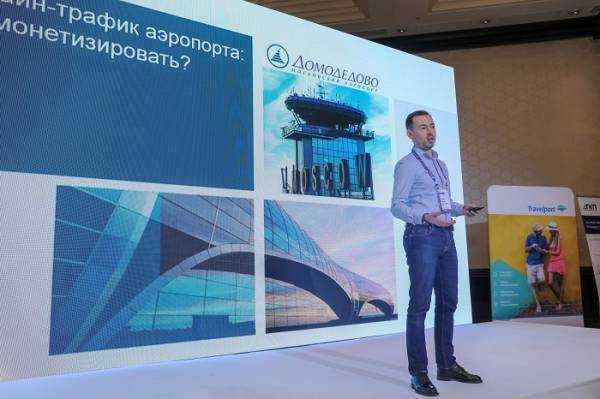
Over its six years of existence, the event has earned a reputation as the premier online travel event in Russia. Today, the international conference Online Travel 3.0 is the leading discussion platform in Russia for leading players in the online travel market, including Russian and international online travel agencies, metasearch engines, GDSs, airlines, travel startups, and more.
Source: trn-news.ru