





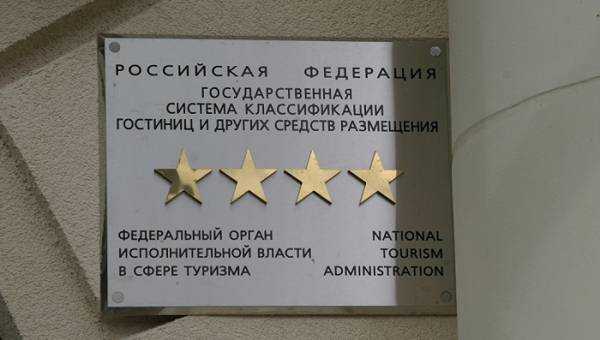
The introduction of administrative penalties for hotel owners operating without a designated category is planned to be postponed for another year, until July 1, 2020. The initiative was initiated by the Russian Ministry of Economic Development.

It was supposed to come into force next year. A law requiring all hotels, ski slopes, and beaches to be classified is in place. Accredited organizations are responsible for assigning a specific category to tourist infrastructure facilities. According to the law, classification will become mandatory for accommodation facilities with more than 50 rooms starting July 1, 2019, for hotels with more than 15 rooms starting January 1, 2020, and for all hotels starting January 1, 2021. However, according to Sergei Galkin, Deputy Minister of Economic Development, the entry into force of administrative penalties should be postponed for a year, to July 1, 2020, Interfax reports.
"The proposed changes could significantly increase the burden on the entire tourism industry and worsen conditions for consumers and businesses. The Ministry of Economic Development and Trade assesses that the draft resolution cannot be adopted in its current form; it requires significant revision," Sergei Galkin said during a meeting of the Federation Council's tourism expert council.
According to the official, the specified deadline is too short to process such a comprehensive package of regulations with a high degree of regulatory impact. Thus, business proposals and comments submitted to the Ministry of Culture back in the spring of 2018 were largely ignored. "The amendments will increase the burden on businesses and will contradict our goal, set by the president's May decrees, to increase the share of small and medium-sized businesses in GDP," Mr. Galkin said.
The draft needs to be finalized, and to do so, its effective date must be postponed. "The Ministry of Economic Development will promptly finalize the draft resolution in close cooperation with businesses and the expert community in the near future. Working groups are already being formed for this purpose," the Deputy Minister emphasized.
The expert supported his position with real-life examples. For example, the regulation prohibits hotels that do not provide a minimum set of services from marketing themselves as hotels. However, this would create additional difficulties for apartments, chalets, and other businesses. Furthermore, the law does not apply to health resorts and children's camps, although they can also provide hotel services.
In turn, Nikolai Korolev, Deputy Head of Rostourism, recalled that the current system has been in place for about four years, everyone has become accustomed to it, and it is important to ensure that the new hotel classification system does not cause any harm.
Source: trn-news.ru