





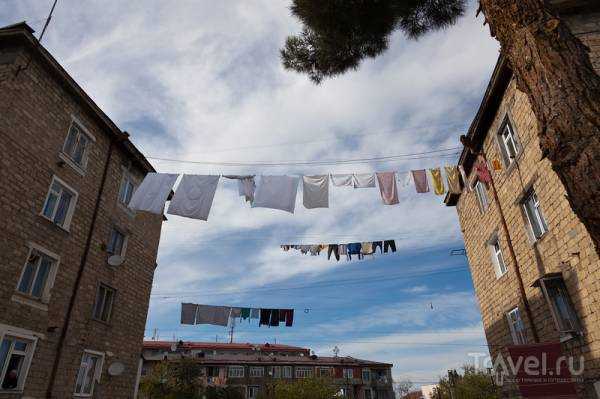
Karabakh wasn't actually on our travel plans. Our original plan was to head back from Goris toward Lake Sevan and spend the night in Dilijan, then explore the mountain monasteries of northern Armenia the next day. But upon reaching Goris and seeing the signs for the capital of this unrecognized country, we decided to adjust our plans. Moreover, we hadn't booked accommodations in advance; we spent the entire trip finalizing our plans for the day only in the morning, and then searching for our next accommodation on booking.com.

Before entering, travelers are greeted by this poster:
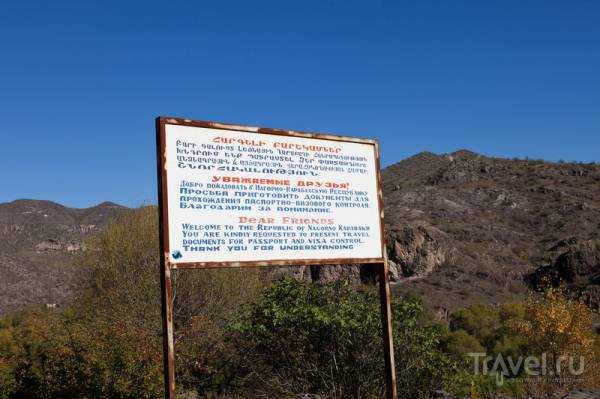
They wrote us down in a notebook and told us that in Stepanakert we needed to go to the Ministry of Foreign Affairs, get a permit there, and hand it in upon leaving—a document permitting us to stay in the Nagorno-Karabakh Republic.
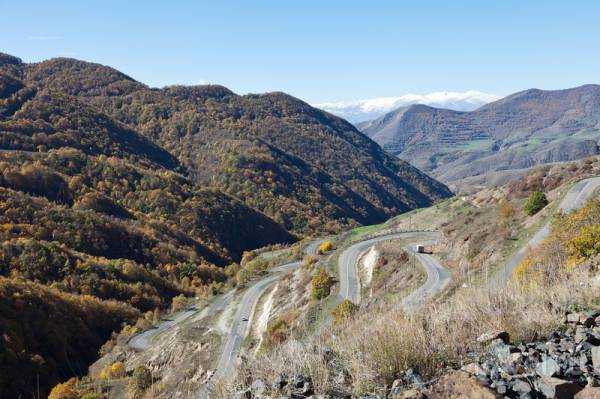
This serpentine road is the only normal road (according to information from the Internet, there is also a dirt road through the Zod Pass) connecting the Nagorno-Karabakh Republic with the rest of the world.
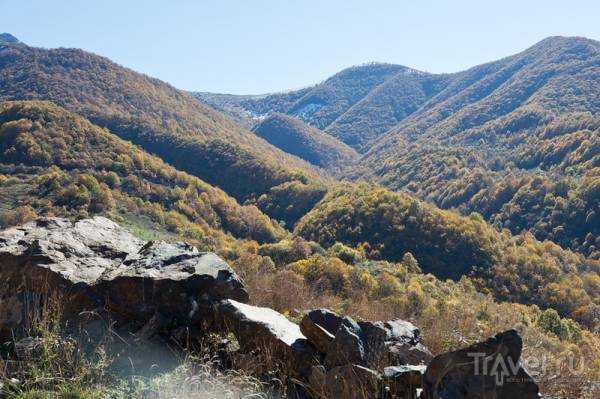
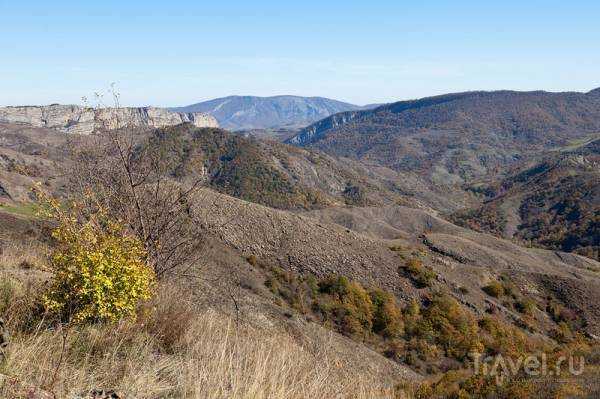
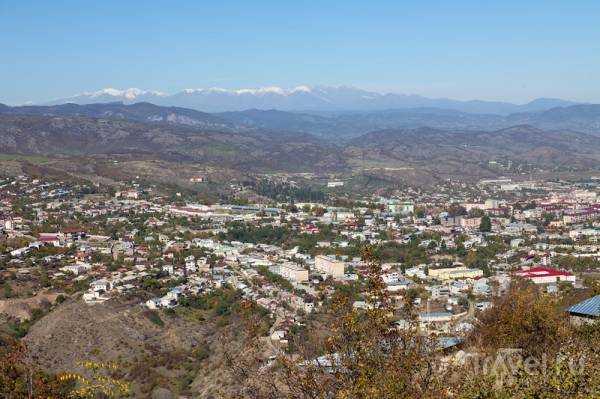
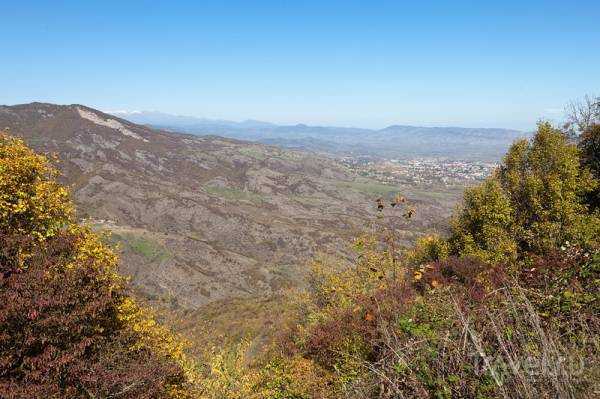
View of Stepanakert from the city of Shusha
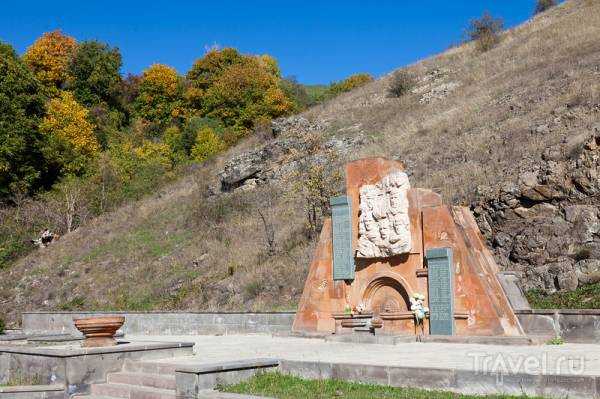
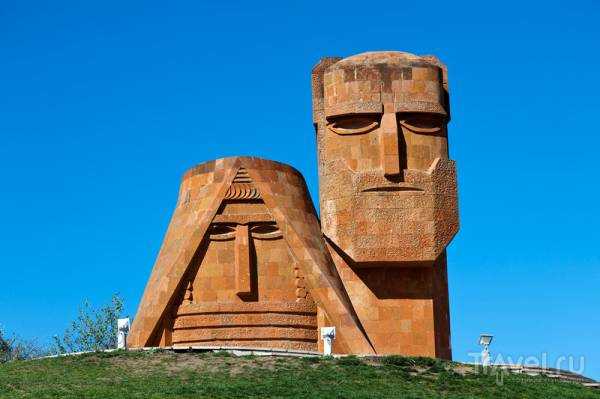
One of the country's symbols, depicted on half of the local souvenirs, as well as on the NKR coat of arms, is the sculpture "We Are Our Mountains"
The plaque bears the name of the patron who funded the restoration of the monument. They could have also mentioned the monument's creator.
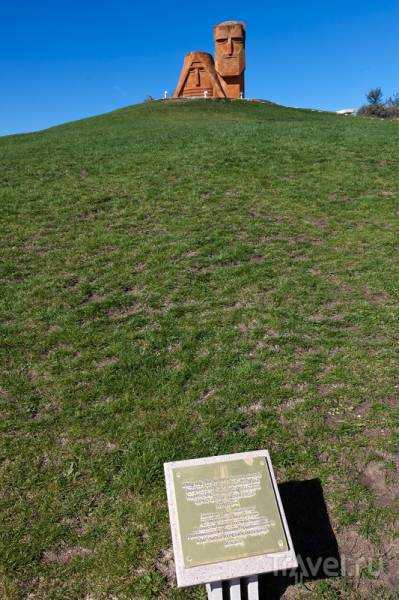
The monument's creator is sculptor Sargis Baghdasaryan, People's Artist of the Armenian SSR. Built in 1967, the monument depicts two elderly people—a husband and wife—in traditional dress, crafted from Oktemberyan (Armavir) reddish tuff. The artist intended the statue to have no pedestal, creating the impression that the figures have grown into the mountains, becoming one with them.
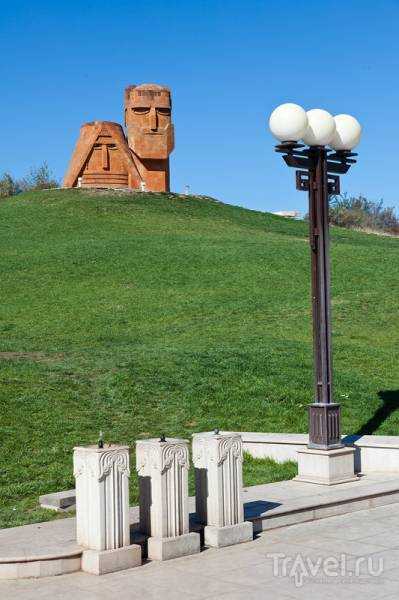
At first, we were only planning to see Stepanakert and Shushi, but the souvenir sellers near the monument unanimously convinced us that, since we had already made it there, we should definitely go to the Gandzasar Monastery.
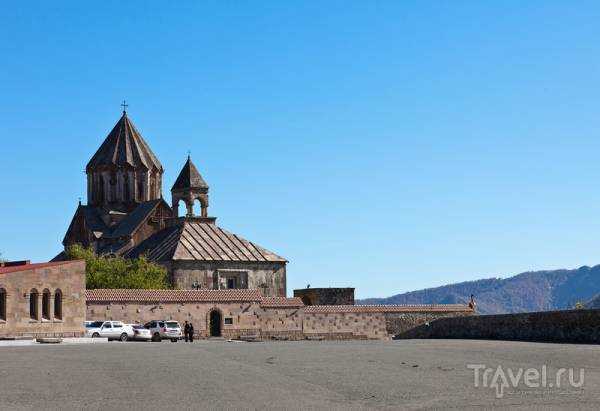
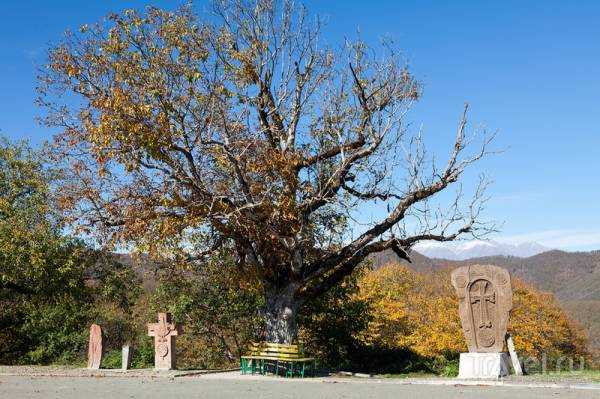
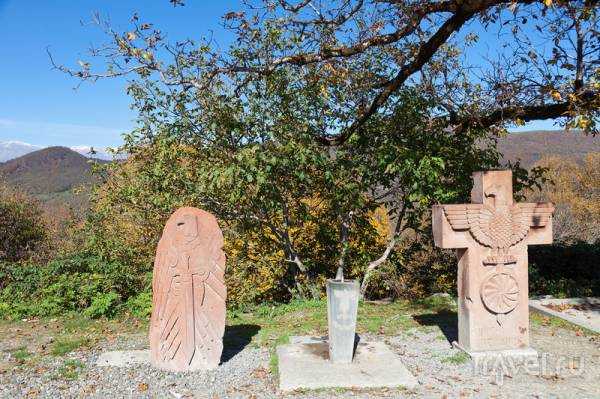
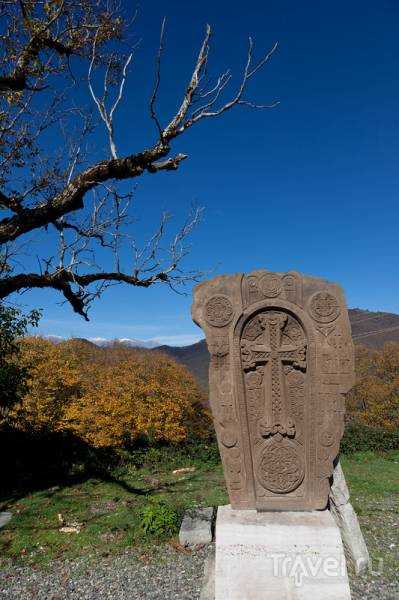
The monastery has a website www.gandzasar.ru, dedicated both to the monastery itself and to Nagorno-Karabakh in general, the following paragraphs are copied from there
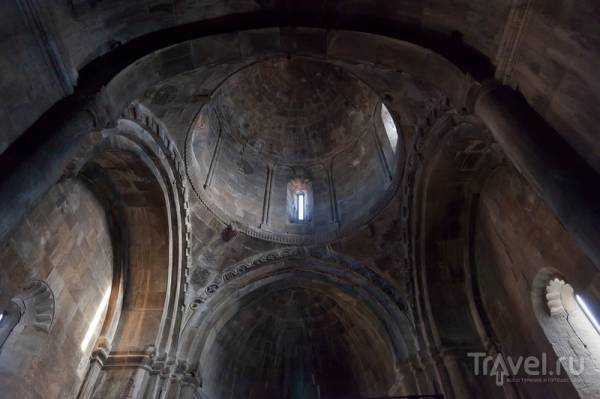
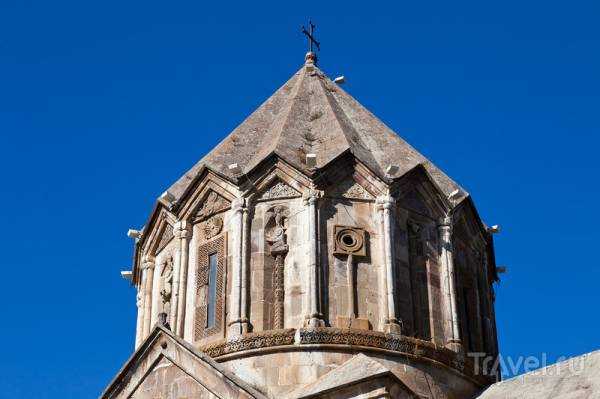
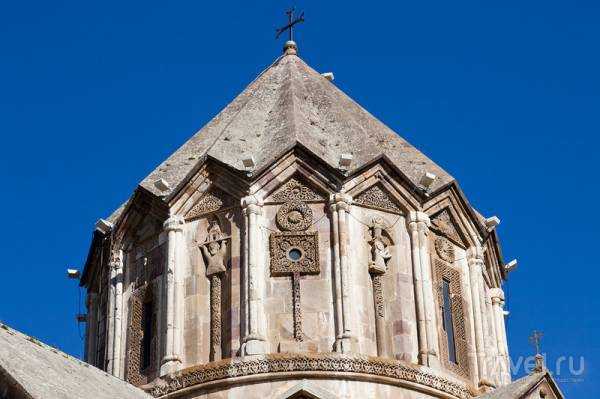
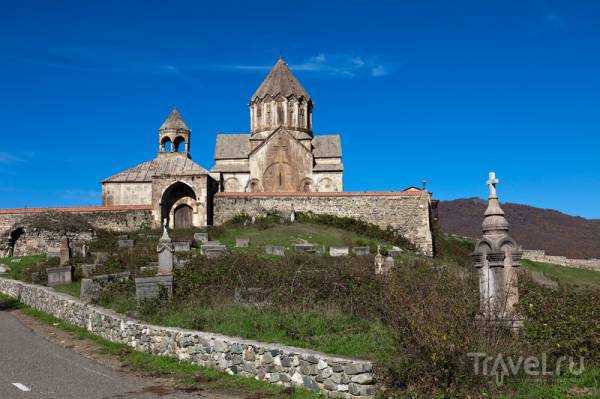
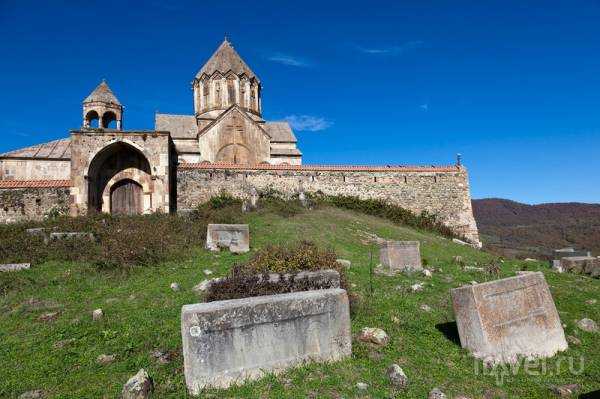
The name "Gandzasar" translates from Armenian as "treasure mountain," referring to the copper and silver mines that were located near the hill in the Middle Ages. However, without a doubt, the true treasure of Mount Gandzasar, as well as the entire Land of Artsakh, is the Cathedral of St. John the Baptist (Armenian: Սբ. Հովհաննես Մկրտչի կաթողիկե եկեղեցի), built in the thirteenth century.
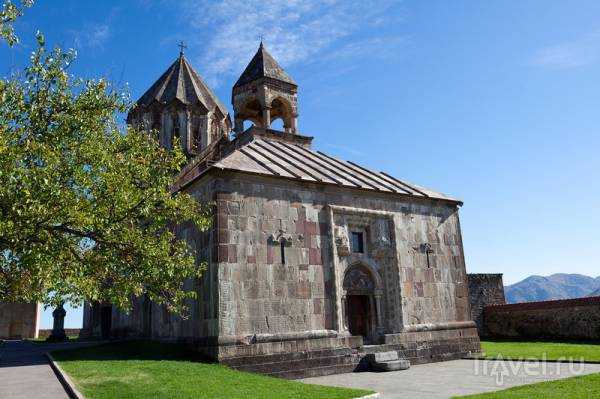
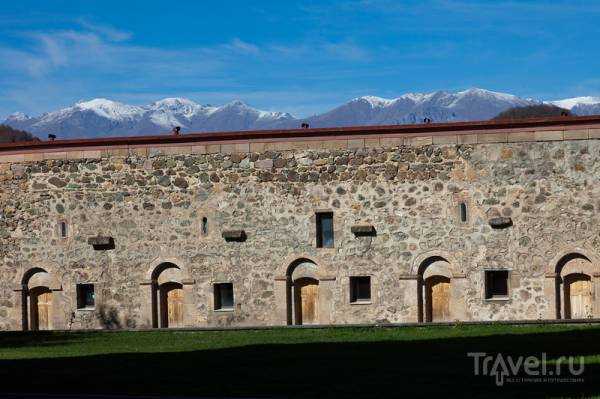
The cathedral is a large cross-domed church. In addition to the church buildings, the monastery includes a seminary, the Catholicos's reception room, a refectory, monastic cells, utility rooms, and other structures. The monastery is surrounded by a high stone wall.
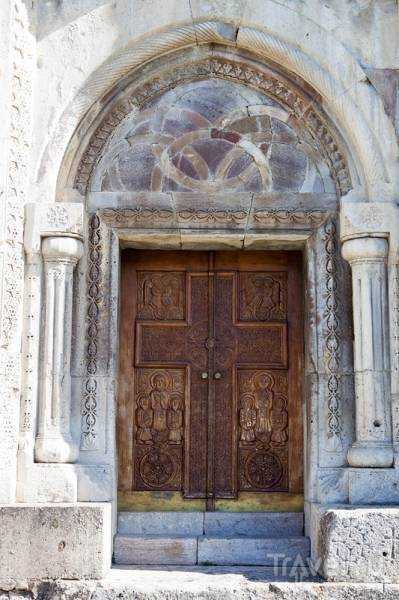
The Cathedral of St. John the Baptist was founded in 1216 by Hasan Jalal Vakhtangyan, an influential Armenian feudal lord of Khachen, the most significant region of the Artsakh province. Hasan Jalal called himself "Grand Prince," "Prince of Princes," "Autocrat," and "King" (Armenian: թագավոր). During the reign of Hasan Jalal Vakhtangyan, the Principality of Khachen became a large unified state with a territory of 12,000-15,000 square kilometers and the largest army in Armenia.
Source: travel.ru