





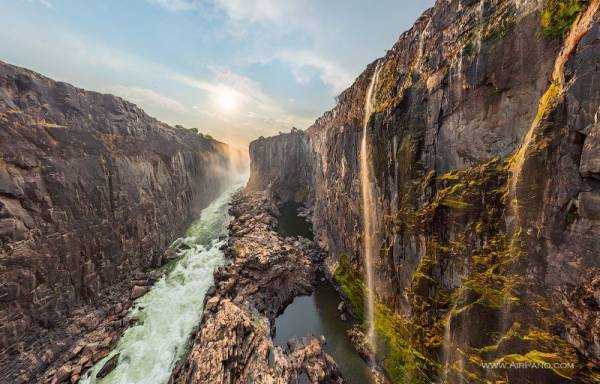
Victoria Falls: First Impressions
The journey to the waterfall was long and arduous. It took us over a day to get to Livingstone, changing planes, time zones, and climates. As soon as we finally reached the hotel, we dropped our suitcases and headed to the waterfall. The sun was setting toward the horizon.
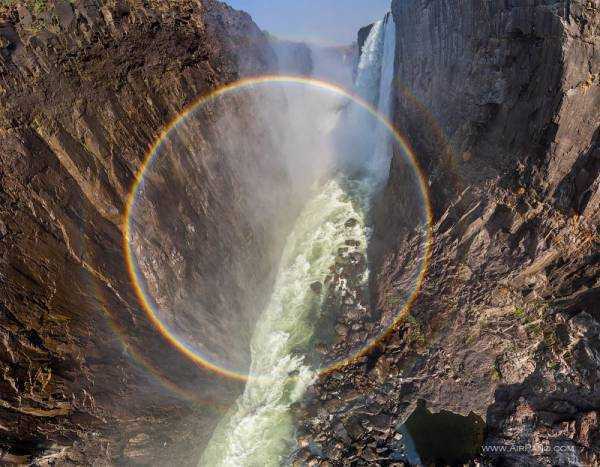
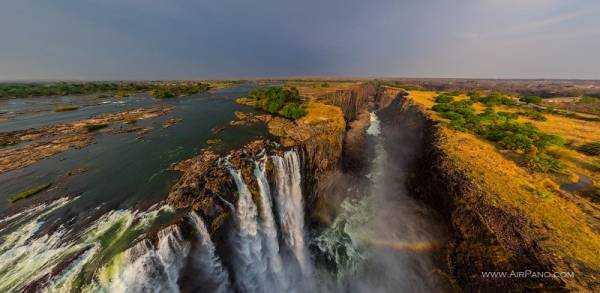
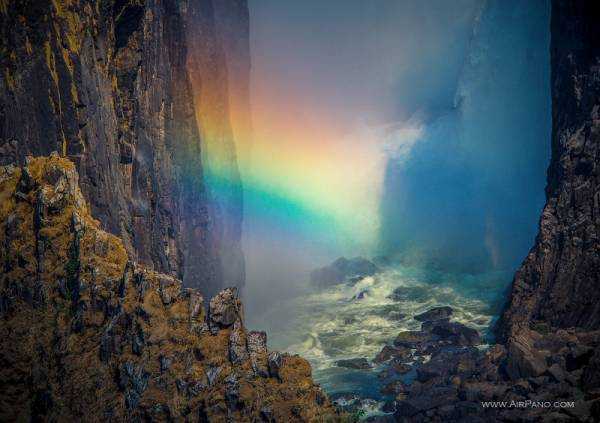
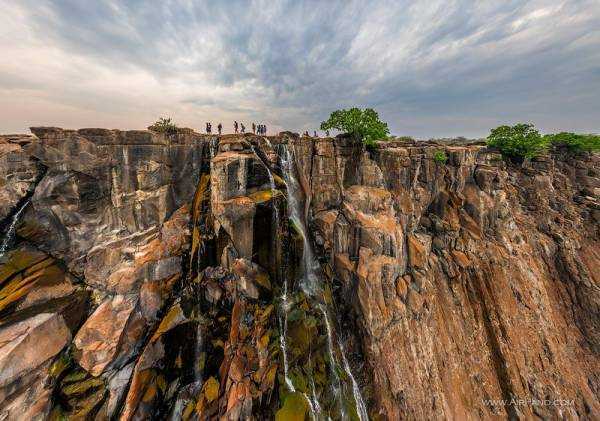
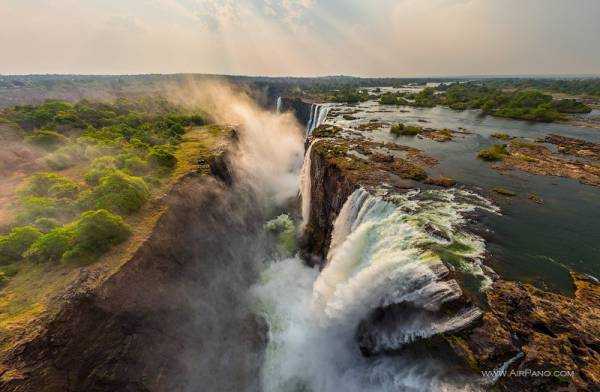
In October, the water level was already low, so part of the gorge was dry. But that was our plan: at this time, you can hike to Livingstone Island and enter Devil's Pool. As we stood at the canyon's edge, the setting sun illuminated the spray of the main cascade. They say that when discoverer David Livingstone saw the falls from afar, he mistook it for a savannah fire: the waters of the Zambezi, falling 100 meters into a rocky canyon, break into thousands of drops, forming clouds visible for miles. Locals call it Mosi Oa Tunya—"Thundering Smoke."

Animals in the national park
We spent the next day exploring the area and obtaining the necessary permits to film in the national park. We also got to know its inhabitants. The mighty waters of the Zambezi attract a large number of animals. Monkeys, hippos, elephants, and giraffes are all found here. The elephants cross the river quite freely, breaking trees along the way. After seeing this, I abandoned my plans to enter the park at night: the prospect of bumping into an elephant on a narrow path didn't appeal to me. However, I did manage to get quite close to the giraffes one day. To photograph them, I had to approach within a few meters. The giraffes, although accustomed to people, were still wary and slunk away from me on their long legs. Only a few hours in the blazing sun paid off. Curiosity overcame the animals, and they came out to see the annoying man with the camera. My patience was rewarded: I managed to get a few good shots.
The monkeys deserve a special mention: they're not the least bit shy. They'll run up to you, tug at your backpack, at your camera strap. They'll bare their teeth. If they see food, they'll take it away. Generally, an encounter with a troop of monkeys is very dangerous. They only seem cute in cartoons, but in reality, it's best to observe them from a distance. They're not allowed on the hotel grounds where we stayed, but in my presence, a particularly brazen baboon climbed the fence, stole breakfast from the terrified women, and ran off to the laughter of the security guards.
Livingstone Island and Devil's Falls
One of the main goals of our expedition was to reach Livingstone Island and Devil's Pool. The island is located approximately in the middle of the river at the edge of the falls and is usually surrounded by water. During the dry season, part of the river dries up, and the island can be reached on foot. However, this is private land, and only a limited number of guided visitors are allowed there. Demand is high, and we were only able to book a visit for the following day.
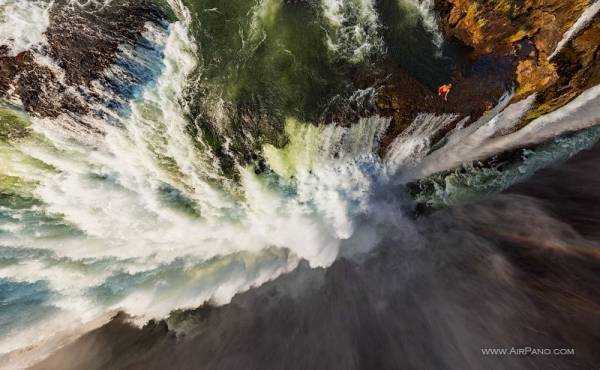
The main tourist attraction is Devil's Pool. At the very edge of the waterfall, there's a basin several meters across with a gentle current. From there, you can peer over the edge of the waterfall and see tons of water tumble into the abyss. The spectacle is truly impressive! To reach the pool, you have to swim across a small channel, walk along a rocky ridge, and climb down into the water. We originally planned to film from the pool itself using a long pole with a camera attached. I even swam all the way to the pool, but that proved to be very awkward, and the best shots, as always, were captured with a drone.
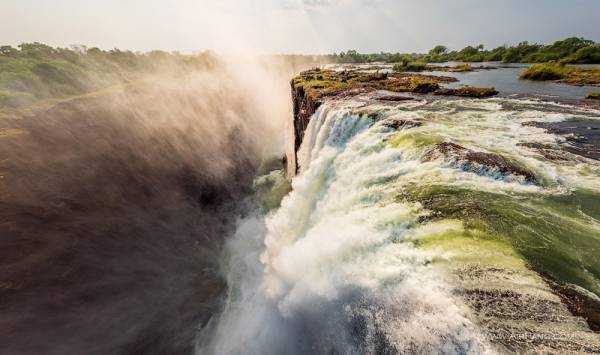
During the rainy season, the waterfall releases over 500,000 tons of water per minute. Now, it's much less, but still impressive. The falling water creates such a roar that it's impossible to talk near it.
The first day of filming on the island ended in failure. The camera mounts broke, and the entire day's worth of footage, along with all the equipment, fell into the river. We tried to fish it out and even offered a reward for whoever found it. But to no avail: only the laughter of hippos echoed across the Zambezi, and we were still unable to save the cameras.
Rafting
Besides Victoria Falls, the Zambezi River is famous for its rapids. Rafters and kayakers from all over the world flock here. We decided to check them out, too, and the best way to do it was from a raft. Frankly, I thought we were in for an easy boat ride, but it turned out to be much more than that.
Having received life jackets, helmets, and oars, we began our descent down to the river. Other adventurers were already crowding the shore. We were assigned a bright yellow raft, and we set off. The captain immediately said that there was no point in even attempting to take pictures until the seventh rapid: everyone had to be rowing. I realized that any hope of an easy ride was fading before my eyes.
Ahead of us lay 19 rapids and more than 30 kilometers downriver. Our rafting companions were Peter and Rita, an elderly couple full of optimism. As it turned out later, they were embarking on a five-day river trip and were determined.
We grab our oars and row at the captain's command. Here comes the first rapid! A splash of water, a brief drop of the raft somewhere down, a thump of oars—we're through! All in all, it's quite fun (and wet).
I won't bore you with descriptions of all the rapids, but here are the names of a few: The Boiling Pot; Stairway to Heaven, a Category 5 rapid, the maximum for commercial rafting; The Devil's Toilet Bowl; Commercial Suicide (a Category 6 rapid, the highest possible, which had to be bypassed by land); The Gnashing Jaws of Death; The Washing Machine; Double Trouble; and Oblivion, one of the most challenging on the river. Harsh names aren't always an indication of a rapid's difficulty. Halfway through, I was even able to get out my cameras and take some pictures.
Meanwhile, we're approaching the Oblivion threshold; the captain begins tying everything down with two ropes, and it looks like things are getting serious. The probability of a capsize at this threshold is 60%. But there are no options, only forward!
The rapids are large, but don't look particularly threatening. We work our oars together, the raft spins in the current, a fountain of spray, and then I fly over the raft, then under it, with the water churning all around. "Aha," I realize, "I fell overboard." Rita is swimming somewhere nearby. Surprised to find I didn't lose my oar in flight, I throw it back into the boat. We passed the rapids fairly well, although the entire left side was washed away. All the equipment is intact, and we've filmed the river.
Gorge
After rafting through the rapids, we decided to film them with a drone. But the journey into the Zambezi canyons isn't so easy…
In the morning, our guide, Brent, took us to the edge of the gorge, assigning us two guys who knew the way and could carry the heavy equipment. A narrow trail descended down, sometimes used by fishermen to reach the river. Apparently, it wasn't used very often.
The guys briskly trudged forward, Stas trotting slightly less briskly behind them, the drone slung over his shoulder, and I trudged along behind. The heat was rising, and the parched trail kept crumbling treacherously underfoot. Soon my companions were out of sight. Bushes with sharp thorns had shifted around the trail, catching my clothes; sand and pebbles rolled in my sneakers. Out of breath, I made it to the shore, where our team was waiting. My colleagues didn't look much better than me, but they were a little more cheerful. I thought we'd arrived, but it turned out we had to walk over rocks and climb along the shore. Why hadn't I refused at the very beginning?
Navigating the rocks was easier than the loose trail; we soon reached the rapids and waited for the rafts to arrive. Navigation in the canyon was poor, so Stas had to fly the drone manually, while I adjusted its flight and monitored the instruments. A couple of rafts capsized; the rapids were indeed quite challenging. But all the teams made it through successfully.
It was approaching midday. The black rocks were scorching hot, there was nowhere to hide from the sun, and our water supplies were running low. And we still had to go back.
The return journey proved more difficult. The rocks were untouchable, and the soles of our sneakers were melting. The only way to avoid being roasted alive was to keep going. Finally, we reached the trail and crawled up the slope. 50 steps. Stop. Catch our breath. After a hundred steps, a sip of water. Another 50 steps…
When the thorny bushes that had been harassing me on the descent appeared, I was actually glad: some shade, at least. The guys were breathing heavily, too. And they had extra weight, suitcases of equipment—not to mention my backpack. Slowly, we continued our climb upward.
After what seemed like an eternity, Brent arrived with a case of cold water. Water had never tasted so good.
Crossing the border
It's been a busy day. Barely able to catch our breath after the canyon ride, we grab our bags and rush to the border. A helicopter awaits us in Zambia, and time is running out. We rush through the checkpoint and flag down a taxi driver who agrees to take us to the Zambian side, but won't take us across the border: he only works as a bridge ferryman.
While we were hauling the suitcases out of the trunk, the ubiquitous monkeys spotted my bag of sandwiches and tried to snatch it, treacherously attacking from behind. But no such luck—I didn't hand over the food, and, showered with curses in Baboon, I retreated safely. The helicopter pilots, very conveniently, sent a car for us, and we sped along the bumpy road.
Helicopter
The helipad is located next to a huge baobab tree on a hill. It's visible from afar in the dry savannah. Pilot Mike is already waiting for us at the helicopter.
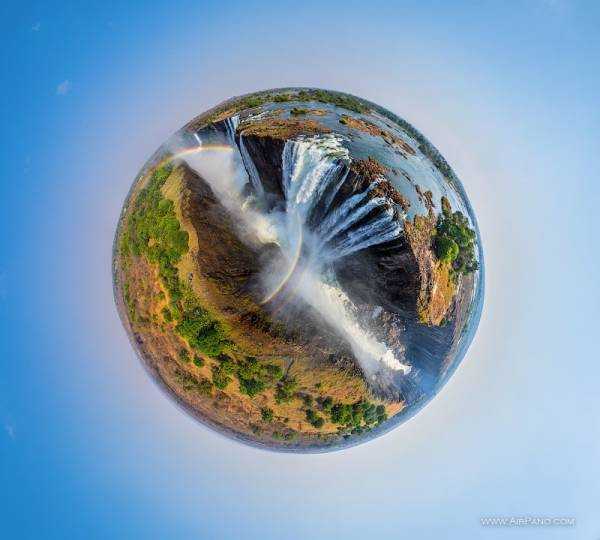
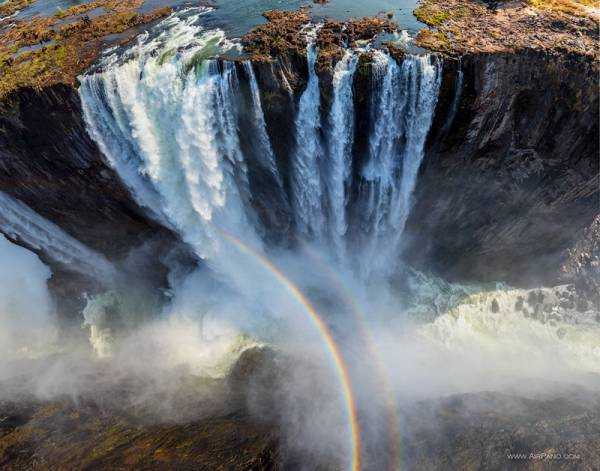
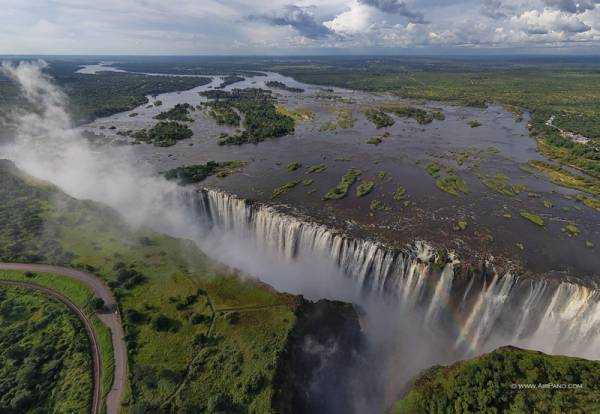
We grab the necessary equipment and load into the helicopter. I sit in the back, Stas in the front. During the flight, the rear door remains open so we can film. At first, it's a little scary to fly with the door open, but the fear is offset by the excitement of the views flashing below us. After a couple of practice passes over the gorge, we land in the savannah and secure the filming equipment to the outside of the helicopter. The rotors whine again, and the helicopter dives into the gorge, skimming almost to the river, banking, and then resurfacing toward the setting sun. We make several more passes at different altitudes. Mike masterfully pilots the helicopter, and through the open door we catch glimpses of the sky, the river, the canyon wall, and then the sky again. A series of sharp turns, and we're flying over the savannah again, heading for the main waterfall. We pass over an intricate bridge. The sun shimmers in the spray of the waterfall, painting it with the colors of the sunset. From above, the waterfall isn't as threatening, but it's still majestic. Mike makes a couple of circles, and we return to the familiar baobab tree. Time flies. Meanwhile, the sun has almost set behind the hill.
Afterword
Two weeks in Africa have passed. It's time to return home. Four flights: the journey will take almost two days. But we're carrying valuable material: unique video footage of Victoria Falls Canyon. So, our efforts weren't in vain.
Source: travel.ru