





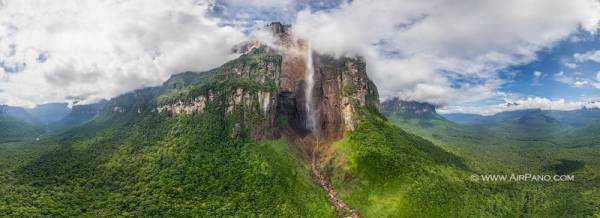
Angel Falls is located in the heart of Canaima National Park in Venezuela, near the border with Brazil and Guyana.

A small, old Douglas carries us from Puerto Ordaz to Canaima. Our suitcases and equipment take up most of the cabin. Tepuis, the famous tabletop mountains, are visible through the window. One of them, Auyán-Tepui, is where the world's tallest waterfall cascades.
The story of its discovery is fascinating. On November 14, 1933, aviator James Angel made a solo flight into Devil's Canyon in search of a gold-bearing river. Upon returning, he reported an "incredible mile-high waterfall." Of course, no one believed him.
James returned to Venezuela only four years later. This time, he took with him his wife, Maria (who was also his co-pilot and navigator), as well as assistants Angel Delgado, Gustavo Eni, and Felix Cardona.
Eni and Cardona attempted to find a way to the mountain's summit by land. However, they were unable to do so for two weeks. On October 9, 1937, the plane took off from the foot of Auyán-tepui, while Cardona remained in camp. James managed to land on the mountaintop, but suffered a minor accident, sinking into the marshy soil. The landing gear was broken. Realizing they couldn't repair the plane and take off, the group decided to return on foot. Before doing so, the expedition leader insisted that the plane's nose be pulled out of the swamp: he categorically didn't want it to remain with its propeller stuck in the ground. The travelers made a sign on the wing saying "Everything is OK" with rags and set off on the long journey. After 11 days, they reached an Indian settlement, from where they were transported by boat.
News of the adventure of the brave five spread quickly, and the waterfall was named after its discoverer, James Angel (in Spanish, Salto Angel, or "Angel's Leap"). The plane remained on the mountaintop for another 33 years. In 1970, it was dismantled and sent to an aviation museum. It is now located in Ciudad Bolívar, across from the airport. We saw the legendary plane with our own eyes!
Getting to the waterfall isn't easy even today. From Canaima Lagoon, you need to either sail upriver for several hours by boat, or fly by helicopter or plane. We decided to try both options and compare them.
Our plans changed on the very first day. The helicopter that was supposed to pick us up broke down, and the flight had to be postponed for a couple of days. We spent those days exploring the lagoon and the surrounding waterfalls. But then the day of the flight to the waterfall arrived; we loaded up our equipment, and the yellow helicopter carried us to Auyán-tepui. We landed at its foot in half an hour.
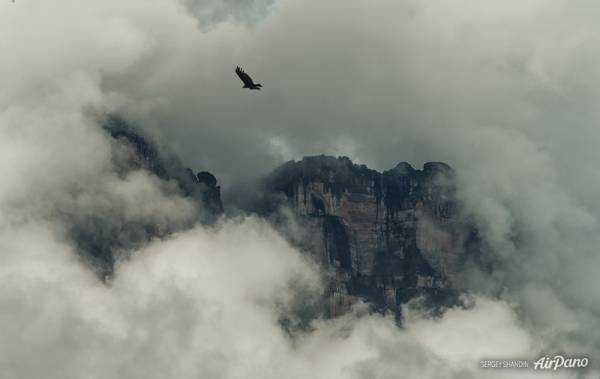
Mountain peaks are often shrouded in clouds, making it almost impossible to see anything. This time, too, the waterfall was obscured by a gray haze. We waited for over an hour. Finally, the clouds cleared, and the helicopter began its ascent. The waterfall is almost a kilometer high, and as we ascended, it was being engulfed again. To save altitude and time, the pilot decided to land right on the mountaintop. Thick clouds surrounded us, but the experienced pilot found a break in them, and we landed on the summit—to the surprise of the climbers camped there. Their journey here had taken them several days, but we had flown there in an hour.
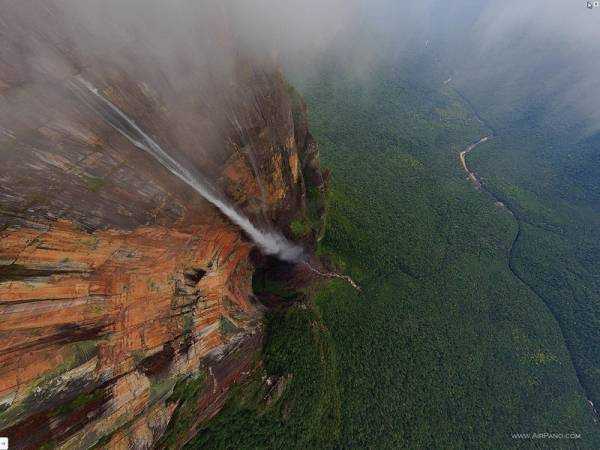
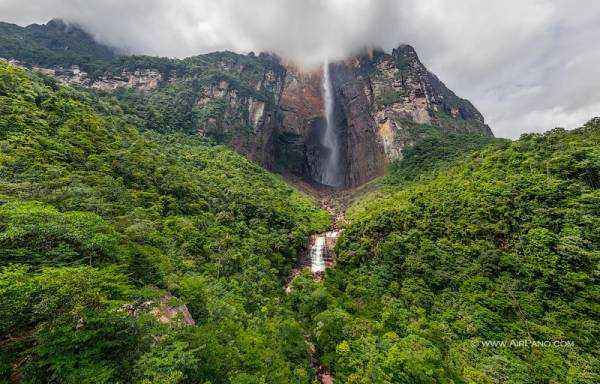
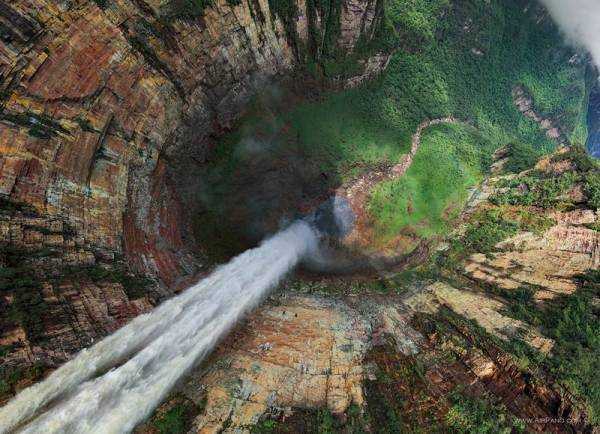
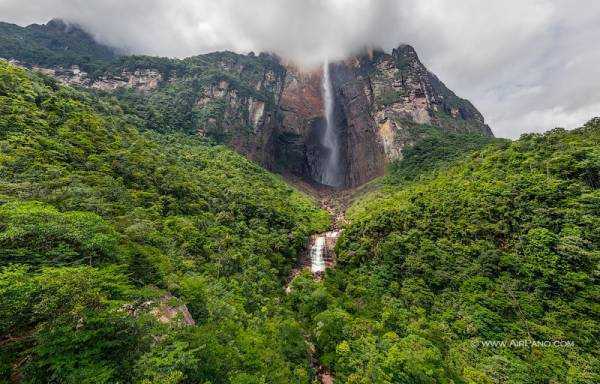
In the company of climbers, we waited for the clouds to clear a bit and then took off again. The pilot, a true master of his craft, steered the helicopter toward the cliff, and before our very eyes, a small river transformed into a kilometer-long vertical flow—a breathtaking sight! We flew along the canyon to several more waterfalls—not as tall, but quite impressive. Time flew by, and it was time to return to the airport. Finally, the pilot showed us one more landmark—"Manhattan": bizarre stone towers formed on the mountaintop by weathering.
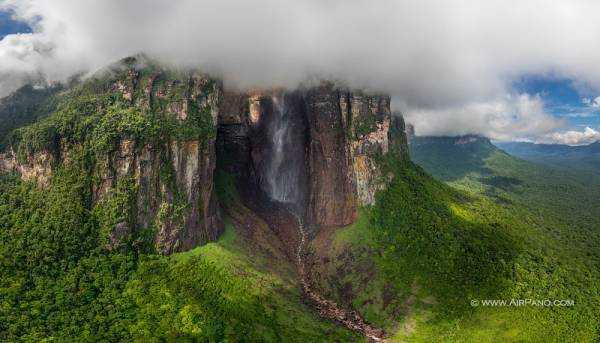
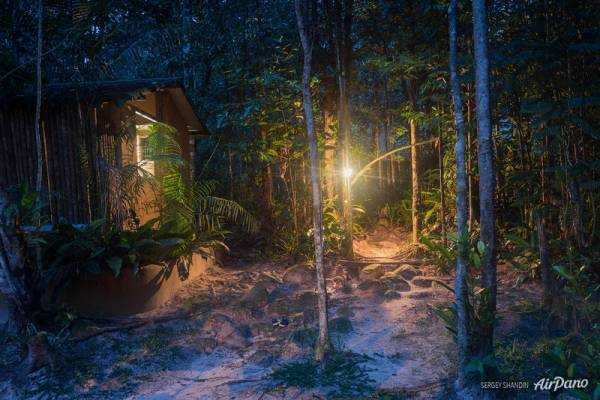
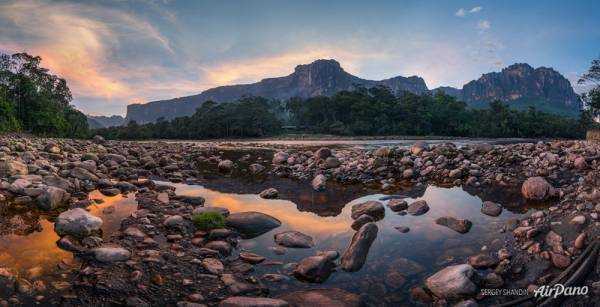
The next day, we had to repeat the journey to the waterfall, but this time by boat. The best watercraft here are wooden canoes, dug from a single tree trunk. These boats withstand the impact of rocks well and easily navigate the numerous rapids. After loading our equipment and gear, we set off upriver. The journey is long, and we won't arrive until evening. The boatman confidently navigates the canoe through rocky shallows, tree branches and vines hanging from the banks, and mesas rise all around. The weather is hot and sunny. Arriving at camp at the foot of Auyán-tepui, we settle in for the night, hanging hammocks and mosquito nets. Here, in the jungle, we will spend several days.
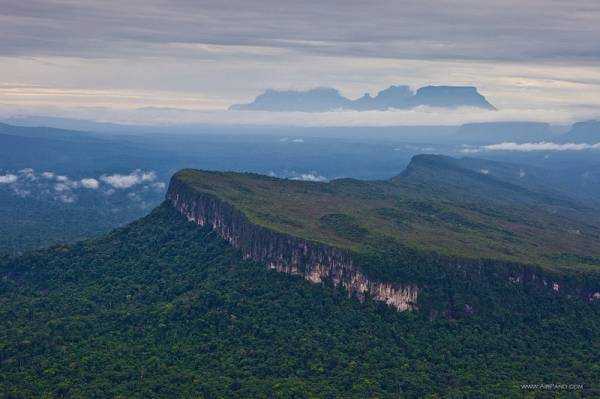
It's about four kilometers from the camp to the waterfall, but the route leads through humid jungle and is quite steep, so by the time we reached the drone takeoff point, we were quite tired. Our guides, however, weren't even out of breath.
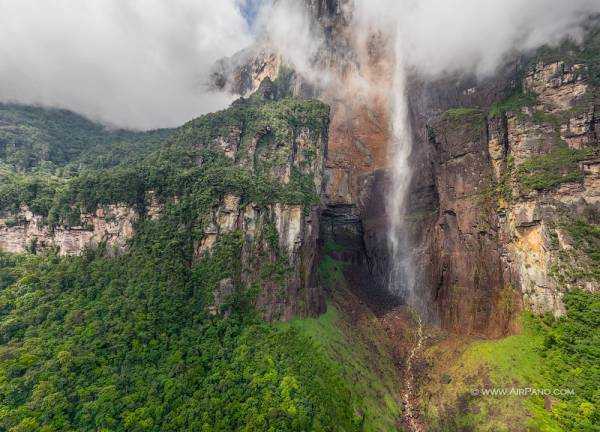
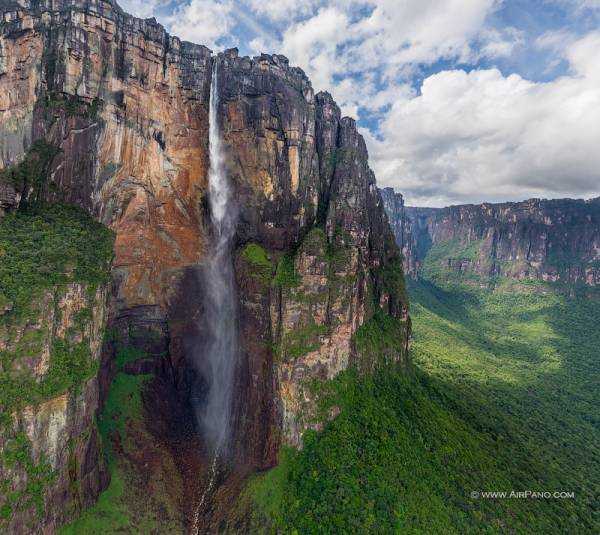
Here, in front of the waterfall, its sheer size becomes clear—it wasn't so noticeable from above. The water, falling from a kilometer high, reaches the base as a fine dust. The top of the tepui is constantly hidden by clouds. Sometimes the clouds descend, shrouding the jungle in mist.
We photographed Angel Falls for several days, returning to camp each evening and heading out for a rendezvous with the waterfall in the morning. At night, thousands of stars appeared in the sky, and the light from the flashlight attracted a multitude of exotic insects. Some weren't very friendly and bit, so I preferred to sit in the dark and gaze at the stars.
The local Pemon Indians believe that tepuis are the abode of the Mawari spirits, and the waterfalls are manifestations of these spirits. They call Auyantepui "Devil's Mountain," but they also claim that anyone who has ever seen the waterfall receives life force from it. The mysterious Mawari are small in stature, wear gold jewelry like the ancient Incas, and dislike meeting people. The Pemon leave treats for them on the table at night. They say that in the morning, the food disappears. Perhaps this is just a legend, but who knows? The jungle is vast and mysterious.
After a few days, the weather starts to deteriorate, and it's time for us to return. The journey downriver was more difficult; we also encountered a heavy rain. At first, it brought relief after the long heat, but quickly soaked us through. The Indians wrapped themselves in life jackets and plastic, their teeth chattering from the cold. We returned to the lagoon at dusk. In the morning, a plane to Puerto Ordaz awaits us, and from there we'll head to Orinoco Delta.
But that's a completely different story.
Source: travel.ru