

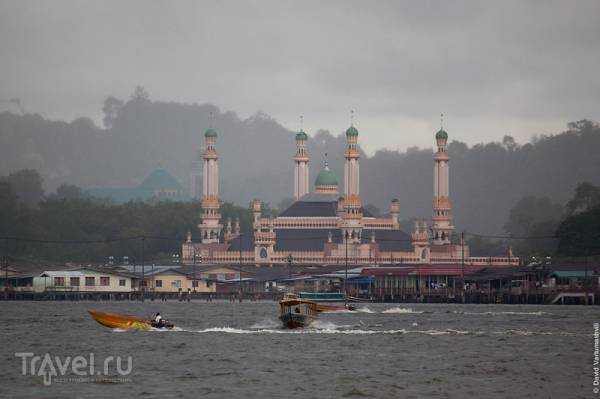
Directly across from the mainland of Bandar Seri Begawan is Kampong Ayer, or the Floating Village, a visit to Brunei that wouldn't be complete without a visit. Below is a story about a trip along the Brunei River and our friendly visit to this unusual place.

On our very first day, we met a guy who introduced himself as Boy N. Tonga. He offered to give us a tour of Kampong Ayer and show us the famous proboscis monkeys endemic to the island of Kalimantan (aka Borneo). Boy wasn't the only one who, recognizing us as tourists—and, as you can imagine, it's hard to hide that in Africa or Asia—tried to push his services. From this, we reached the first, somewhat disappointing, conclusion: not all is well with the well-being of the population here, if locals are trying to coax you into some tour just to make a few extra bucks. Since I enjoyed the tour, and we saw more than we had agreed with Boy, I can recommend him. If anyone needs him, his phone number was 8223273.
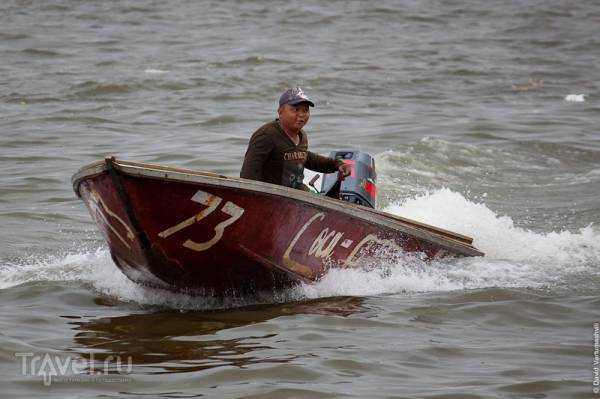
The next morning we called Boy, met on the embankment and boarded the boat.
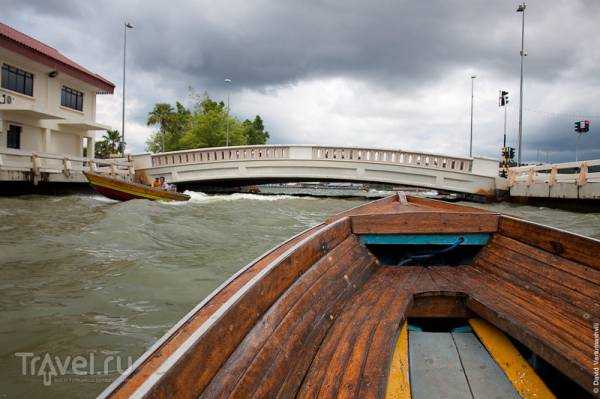
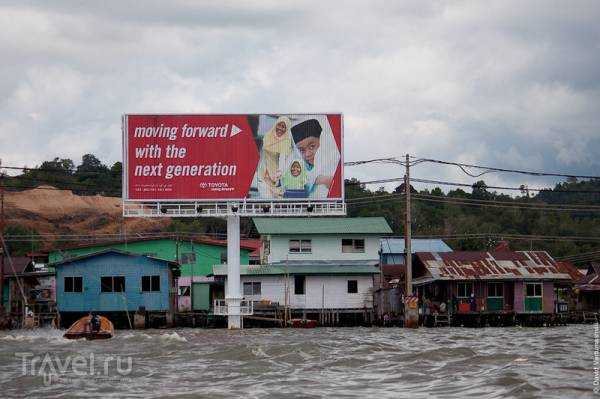
Soon the boat was already in the middle of the river. I noticed a huge billboard towering over the houses. It was advertising none other than Toyota. Although, it was probably not an ad for cars, which are outdated here, but for boat motors.
Boy suggested we first take a boat trip along the Brunei River, explore the mangroves, and perhaps encounter proboscis monkeys. I agreed, but only to fill my time, as they say, because I knew an encounter with the monkeys was unlikely. From reports of river visits, I remembered that few people had ever encountered these monkeys, so I had no particular illusions. Within the first few minutes, as the boat cut through the murky waters, it became clear that the largest river in one of the richest countries in the world was heavily polluted. Later, the reason would become clear.
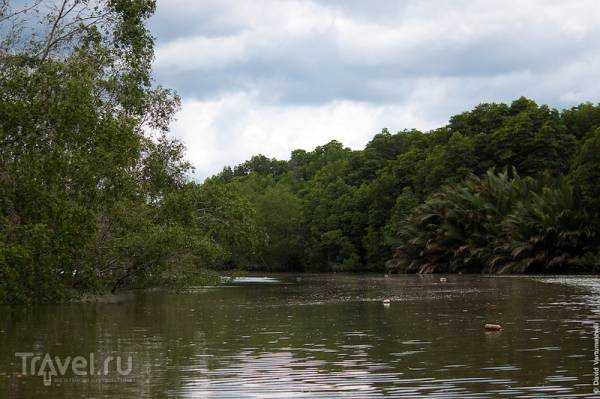
At one point we turned into dense mangrove thickets:
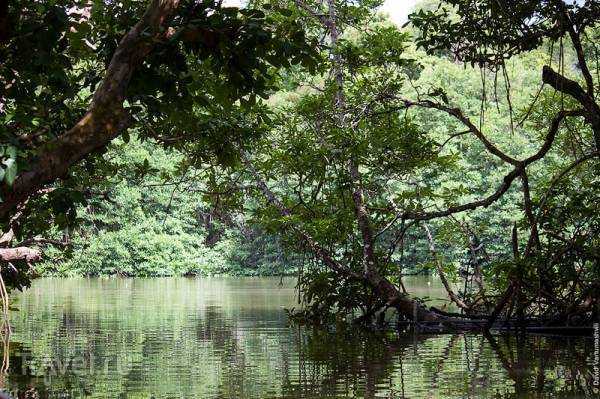
And suddenly, completely unexpectedly, we saw a family of proboscis monkeys:
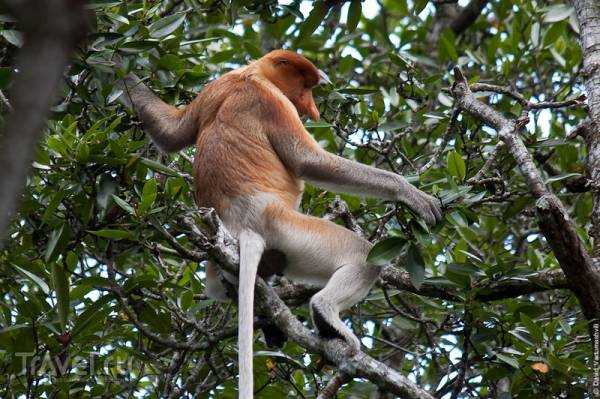
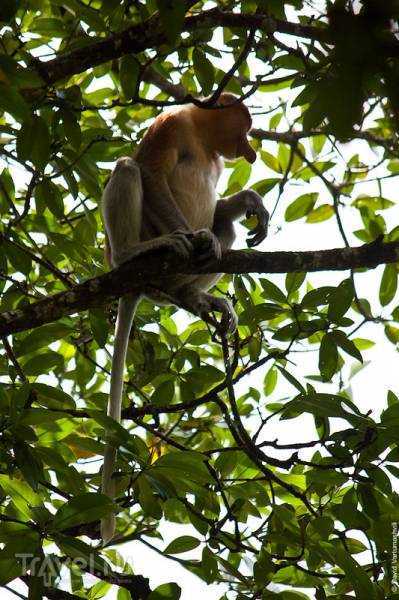
Proboscis monkeys are found exclusively on the island of Borneo, where they inhabit coastal regions and valleys. The proboscis monkey's most striking characteristic is its large, cucumber-like nose, which, however, is present only in males. Proboscis monkeys live in tropical forests or mangroves and never stray far from water. They are excellent swimmers, leaping directly from trees and able to cover up to 20 meters by diving underwater. Within the open shallows of mangroves, they move on all fours, but between densely populated mangrove trees, they walk bipedally, almost vertically. Along with gibbons and humans, they are thus the only primates capable of covering relatively long distances upright. The purpose of the large noses in males is unknown. It may serve a sexual purpose—the larger the nose, the greater the chance of impressing and winning a female. This species is considered endangered.
Females:

Male:
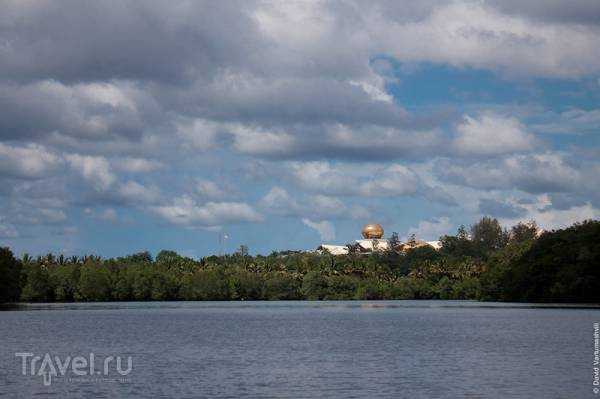
On the way back, we noticed magical domes, like something out of an Aladdin movie. This is the palace of Sultan Hassanal Bolkiah, considered the number one attraction in Brunei. The palace is open to the public for exactly three days a year.
Several years ago, there was news that "His Most Generous Highness" had raised the salaries of his country's civil servants in honor of his sixtieth birthday. The last time Brunei citizens received such a gift was in 1984. And the country is truly his property: he is the Prime Minister, the Minister of Defense, the Minister of Finance, the Supreme Commander of the Armed Forces, and the spiritual leader. The constitution states: "His Highness the Sultan of Brunei Darussalam shall not act unfairly, either as a citizen of the Sultanate or as an official. No citizen of the country shall have the right to sue the Head of State in any court of the world." While the Sultan lives better than anyone in the world (Michael Jackson danced at his birthday party, for example), not all of his subjects can afford a boat.
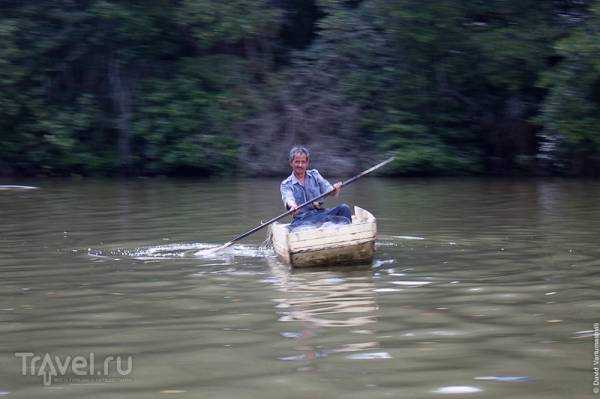
Around the next bend in the river the roofs of Bandar appeared:

New buildings of the modern city and golden minarets:

And the private sector on the water, which is where we headed:

The rusty roofs in the Google Maps image are the houses of Kampong Ayer.
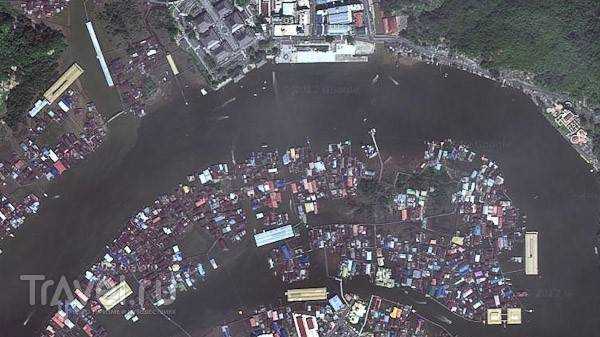
While Bruneians have now migrated to the mainland, their ancestors, from the time of the first settlements on the river, preferred to build houses on stilts and live directly above the water. Research has shown that the first houses appeared here 1,300 years ago. The first Europeans to interact with the local population and sketch their dwellings were members of Ferdinand Magellan's crew, who visited the area in 1521. At that time, Kampong Ayer was an important trading center, the largest in Borneo.
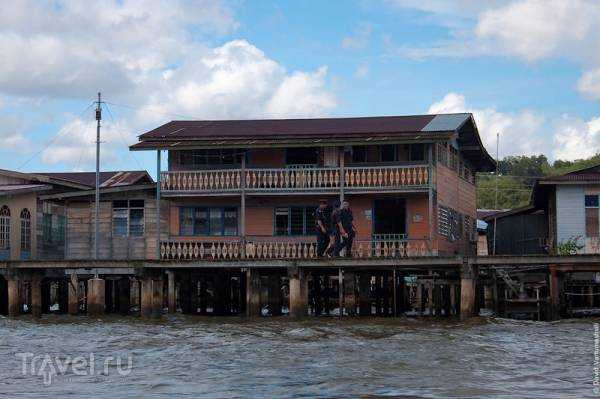
And here are the first houses:
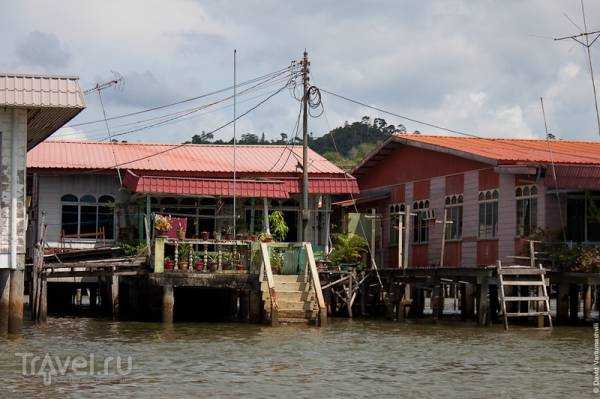
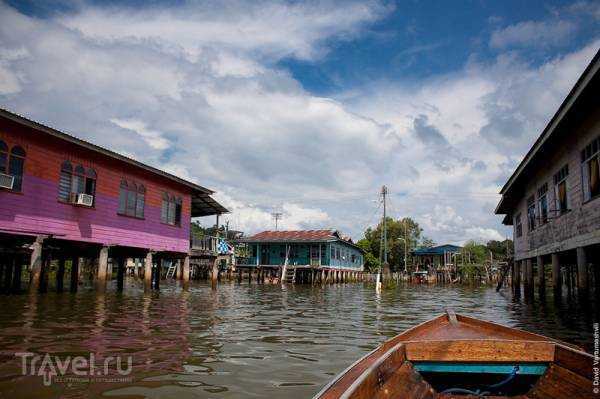

Currently, about 40,000 people live here, which is no more and no less than 10% of the country's population.
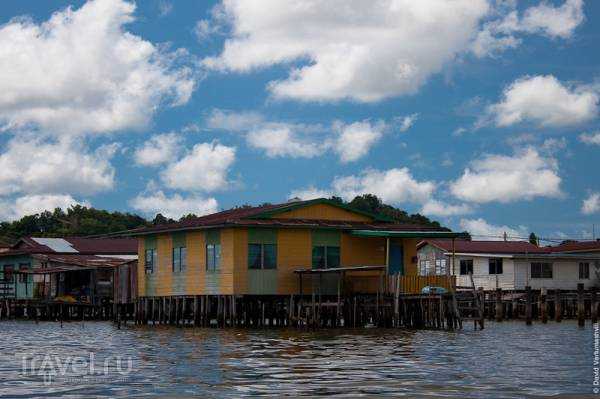
The piles are all concrete, meaning these houses are only a few decades old. Previously, they were likely built on wooden piles. The Malay Technological Museum, located in the building next to the National Museum of Brunei, offers more information about these houses, their construction technology, and their architecture.

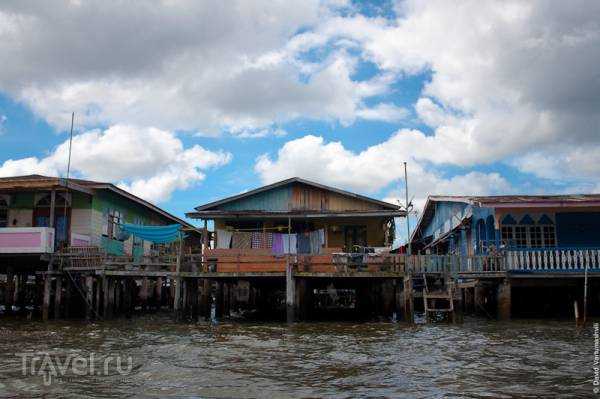
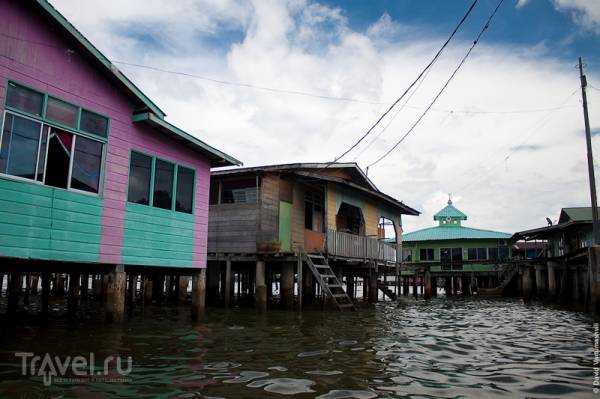
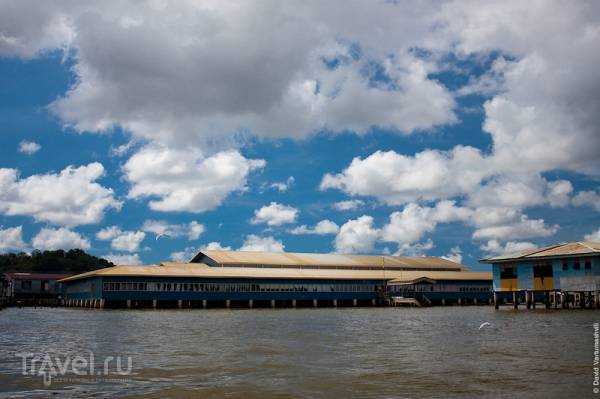
There are approximately 4,200 buildings here, connected by dozens of kilometers of bridges and walkways. The village offers all the amenities of civilization, including internet and satellite TV. Some residents even manage to keep small vegetable gardens and livestock on stilts. Among the buildings are also hospitals, shops, cafes, schools, and more.
School:
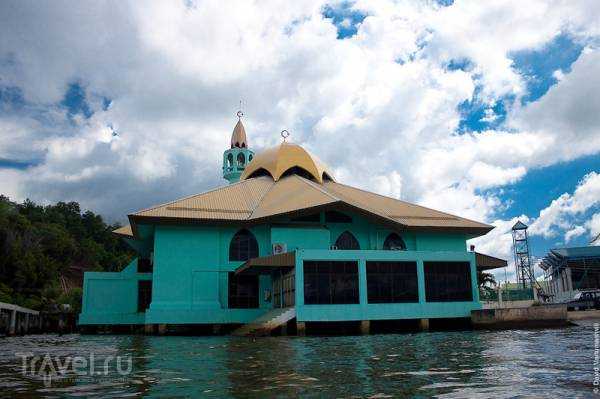
Mosque:
Police:
Source: travel.ru