


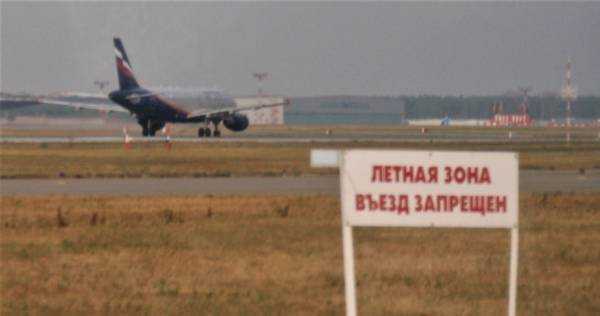

Aviation authorities in Russia and France have reached an agreement to slightly increase the number of flights between the countries. However, despite the Russian Ministry of Transport's bravura statements about an "unprecedented increase in the number of flights," the agreement will not solve the problem of the transport shortage between Russia and France and is unlikely to lead to a reduction in the current exorbitant fares on a number of routes, according to a Travel.ru correspondent.
On the key Moscow-Paris route, the quota will increase by only seven flights per week, and according to the memorandum of understanding, all of them will go to the current monopoly, Aeroflot, which, along with its alliance partner Air France, maintains exorbitant prices on the route. Aeroflot currently holds rights to 35 frequencies per week (five daily) and uses them entirely, primarily on Airbus A321 aircraft. Its subsidiary, Rossiya, holds seven frequencies (one flight per day) as a result of the improper transfer of rights from Transaero to the Aeroflot Group, and uses these frequencies only on the summer schedule. Rossiya does not fly this route on the winter schedule, as noted in the memorandum, due to the refusal of the French Schedule Coordination Association to allocate slots at Orly Airport. The reasons for the lack of slot coordination are not specified in the memorandum.
In any case, it appears that next summer, Aeroflot Group will be able to fly to Paris seven times a day (five or six times by Aeroflot itself, and one or two times by Rossiya). On the French side, Aeroflot's SkyTeam partner, Air France, has 35 frequencies (it uses only 28, and on smaller Airbus A319 aircraft). Aigle Azur has another seven frequencies per week, but currently only uses two. High fares on this route will obviously remain in the near future—it seems the aviation authorities of both countries are not interested in introducing competition on a route that is extremely profitable for monopolies. On the equally monopolistic St. Petersburg-Paris route, no new frequencies have been added at all (currently served by Rossiya and Air France with one and two flights per day, respectively; in winter, Air France reduces the frequency to one flight per day).
The situation on the Moscow-Nice route is slightly better. Seven weekly flights have been added, but they are expected to be operated by a third carrier. Currently, the situation there is similar to Paris: Aeroflot (two daily flights in summer and one in winter) and Rossiya (one flight only in summer) operate there. French carriers are ignoring the route. Progress may also be possible on the St. Petersburg-Nice route: seven frequencies have been added in summer (but only three in winter) for a new carrier (Rossiya currently flies two to six times a week, depending on the season).
Ural Airlines has also received permission to increase the frequency of Yekaterinburg-Paris flights from two to seven times per week. The list of destinations in France permitted for Russian carriers has also been revised. The new permissions include flights from Moscow to Marseille (five times per week), from Moscow to Montpellier (five times per week), from Moscow to Bordeaux (five times per week), and from Kaliningrad to Paris (seven times per week). The carriers operating the new routes are not yet known (Pobeda Airlines, which recently also proposed launching Moscow-Bordeaux flights, is apparently interested in the Kaliningrad route).
Strasbourg (which Transaero once flew to) no longer appears to be on the list of routes permitted for Russian airlines, but Clermont-Ferrand is, for some reason, included. French carriers' list of destinations in Russia is not fixed—they are free to choose any five Russian airports, in addition to those already used for flights to Moscow and St. Petersburg. However, French airlines have never shown any interest in Russian regions, and this is unlikely to happen in the foreseeable future.
Overall, connections between Russia and France remain severely limited, leading to high prices for direct flights. Unfortunately, there are virtually no carriers in France interested in seriously competing with Air France on the Russian route, and the French aviation authorities have no incentive to change anything. France is still a long way from the German situation, where almost any route between Russia and Germany can be served by three airlines on each side, with no restrictions on the number of flights.
Source: travel.ru