





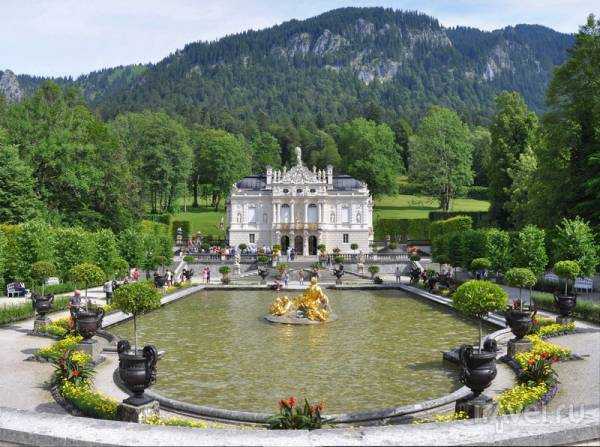
I continue my story about Bavarian castles. Ludwig of Bavaria's idol was the Sun King, Louis XIV. Ludwig adored imitating him and tried to bring the spirit of the 17th-century French court to Bavaria. However, he didn't implement this idea in real life, but rather in the architecture and decoration of his castles. The two "French" palaces built by Ludwig in southern Bavaria—Linderhof and Herrenchiemsee—are the main topic of this post.

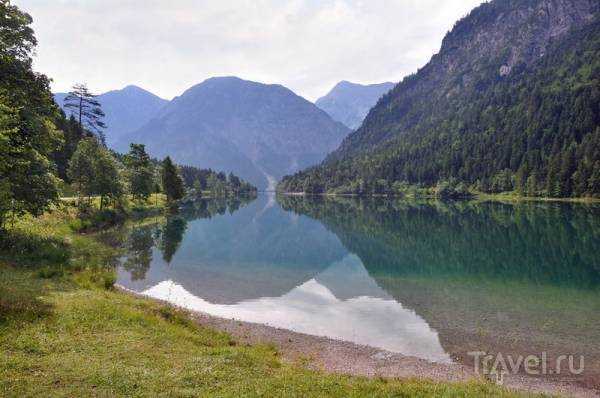
Linderhof Castle is about a half-hour drive from Neuschwanstein, although in reality the journey can take much longer, as along the way there is a strong temptation to stop at Lake Plansee with its crystal-clear water and stunning panoramic views.
Linderhof is usually called a castle, although I think the word palace would be more appropriate, since it's a residence, not a fortification. But in German, all these buildings are "schloss"—castle—so we'll stick to tradition.
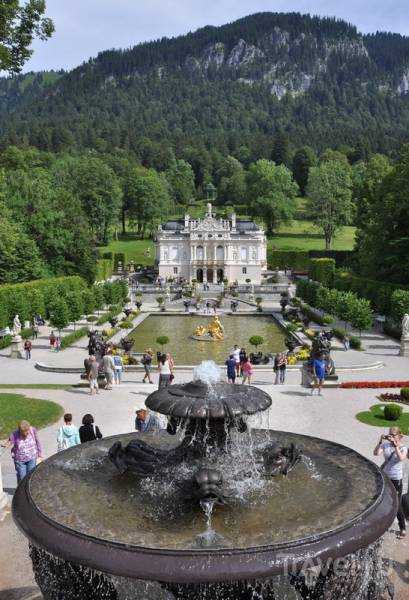
Linderhof was built by Ludwig between 1874 and 1878 on the site of his father Maximilian II's small "royal lodge." It is the smallest of the three castles Ludwig built, but it is the only one to be fully completed—from the surrounding park to the interior decoration of all the rooms.
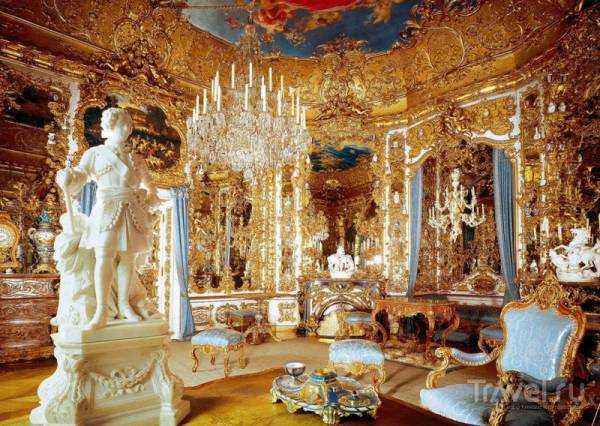
Linderhof is a true mini-Versailles. Everything about it recalls Louis XIV, who was Ludwig's role model. Dressed in the king's costume, Ludwig strolled through the palace's rooms, replicating everything he considered worthy of the French monarch's life.
Hall of Mirrors
Bedroom
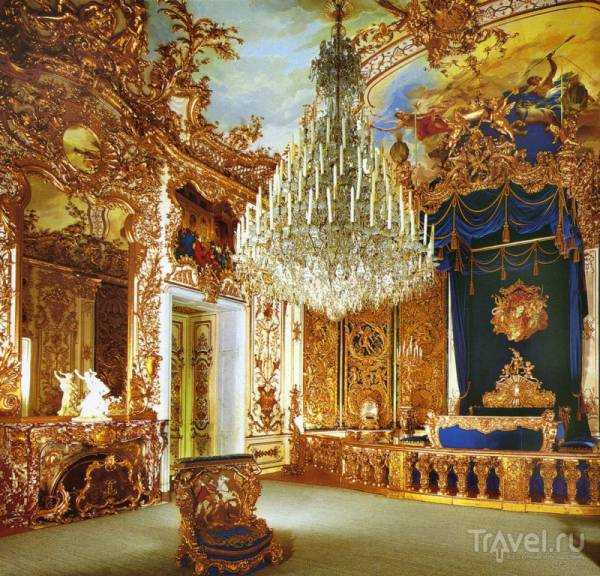
In the middle of the dining room there is a dining table, which, thanks to a special mechanism, could be lowered down, where the servants would set the table, and then the set table would be raised back up into the dining room.
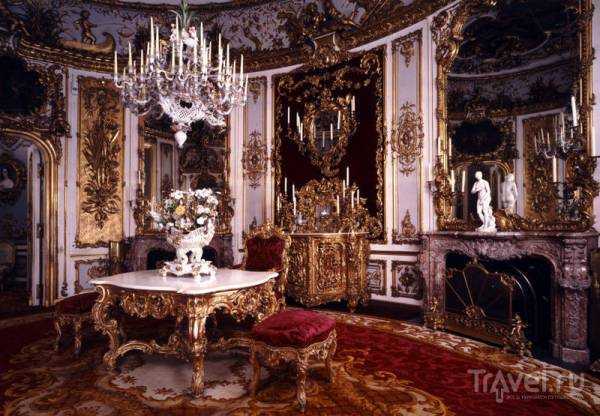
Interior photos from guidebooks
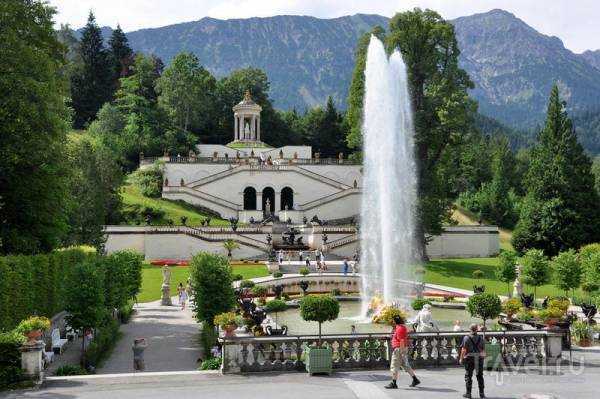
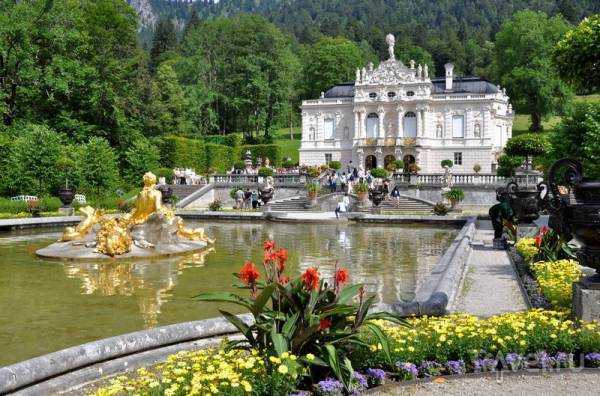
The castle is surrounded by a formal French park with statues, green trellises and water cascades.
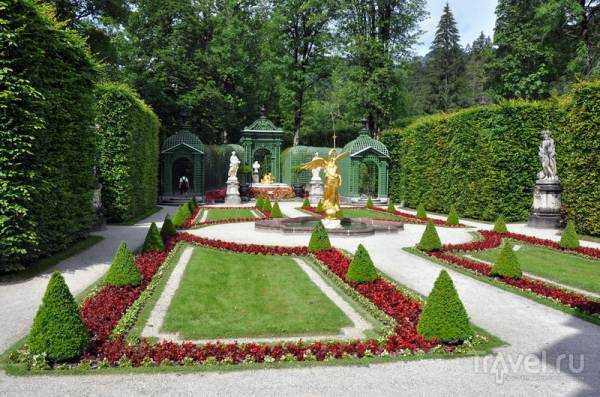
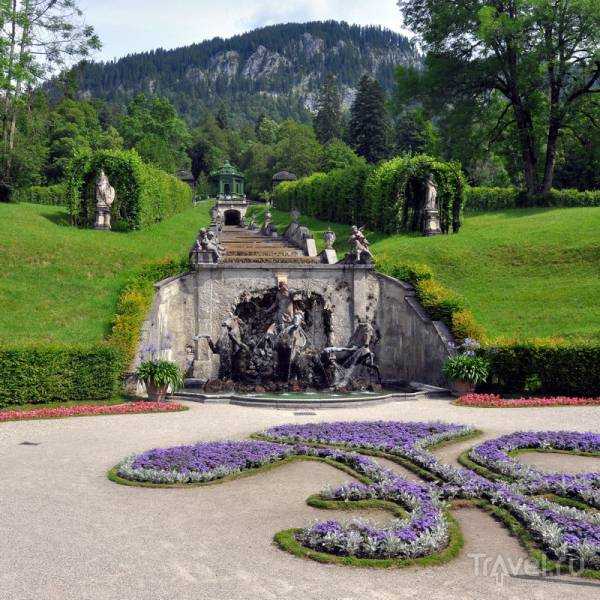
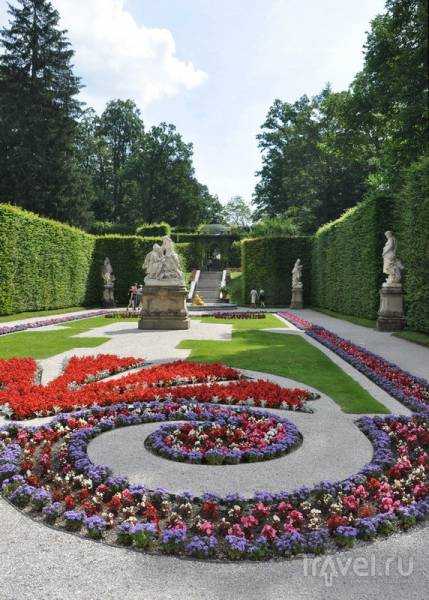
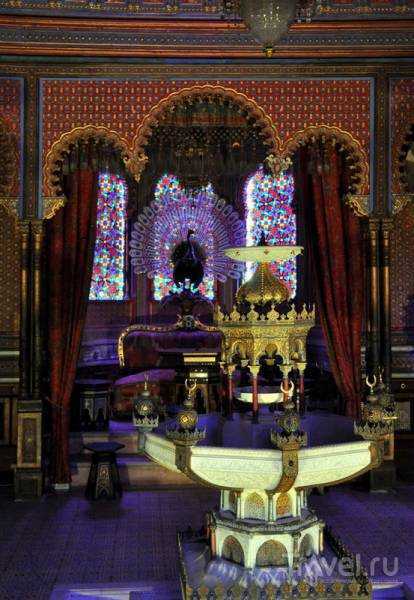
On the mountainside above the castle are pavilions where Ludwig liked to rest or meditate. One of them is called the Moorish Pavilion. A peacock, rather than the traditional swan, stands behind Ludwig's chair.
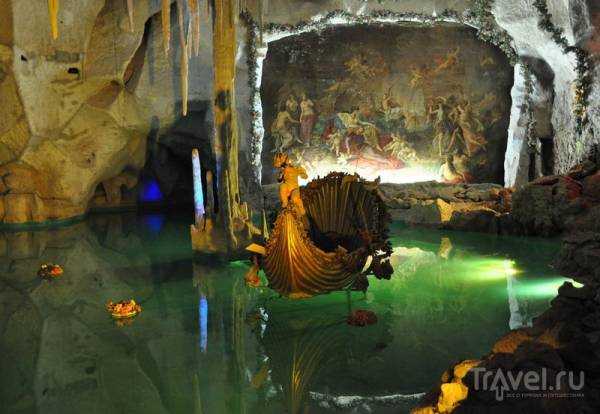
But in the Venus Grotto—an artificial cave with a man-made lake—Ludwig found a "swan" boat, on which he made imaginary journeys, imagining himself as Lohengrin. Wagner operas were performed on the cave stage, and Ludwig watched the performances from the boat. The lighting system used in the cave is considered one of the forerunners of modern color music. The lighting effects were created using rotating glass plates, powered by one of the first electric generators.
Live swans greet and see off visitors to Linderhof on the lower pond.

140 kilometers east of Linderhof lies another of Ludwig's castles, Herrenchiemsee. Built on Husband Island, located in the middle of the large Chiemsee lake, it can only be reached by boat. The most convenient way is by boat, departing from the pier in Prien am Chiemsee, a fairly typical Bavarian town.
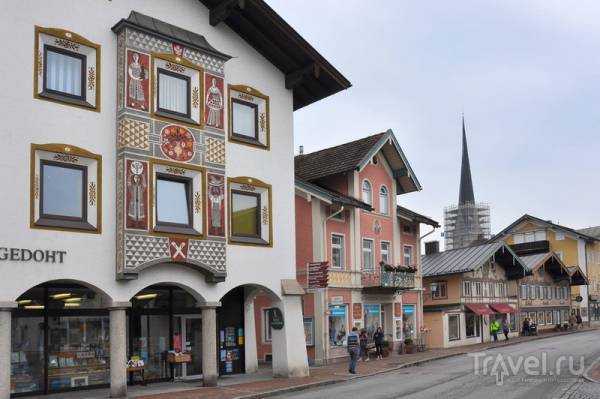
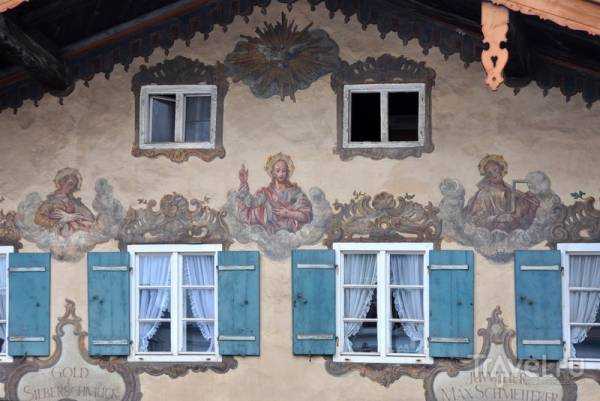

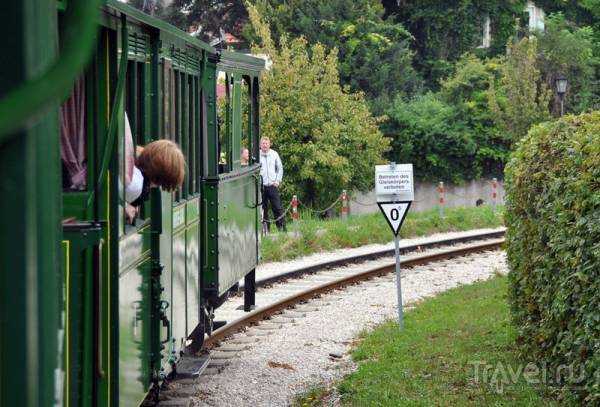
A narrow-gauge railway, once used to transport materials for the castle's construction to the waterfront, runs from the center of Prien to the pier. Retro trains for tourists, pulled by a small steam locomotive, now the oldest operating steam railway, run along it.

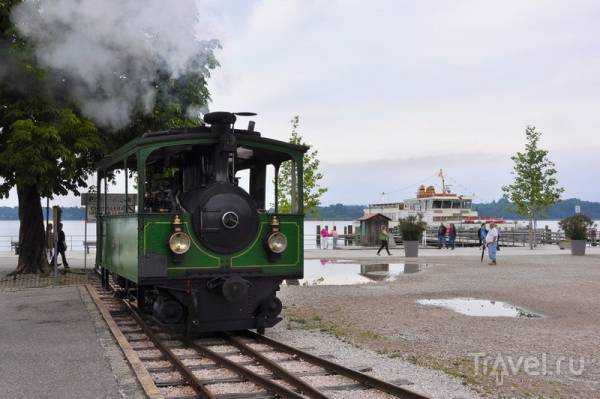
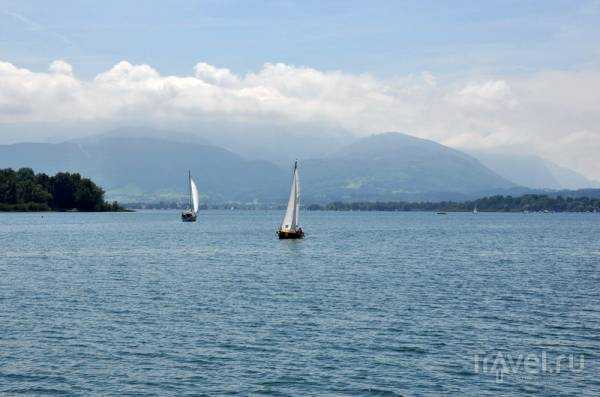
Chiemsee
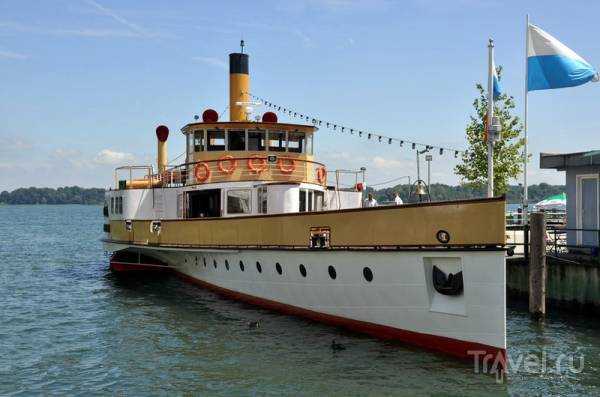
Many of the vessels that ply between Prien and Husband Island, where the castle is located, have also survived from the 19th century. Some even have paddlewheelers.
Herrenchiemsee Castle was conceived by Ludwig as a replica of Versailles, with a wide canal leading to the lake and figurative fountains in the surrounding park and in front of the castle's façade.
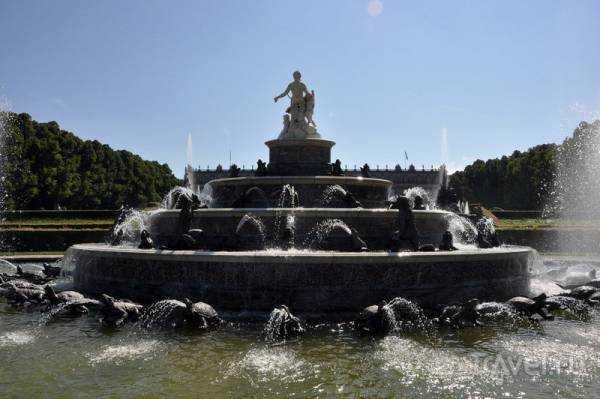
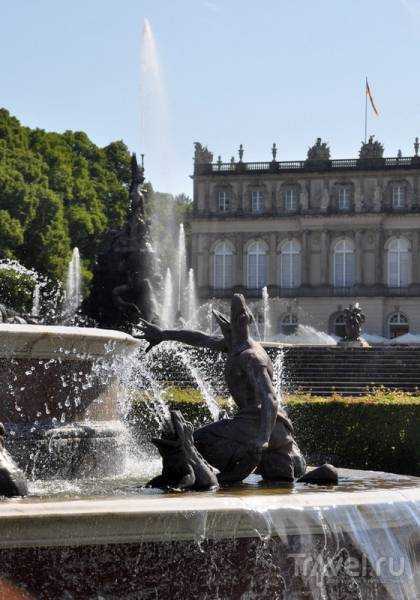
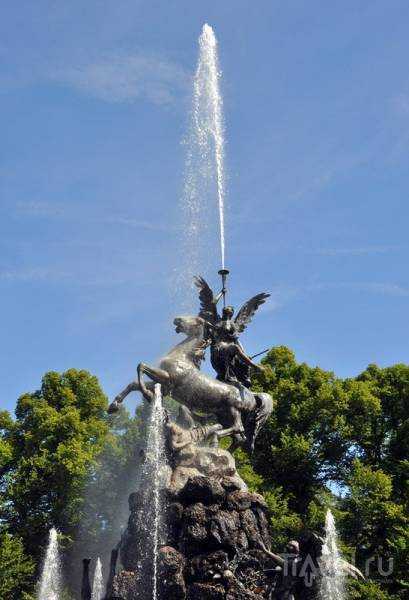
In the park

Herrenchiemsee Castle, main facade
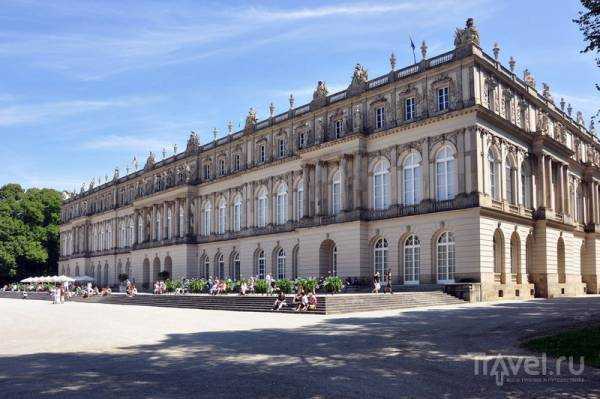
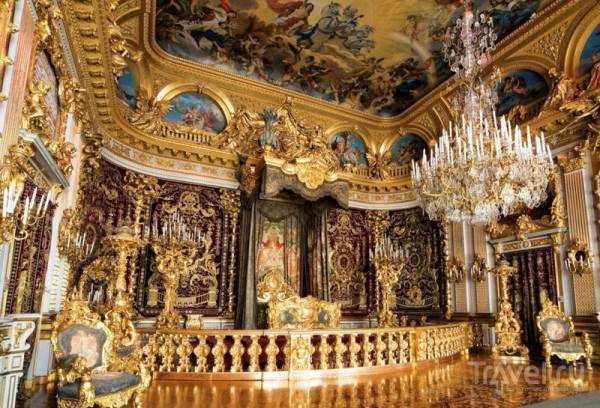
Judging by the partially completed interiors, Herrenchiemsee promised to be even more brilliant and sumptuous than Versailles.
Bedroom
The main staircase
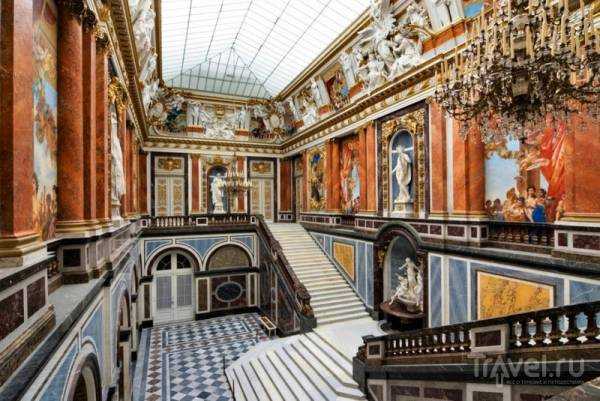
Mirror Gallery

Interior photos from guidebooks
Unfortunately, there was insufficient money to complete the castle's decoration. Ludwig attempted to borrow money and spent the family treasury, but this led to discontent among the ruling elite (the monarchy in Bavaria was constitutional) and a conspiracy against the king. It is unknown who led the conspiracy, but it is clear that Ludwig's deposition benefited the government ministers and the Prince Regent. The king was declared insane in absentia and forcibly committed to a psychiatric hospital, where he died a few days later under unclear circumstances. Few believe the official version—suicide.
Ludwig of Bavaria remains one of the most enigmatic and tragic figures of the 19th century. And what he was accused of and called mad for is now the pride of his former country and a global cultural treasure.
Source: travel.ru