





When the time came for the goddess Latona to give birth to Apollo and Artemis, whom she conceived by Zeus, the jealousy of his wife Hera became overwhelming. She pursued the unfortunate Latona wherever she went, preventing her from finding a safe place to give birth. Finally, Latona reached a rocky island floating on the sea, constantly shifting its location.
She swore to the gods that her son would not leave his birthplace and would bring him fame and fortune. At that moment, the island stood still, and Latona ceased to feel fear. Her labor lasted nine days, as Hera forbade Elytia, the goddess of childbirth, from assisting her. But the gods took pity on Latona and sent Iris, the goddess of the rainbow, to her aid, bribing her with a wondrous necklace.

On the shores of a circular lake, at the foot of Mount Cynthus, Latona finally gave birth to the most beautiful of the gods, Apollo, and his sister, Artemis. From that moment on, the island formerly called Adelos, meaning invisible, became known as Delos, meaning visible, for it was illuminated by the radiance of the radiant God of Light.

Excavations show that the island was one of the most important trading zones in the Eastern Mediterranean. People from all over the world lived and traded here: from Syria and Rome, Egypt and Phoenicia. Even then, the island could be described as "cosmopolitan."


The island developed until 88 BC, when it allied with Rome. At that time, according to accounts, approximately 20,000 local inhabitants were killed and the island's main city was destroyed. From that point on, the island became uninhabited, save for pirates and bandits, who plundered what remained of the city.

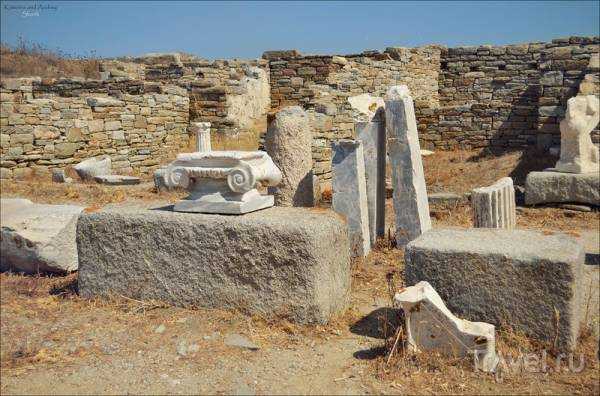
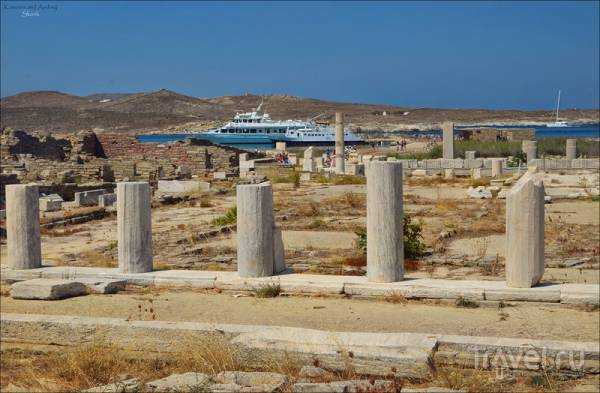
The island is 5 km long and about 1.3 km wide. The main center was located in its northern part, where the majestic Temple of Apollo stood. An ancient sacred way leads to it. The large number of temples on such a small island is impressive: the Temple of Apollo, the Temple of Isis, the Egyptian Goddess, the Temple of Dionysus, the Temple of Artemis, the Temple of the Pythia, the Temple of the Bulls (a large seagoing vessel, the trereme, was said to have been kept here), the Temple of the Syrians, and a temple dedicated to Serapis…

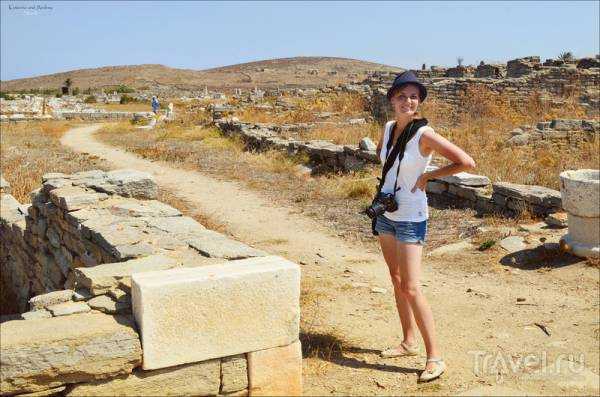
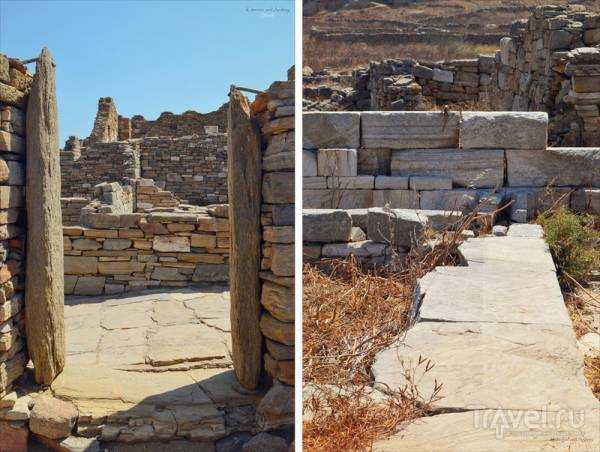
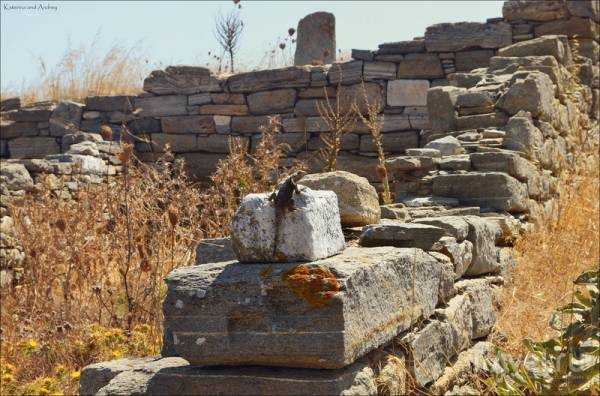
The ruins of a synagogue, a theater, local residents' homes, a stadium, a gymnasium, a hotel, water cisterns, and a large number of statues and sculptures remain…
It's worth noting that the residential buildings are better preserved than others, offering insight into how the islanders lived. Wealthy residents lived in luxurious, often two-story, richly decorated houses. Valuable works of art, such as beautiful mosaics, have been found in these houses. The mosaics are best viewed in the so-called "House of Masks."

But the most famous building, which everyone has surely seen, is the Lion Portico, erected by the inhabitants of Naxos. There were at least nine lions, and according to some accounts, sixteen. Only six lions remain today: five on the island, and the sixth guards the Arsenal in Venice.

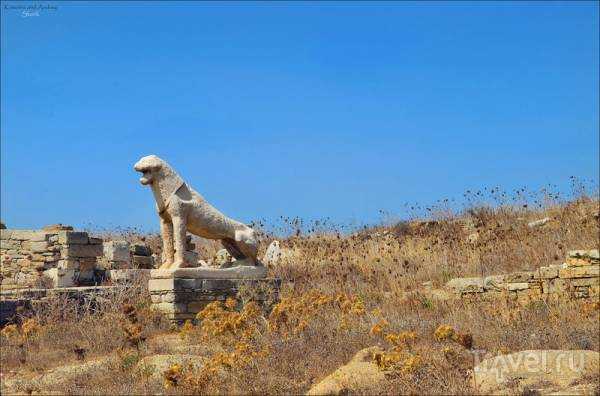
Historians have never determined why it was built. They probably guarded the lake where Apollo was born, which is where their gaze is directed.


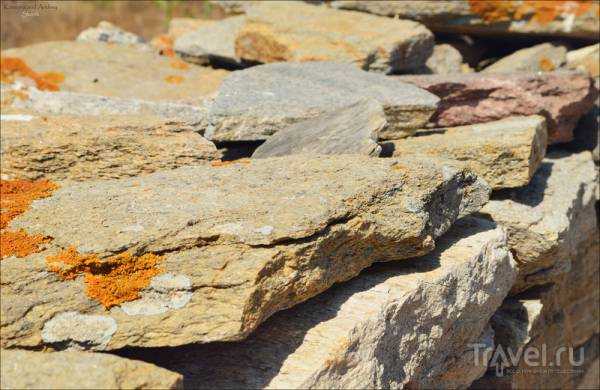
Some practical information: the easiest way to get to the island is from neighboring Mykonos. The journey takes 25-30 minutes, and boats operate on a schedule that can be found at the port of Chora (Mykonos). Mondays are closed. There's an entrance fee to the island (I can't remember the price right now). One of Greece's most important museums is also located here. We visited Greece in July, and it was incredibly hot. Take the very first boat to the island, and bring hats and water, as there's nowhere to hide on the island. We bought our boat tickets the day before, so I don't know about ticket sales just before departure. But I think there shouldn't be any problems. The island is very sun-baked in the summer. Sharp thorns are everywhere, and there's almost no vegetation. The only "local residents" are some nasty flies and lizards.



Source: travel.ru