





Last time I wrote about my trip to the peninsula, but it wasn't until the weekend that I got around to sorting through my summer photos, and on a frosty winter day, I want to reminisce about the passing of summer. Before heading home, I took a leisurely stroll on my final day in Kerch, visiting the history museum, descending to the foundations of the city of Panticapaeum on Mount Mithridates, visiting another historical site in the city, and enjoying the warm, sunny weather and the sea, the feeling of which now only serves to warm me.

I will remember this short trip for a long time, but I think it will be a reason to return and ride a bicycle across Crimea.
On my final day, I decided to take a stroll through some of the sites I never got around to. I mentioned them in the post preview, so I won't list them again.
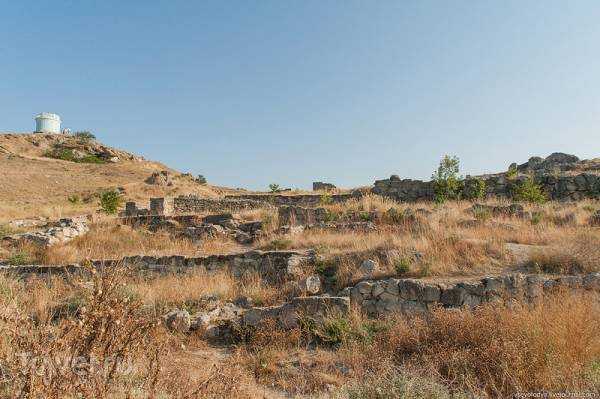
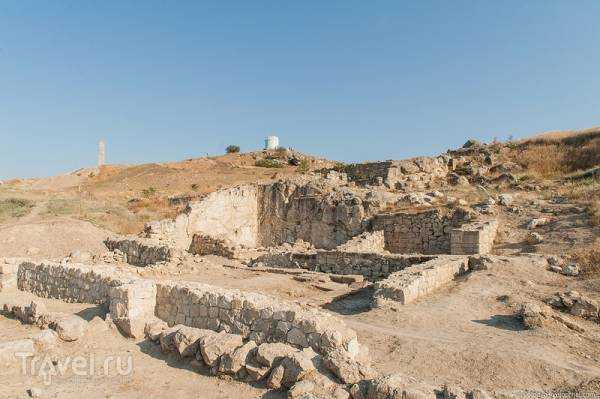
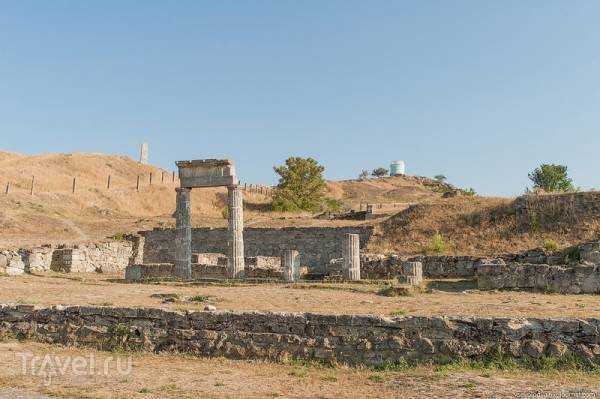
One of the few things that has survived into modern times. It felt like I was in Athens or somewhere in Greece.

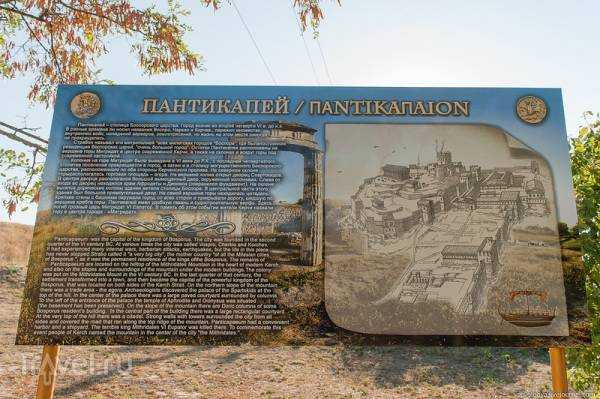
Information board about the ancient city.
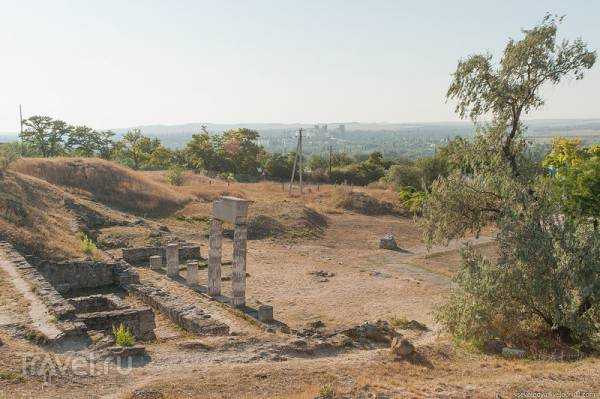
The next ancient site I visited was the ancient settlement of Nymphaeum. I learned about it upon arriving in the city from a guidebook and Wikipedia and decided to go and see it. There were far fewer ancient artifacts there than in Panticapaeum, but it was still interesting to see. I found some guys conducting archaeological excavations there.
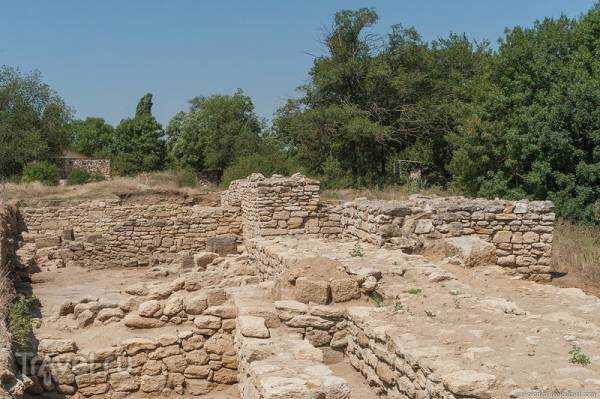
A little historical background:
"Archaeological excavations of the settlement and necropolis of Nymphaeum, 6th century BC – 3rd century AD
Seventeen kilometers south of the center of Kerch, near the modern village of Eltigen (Geroevskoye), the ruins of an ancient city, identified with the Bosporan city of Nymphaeum, are still visible. The settlement occupies a plateau on the shore of the Kerch Strait (ancient Cimmerian Bosporus), to the west of which are burial mounds and a ground necropolis.
"Nymphaeum—a temple of nymphs, a city site near Pontus…" Among the cities of the Bosporan Kingdom, Nymphaeum occupied a prominent position. Founded in the first half of the sixth century BC, the city, according to ancient authors, had a good harbor, and the surrounding lands were rich in grain, which at all times ensured the prosperity of both its inhabitants and the Bosporan Kingdom as a whole. This is why the Bosporan rulers attached particular importance to this region. The study of this site plays a significant role in resolving a number of key questions and issues related to the history of the Bosporan Kingdom.
The first description of the settlement was made by P. Dubrux, who identified it with a military observation post, and determined the location of the Nymphaeum to be on Cape Ak-Burun in the area of the Pavlovsk battery.
This monument attracted intense attention in 1886 due to the discovery of magnificent jewelry, which was reported in the press. These discoveries led to the intensification of predatory excavations of the Nymphaeum burial mounds by local peasants and private individuals, facilitated by the location of the city and its necropolis on landed estates.
The first systematic archaeological studies of Nymphaeum and its necropolis were carried out in 1876-1880 by the Imperial Archaeological Commission, when the settlement and burial mounds of Nymphaeum were described and mapped.
In the mid-1950s, the only comprehensive publication of these materials was prepared by L.F. Silantieva. It described the burial rites and finds from the burial mounds and ground necropolises of Nymphaeum. Particular attention was paid to male burials containing weapons, gold torcs, and magnificent black-glazed ceramics, accompanied by horse burials, which suggested the presence of barbarian elements in the burial rites and the interpenetration of Hellenic and barbarian cultures.
Subsequent excavations of the necropolis were carried out by peasants and private individuals under the direction of A.V. Novikov, the owner of the Eltigen estate. In 1900, his collection of ancient artifacts was acquired by the Hermitage. The materials from this collection are of great importance for the study of the Nymphaeum, complementing and expanding the results of archaeological excavations."8.
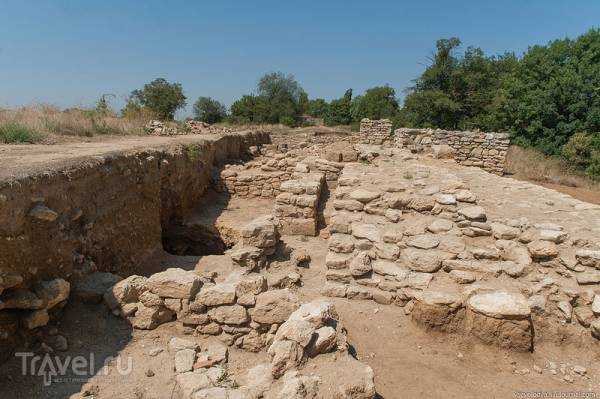
Ancient and modern times.
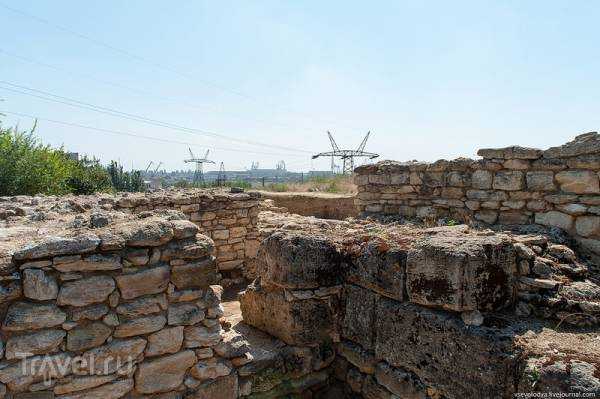
"Victory".
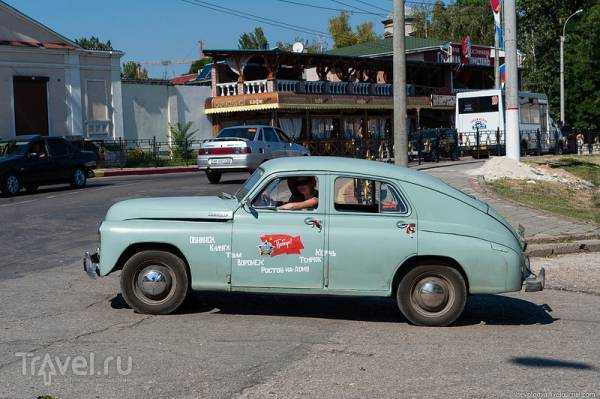
One of the central streets located near the embankment.
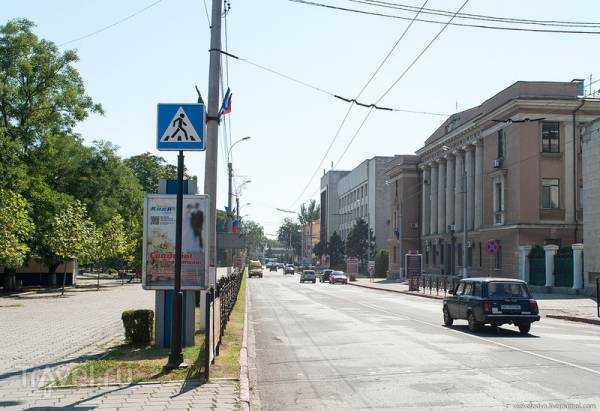
The barkers offered me a ride on a yacht for a small sum of money, but I didn’t have the money and didn’t really want it, even though the desire to sail on a yacht on the open sea was tempting…
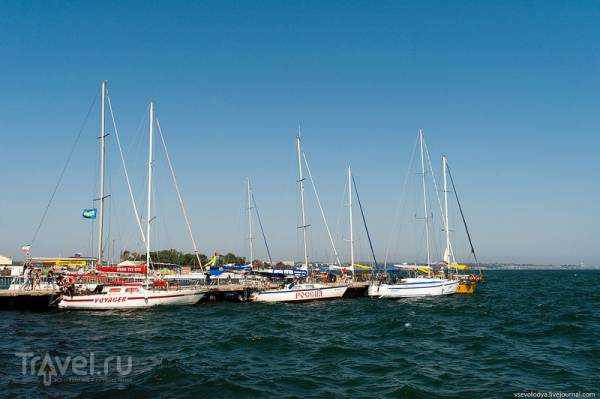
As I've already noted, Kerch has many monuments, both modern and ancient. This is encouraging. The city is not only a former industrial center of the region, but also an island of culture.
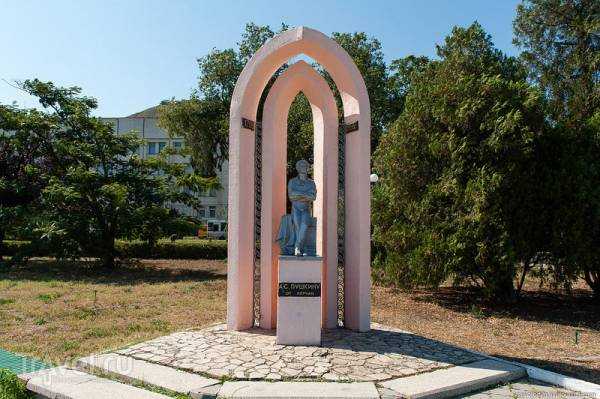

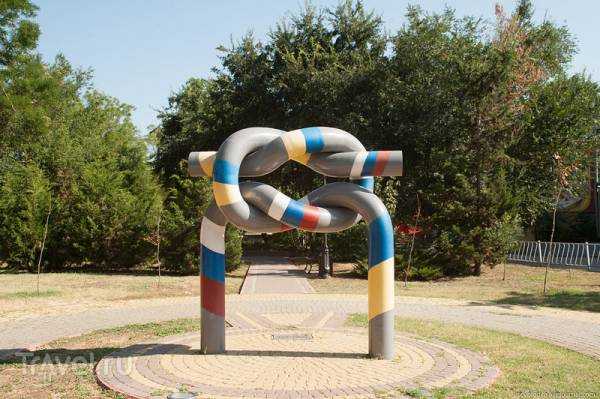
I especially want to mention this monument. It's a monument to the friendship between Russia and Ukraine, shaped like a knot in a naval tie that only tightens when you try to break it. I really liked it. I hope that despite all the ups and downs in our foreign policy, we will remain as close as ever.
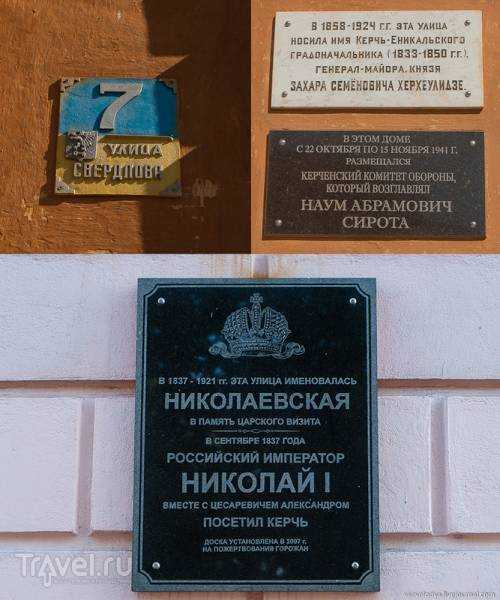
There are also many interesting plaques in Kerch. I didn't notice this at first, but after walking around, I realized it. I especially liked the plaque with the house and street address for several reasons: firstly, it's the Ukrainian flag, and secondly, it shows the Kerch coat of arms. A very impressive plaque.
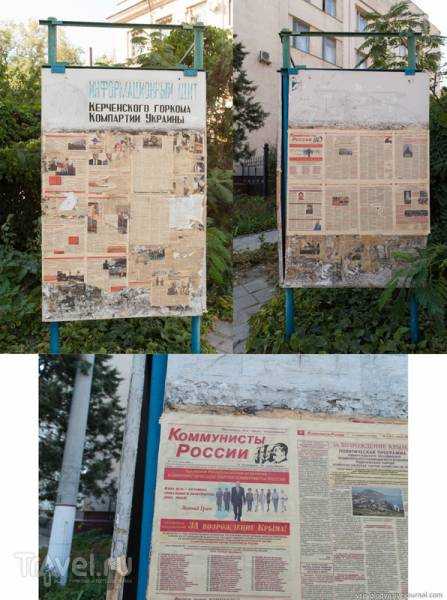
I saw this on one of the streets. I thought they'd invented a time machine in Kerch, but it turned out to be much simpler: a battle for voters in the modern-day Autonomous Republic of Crimea.
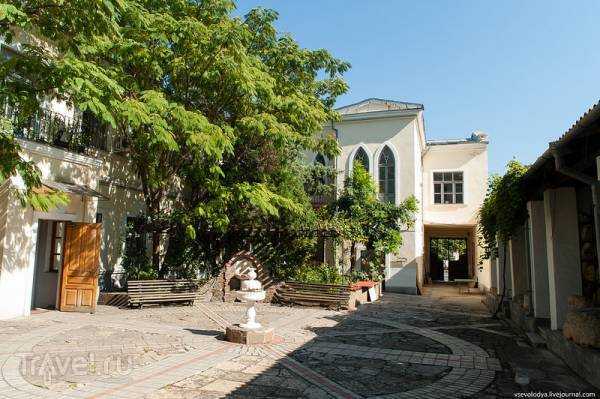
The courtyard of the Kerch Historical Museum. I liked the museum. There are many interesting exhibits telling the story of Kerch, who inhabited it, who owned it, and what industries were developed during the time of ancient Greece. I recommend it to everyone.
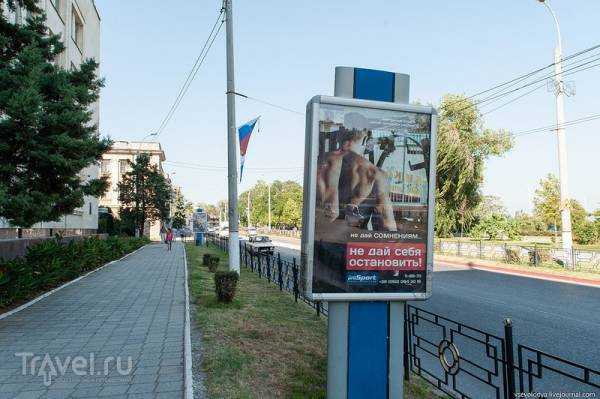
There's also a lot of public service advertising in the city. It's nice to see ads for physical fitness, not beer and cigarettes.
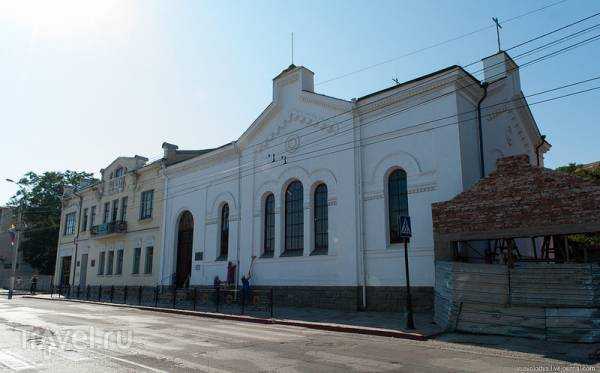
Ukrainian Orthodox Church of the Moscow Patriarchate Church of the Holy Blessed Prince Alexander Nevsky.
I especially liked the positive coloring of the houses. It's stylish and pleasantly done.

The final shot.
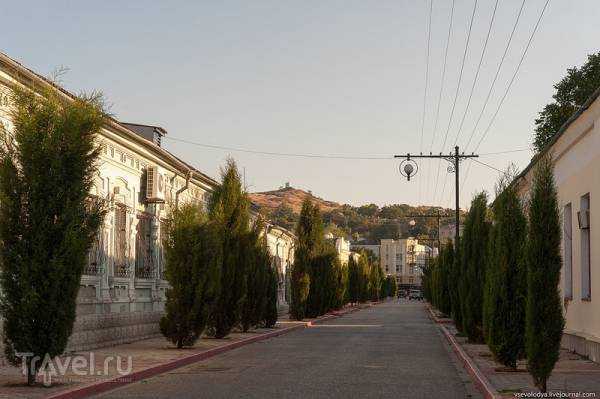
It was the final day of my August stay in the beautiful city of Kerch. The next day, I left on the morning bus bound for Anapa. I didn't manage to do everything, and I was only in Crimea for a few days, but I hope to return to Crimea soon to cycle around the peninsula thoroughly, as I had planned. For now, as I wrote above, all that remains is to warm up with hot tea and reminisce about the past summer, and hope that the next one will be even cooler and more fun than the last!
Source: travel.ru