





I continue introducing the reader to the most impressive place I visited during my travels in Switzerland. I've already shown how different the Gotthard Pass can be, depending on whether the northern or southern elements prevail. But this place acquires a special magic at night. A night on the pass, far from civilization, among the mountains and the starry sky—it's pure magic!
During my second overnight stay at the pass, which is the subject of today's story, I saw the pass under the control of both elements, penetrated an underground fortress I had previously thought abandoned, and witnessed a fantastic spectacle—the moon rising over the mountains. Now, more about all of this...
The post turned out to be with a slight addition of magic and a small touch of mysticism; this place has both in abundance!
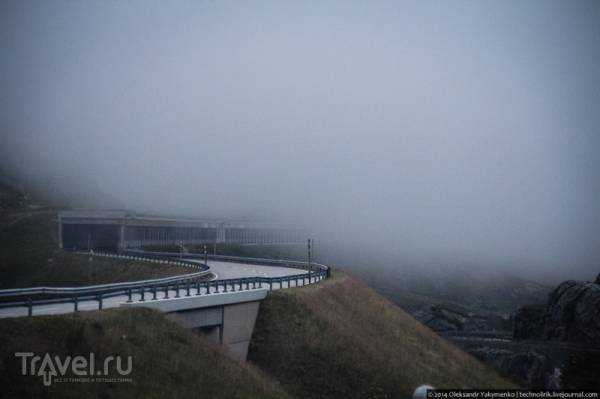
With the engine purring in second gear, after traversing kilometers of serpentine roads, my capsule on wheels takes me to an altitude of just over two thousand meters. The high mountain pass greets me with fog—currently under the influence of the northerly winds.

Fog hides the avalanche gallery of the main artery of the pass and the farmstead located behind it, consisting of several buildings.
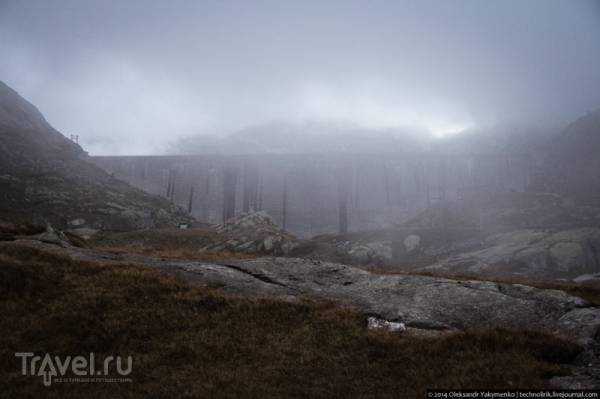
The dam and the surrounding area are also hidden by the clouds that envelop the pass.
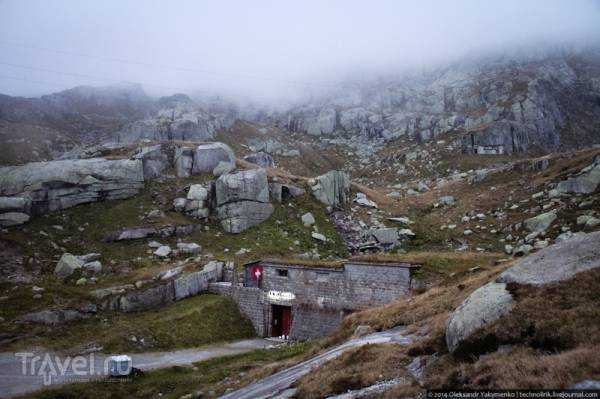
The entrance to the underground Fortress of San Carlo, which I had thought abandoned during my first visit. By this time, I already knew that the fortress was not only not abandoned, but was actually living a new life of its own, quite unusual for such structures.
Having parked the car, I went to examine the artifacts of the military past of these places, which generously dot the surrounding rocks.
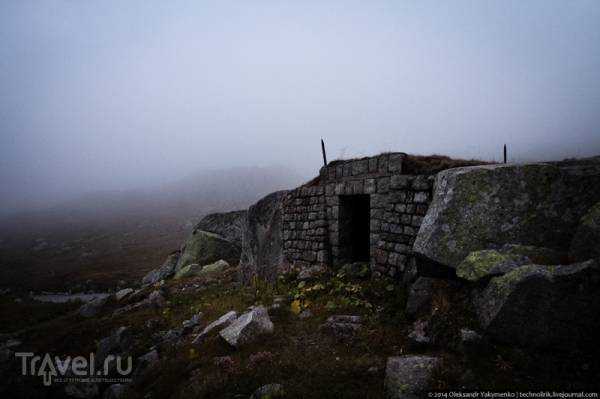
In bad weather, this compact shelter could be used to set up a cozy camp.
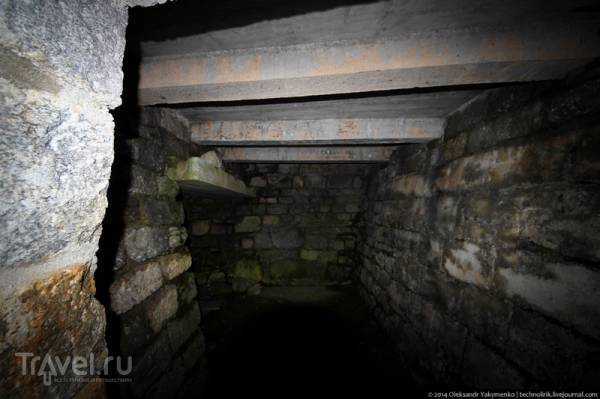
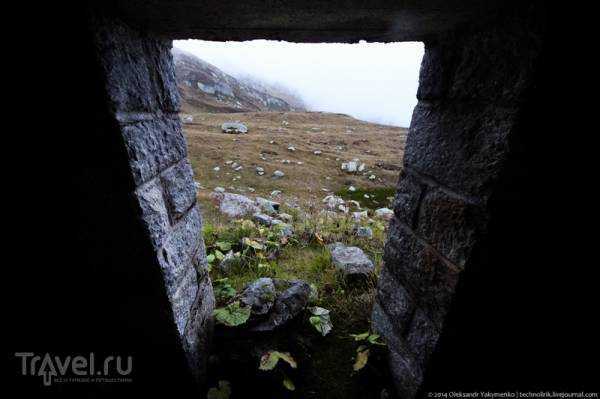
Beautiful mountain view included.
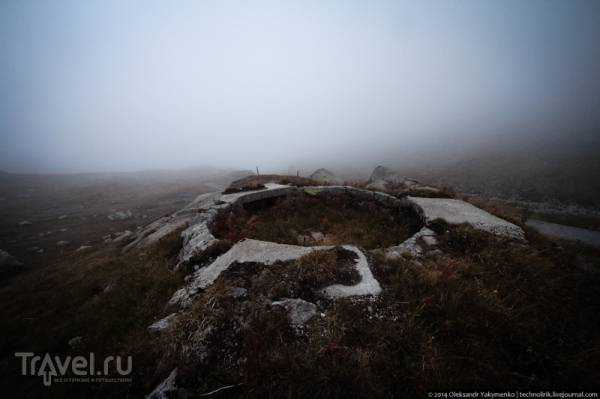
The remains of the pedestals of anti-aircraft guns that once protected the fortress from air raids. In the fog, such artifacts look especially mysterious.
The entrance to the fortress is disguised as a shepherd's barn. From its appearance, you'd never guess that this is a military installation.
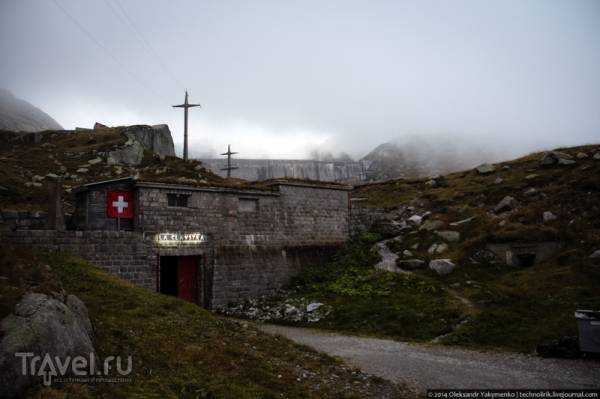
Only the nearby embrasures, covering the entrance to the fortress, suggest that this is not a simple place.
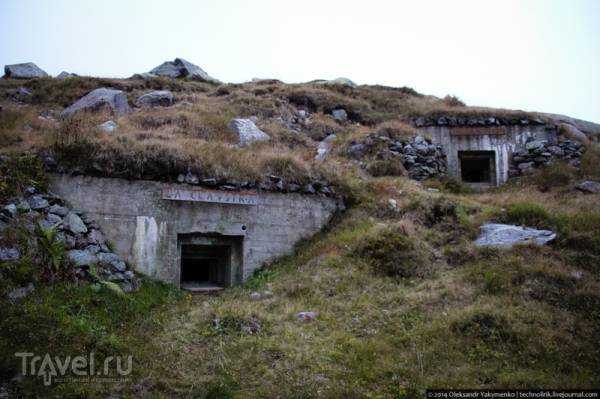
Another machine-gun casemate with an embrasure, located on the approach to the fortress's main portal. This casemate had no underground connection to the fortress.
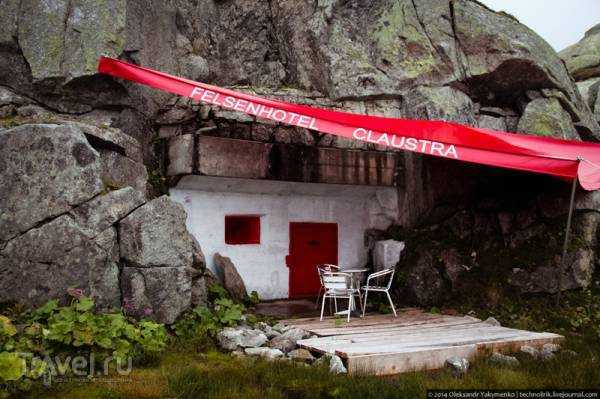
As you may have guessed from the caption in the previous photo, the fortress now houses the La Claustra Hotel. This is the only known instance of a huge bunker being converted into a hotel. I've never seen anything like it, nor even heard of anything similar anywhere else.
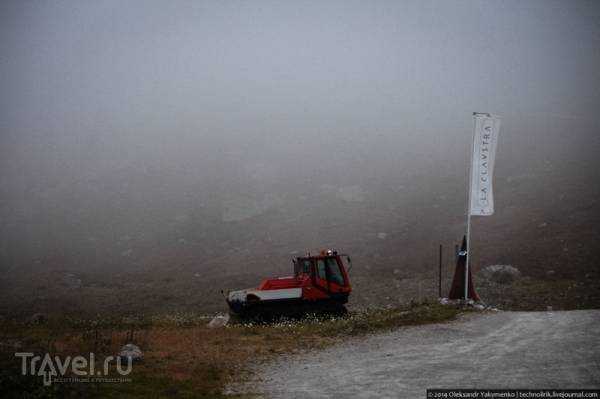
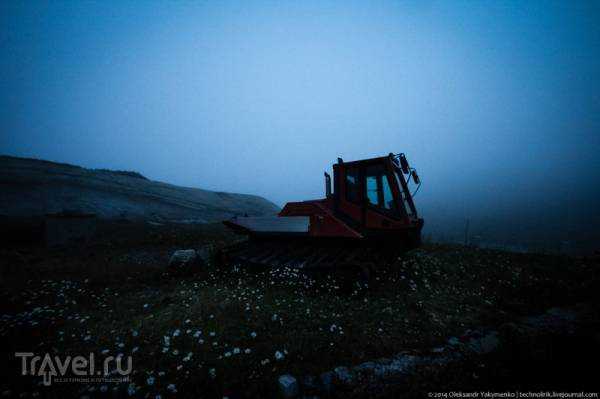
A snowmobile was spotted near the underground hotel. For six months, the pass is covered in thick snow, making access impossible by regular transport—only by snowmobile.
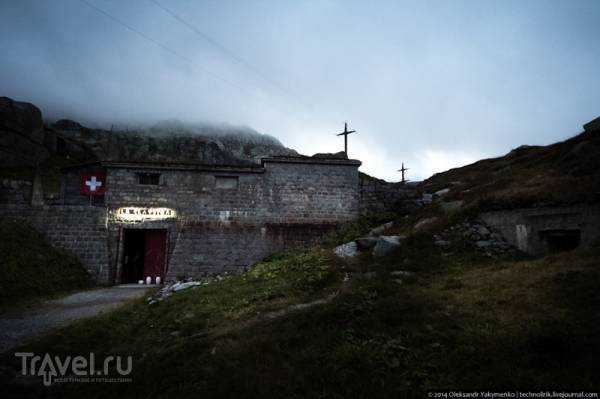
I continued my walk around the fortress-hotel and climbed up to the artillery turrets, camouflaged as rocks. Poor lighting and fog made it difficult to take high-quality photographs of the turrets, so I reshot them the following morning in sunny weather. It was rapidly getting dark, and by the time I reached the platform in front of the hotel entrance, the fog and mist had reduced the visible world to a mere fifty meters.
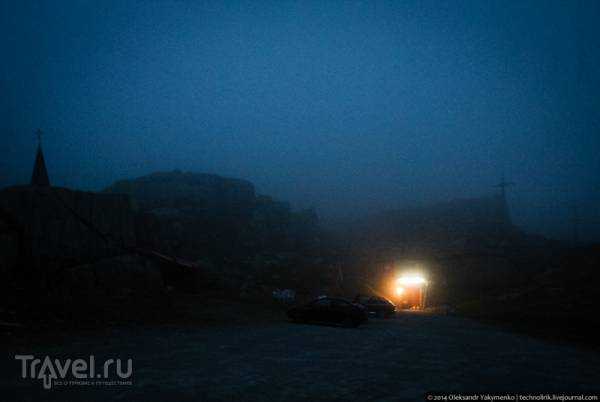
In this deserted, cloud-shrouded area, far from human habitation, the hotel seemed like an oasis of civilization in the middle of a stony desert, and the lights above the entrance were a beacon in the sea of gray haze, beckoning you inside.
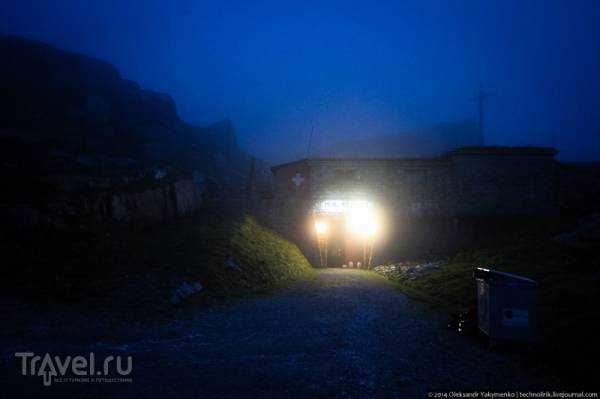
Shortly before this trip, I learned about this hotel inside the old fortress and decided to spend the night there to explore its interiors, but the price of 315 euros per night changed my plans.
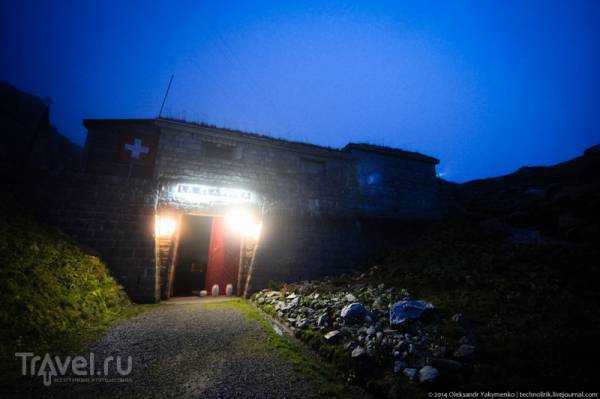
They weren't waiting for me inside, and I had no choice but to limit myself to an external examination of the portal to the mysterious dungeon and move on.
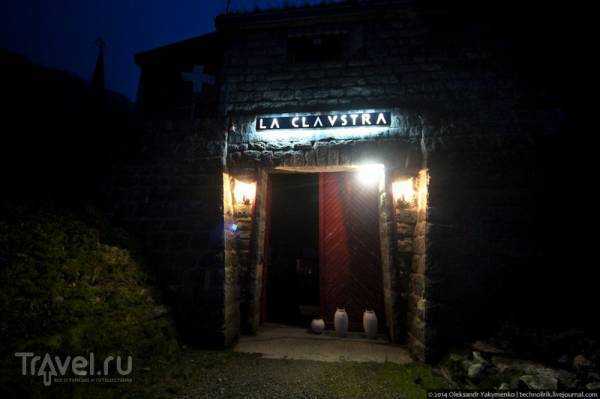
This is the view a hotel guest sees upon exiting the underground complex. I imagined what it would be like to live here for six months during the winter, completely cut off from civilization.
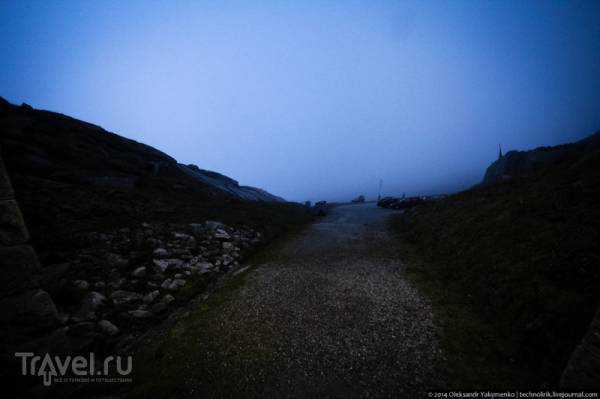
I immediately thought of Stephen King's book "The Shining," about a secluded mountain hotel haunted by an evil spirit. When I read it as a child, I was afraid of the dark for a month. The film adaptation is also quite good and is one of the best adaptations of the master of horror's works.
There was nothing else to do here, so I headed to the next outpost of civilization—a farmstead located a kilometer from the hotel. During the day, it's bustling with tourists passing through the pass and stopping at the farmstead to eat sausages at a local restaurant and chop onions against the backdrop of the mountains and lake. As darkness falls, the farmstead dies out, with only the windows of the single hotel lit up and a glimmer of life.
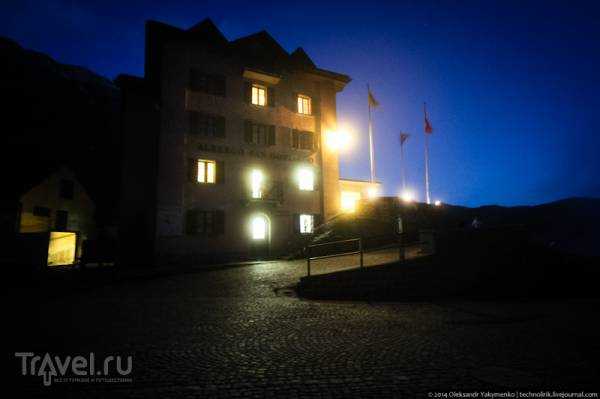
As I approached the farmstead, I was surprised to discover that there was no cloud cover like the one that had blanketed the area around the fortress. Before I could even consider this, the cloud had moved in, turning the farmstead into a silent hill. The photo captures the moment the farmstead was engulfed in fog.
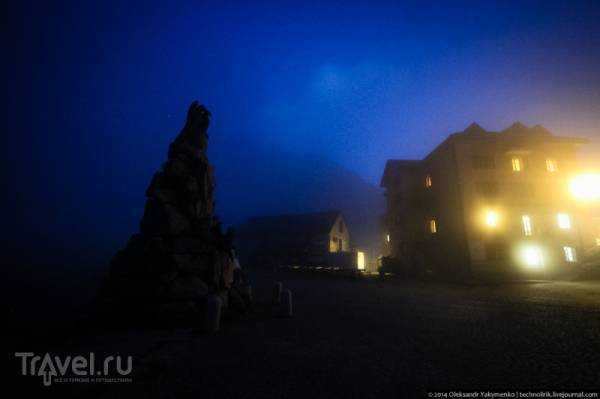
The village is dotted with statues and monuments to the pass's pioneers, saints, and others. After dark, and especially in the fog, the silhouettes of some of the monuments take on a slightly eerie appearance.
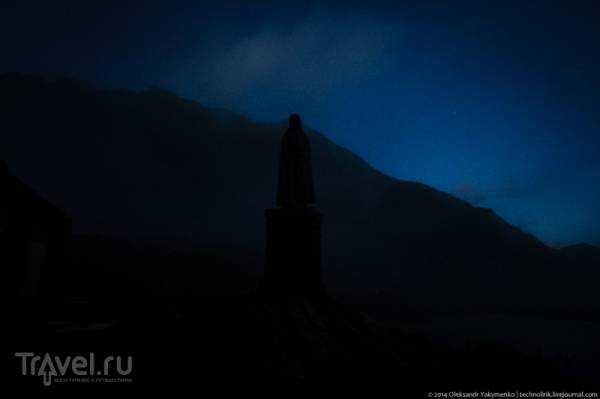
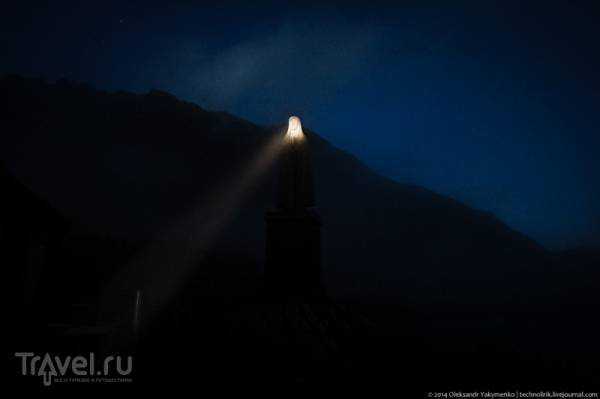
I was walking here completely alone, and I couldn't shake the feeling that the statues were alive and watching me. It's a good thing I brought a flashlight, so I could confirm the illusion.
Another mystical place near the village is a house adjacent to the old fort. It's surprising that the lights are on, given that the fort has been mothballed for decades, and apparently someone lives in the house. I even thought they were watching me from the window.
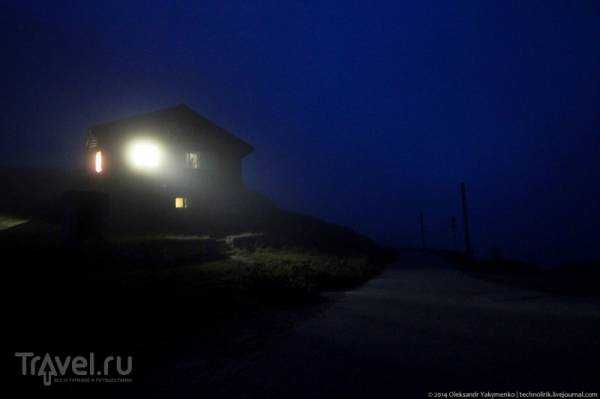
The fog turned the world around me into an unreal one, and I even began to imagine that I saw a figure in a dark cloak in the darkness.
But the bright beam of the flashlight dispelled all illusions.
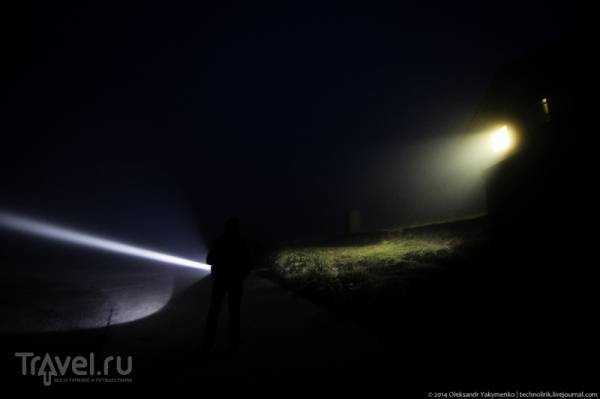
True, as soon as the flashlight was turned off, fog and darkness swallowed everything around, filling the world with visions.
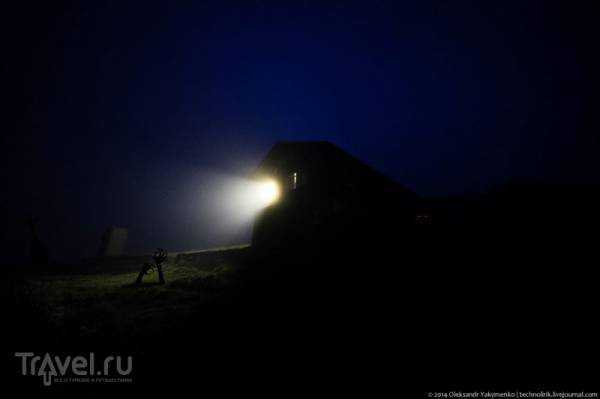
So, while walking in this very atmospheric place, I tried not to turn off the flashlight, so as not to go crazy.
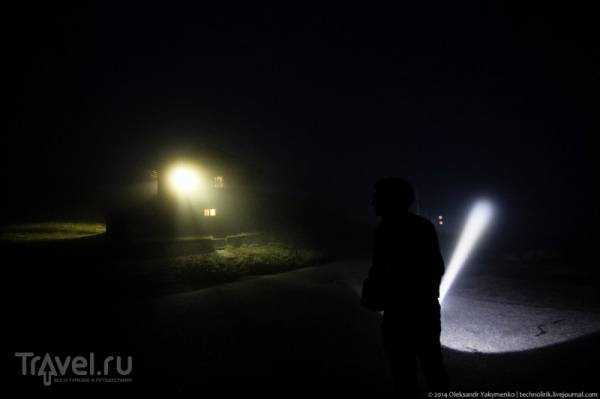
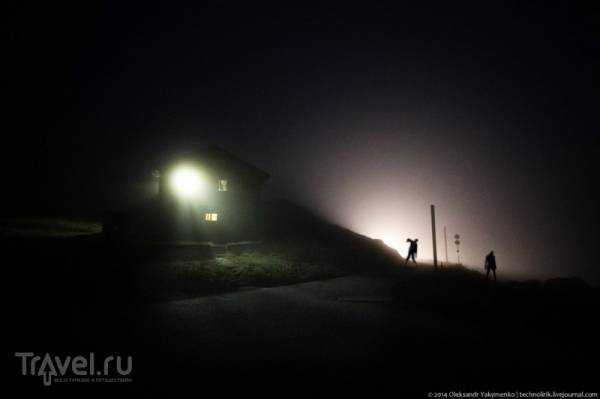
Suddenly, a flash of light illuminated the horizon, revealing several silhouettes from the darkness. "Finally, people!" I rejoiced, but upon closer inspection, I realized my joy had been premature. A minute later, I was already sitting in a car, speeding away from this place.
A little over a kilometer from the hamlet, I found the perfect spot for the night, not far from the portal to the underground hotel. Just half an hour ago, this area had been shrouded in clouds, but now there was no trace of them left, and a beautiful dome of starry sky hung overhead.
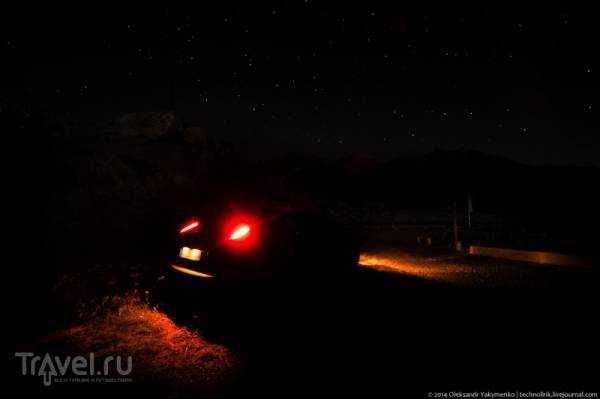
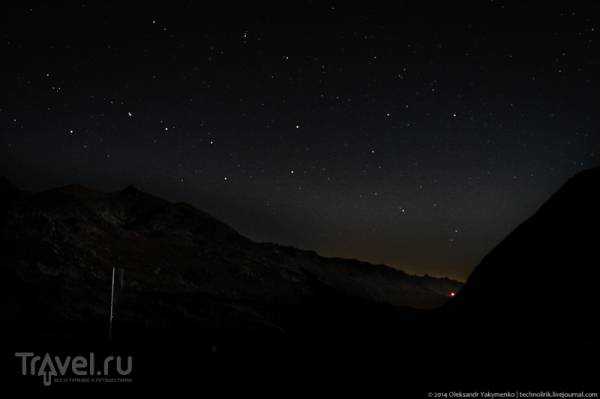
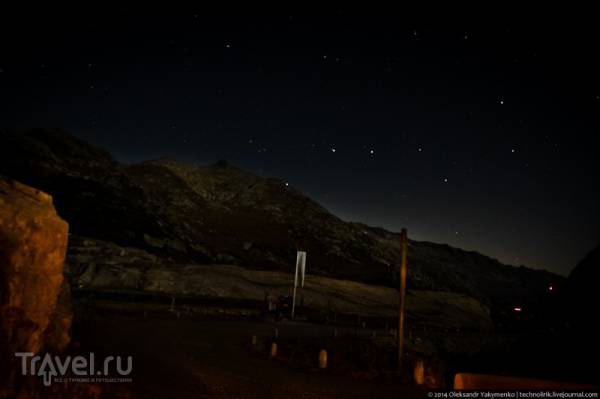
The constellation Ursa Major shone brightly above the mountain range, many other constellations were visible, but I don’t know their names.
The last time I saw such a starry sky was when I was a child, when my friends and I went to the stadium outside the city to look at the stars.
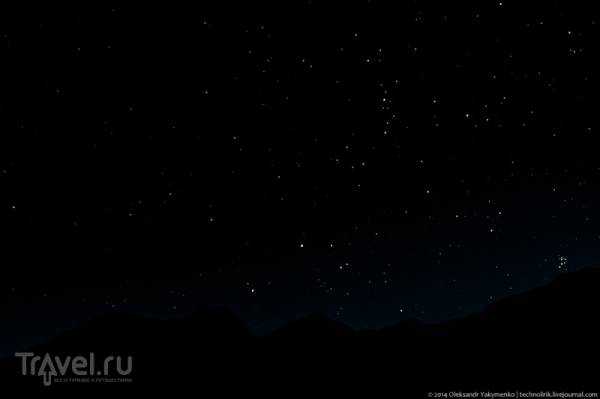
Thanks to the absence of any settlements or light pollution within tens of kilometers of the mountain pass, the stars were clearly visible. I deeply regretted not having a professional camera with me that night; my old Canon D600 with a kit lens produced rather mediocre shots in the very low light.
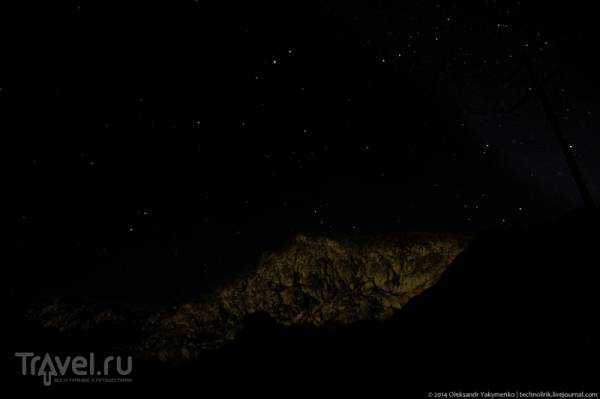
While taking these photographs, I noticed how quickly the positions of the stars in the sky were changing. Comparing this photo with the next one, you can see how the Big Dipper's position in the sky has shifted.
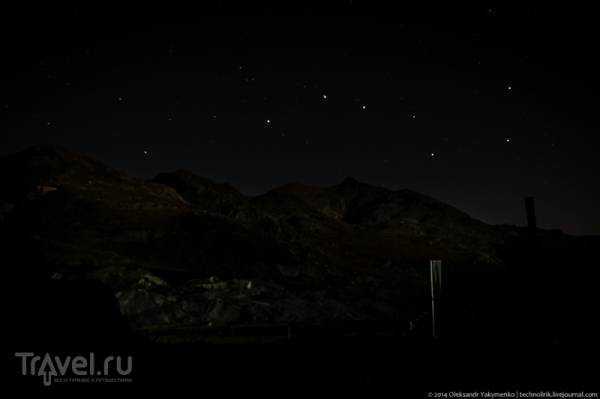
There is a difference of about two hours between these pictures.
Source: travel.ru