





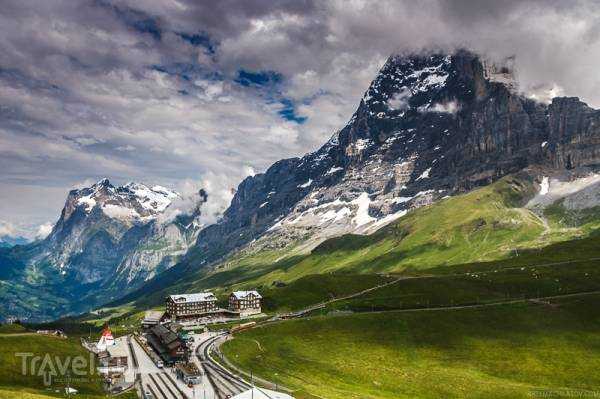

Are numbers really that important when it comes to experiences? But a trip to the famous Eiger mountain in the Bernese Alps wouldn't be complete without accurate data.
There are two routes to the Eiger from Wengen. The first and easiest is to board a cozy retro train from the town station and travel along the Jungfraubahn railway to the so-called "Top of Europe"—the Jungfrau Mountain, or more precisely, the Sphinx Observatory, located at an altitude of 3,571 meters. This route is chosen by 99% percent of tourists visiting Wengen. It's not cheap, and even the SWISS PASS doesn't work here—in any case, you need to buy a special round-trip ticket for 160 euros. The journey from Wengen to the summit takes about an hour and a half.
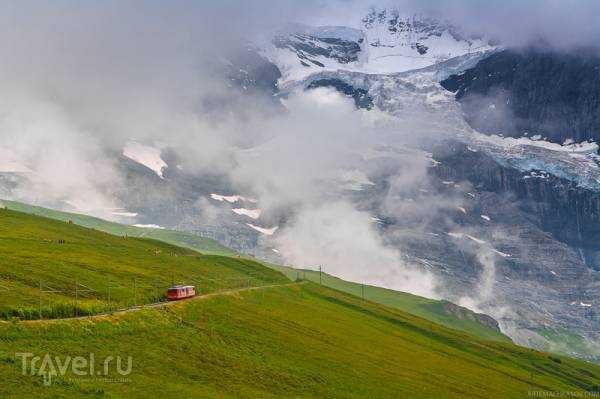
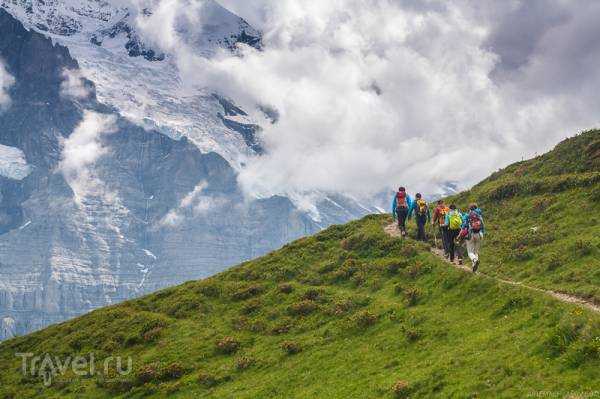
The second option, while not promising a trip to the much-hyped "roof of Europe," is much more affordable and far more exciting. It involves a ride on the Wengen-Männlichen cable car to an altitude of 2,343 meters, followed by a multi-hour hike high in the mountains, and a return hike to Wengen.
It's not hard to guess which option we chose!
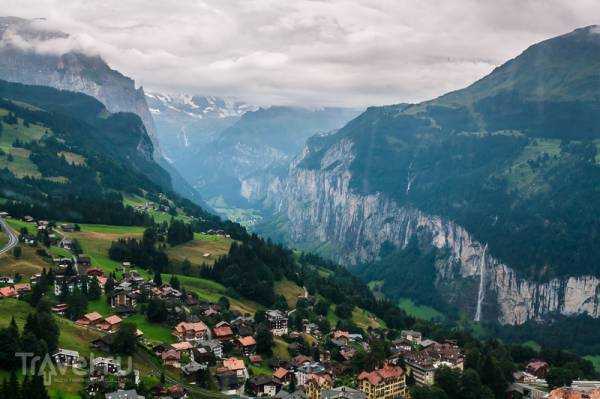
Early in the morning, the gondola lift silently lifted us up, revealing a wonderful view of the town we had left behind and the Lauterbrunnen valley.
If you find yourself on Männlichen Mountain in foggy weather, you'll see little. A thick blanket of cloud obscures the neighboring mountains and valleys. The yellow-green slopes are practically devoid of large or medium-sized vegetation—not a single bush or tree. The air here is filled with the taste of mountain grass and snow. You sense that the Great Mountains are somewhere nearby.

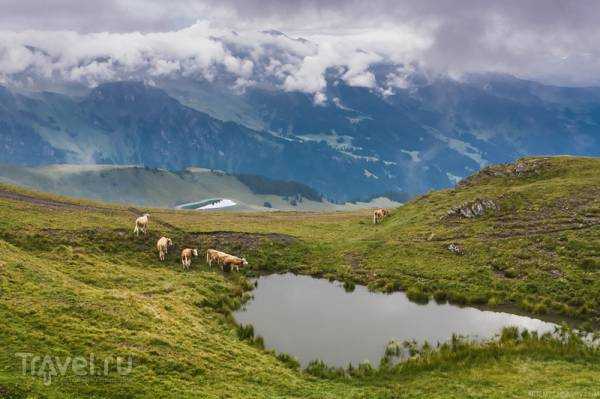

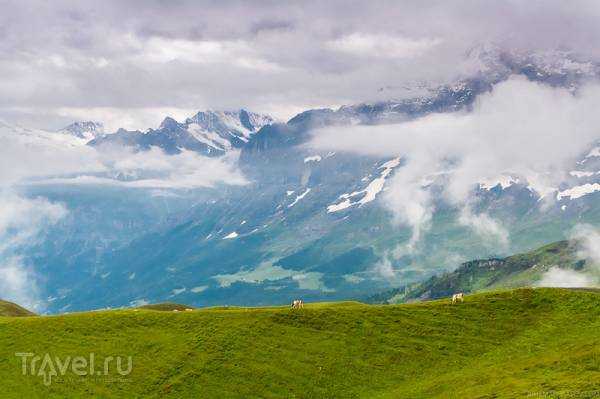
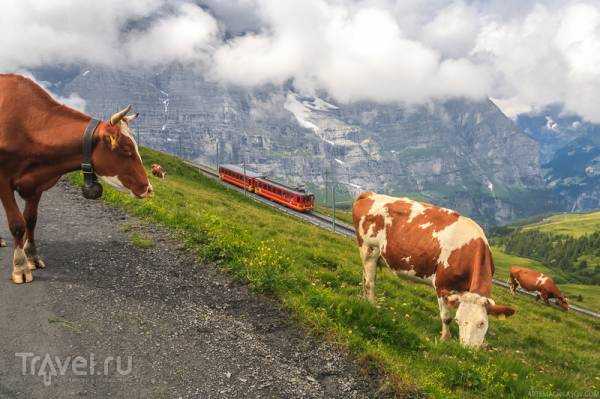
Cows graze peacefully, vintage cable car cabins furrow the sky, resembling beads of red rowan berries in autumn.
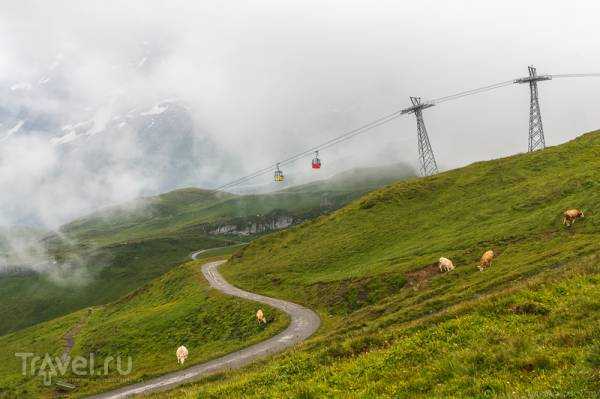
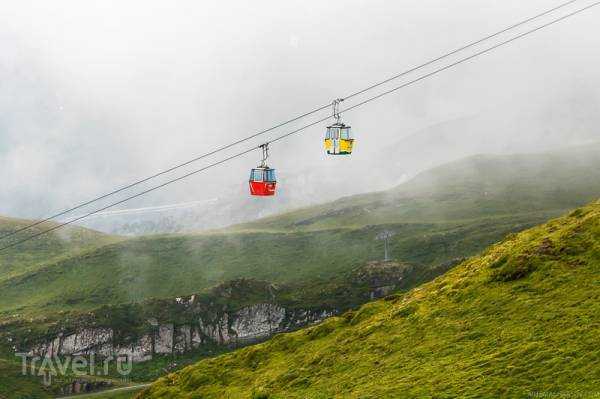
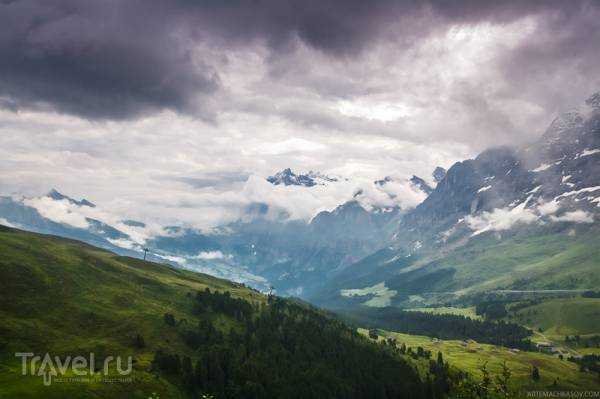
Cloudy cotton wool plays a game with the viewer, sometimes revealing fragments of the surrounding landscapes for moments, sometimes closing them off again.
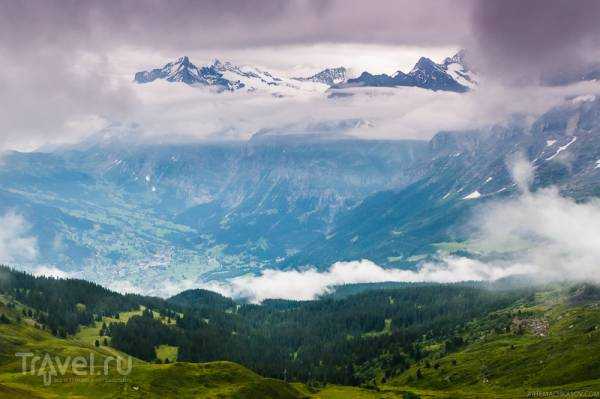
Somewhere there, beyond the mists in the valley, lies another high-mountain resort town – Grindelwald.
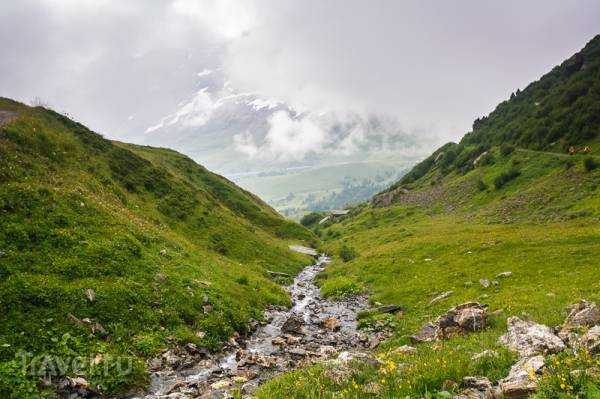
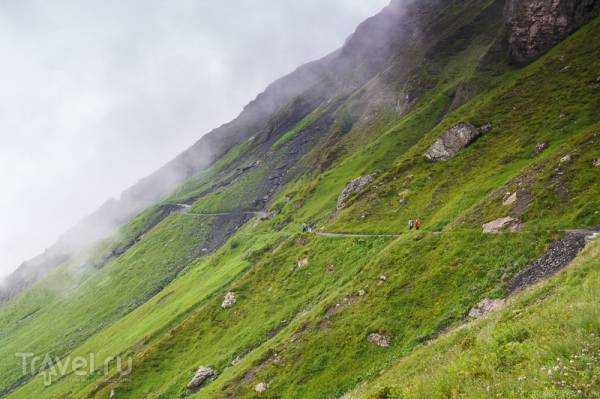
The walk continues along a picturesque traverse, from one of the turns of which a misty view opens up of the destination of our journey – the Eiger mountain (also known as the Eiger), at a height of 3970 m.
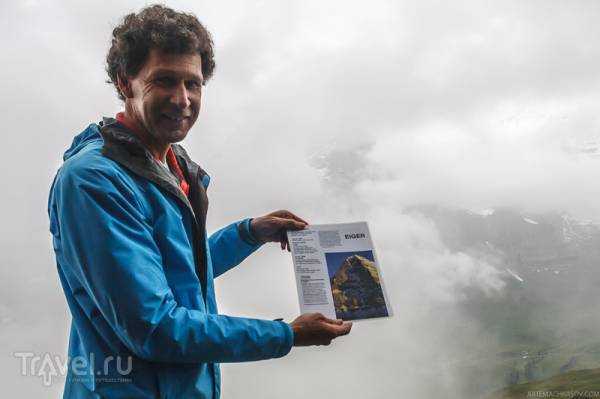
Along with the neighboring mountain peaks Jungfrau (4158 m) and Mönch (4107 m), the Eiger is one of the symbols of Switzerland.
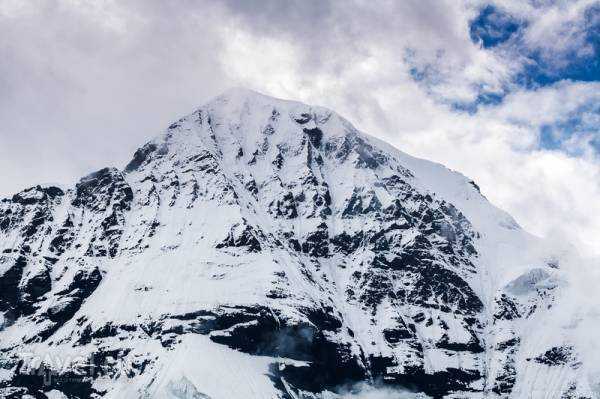
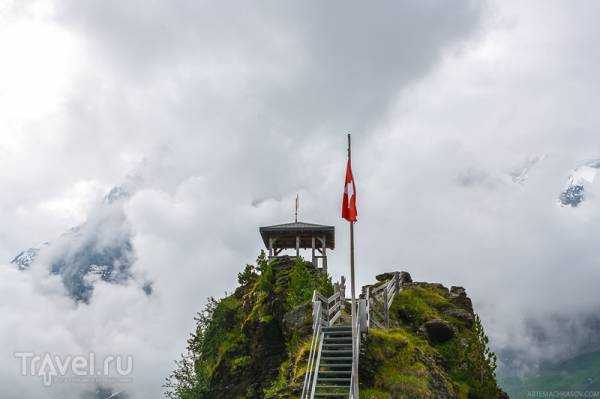
The monumental and disturbing beauty of this mountain conceals a dramatic, bloody past. Over the past 80 years, over sixty climbers have perished here. It's no coincidence that the name Eiger comes from the word "ogre," or "cannibal." What is it about the Eiger that attracts daredevils, and why is it so dangerous?
The Eiger North Face, also known as the "Wall of Death", is a unique geographical feature.
This is the largest north face in the Alps. The vertical drop is 1,800 meters, with an average slope of 75 degrees. The climb, along ice-covered rock slabs, passes through steep sections and ice fields. The wall receives virtually no sunlight, making it extremely cold even in summer.
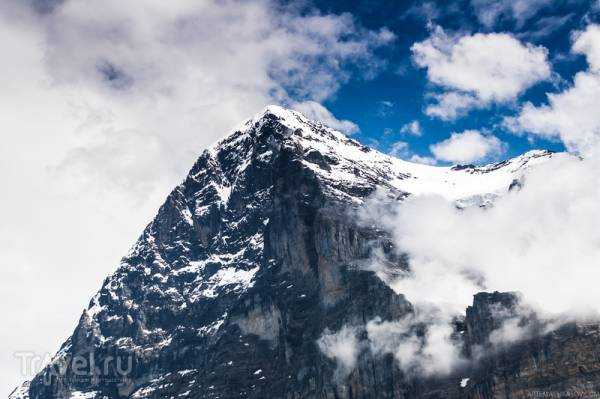
Add to this the constant avalanches and rockfalls, as well as rapidly changing weather, and you can understand why, until the mid-1930s, no climber seriously considered the possibility of climbing the north face of the Eiger.
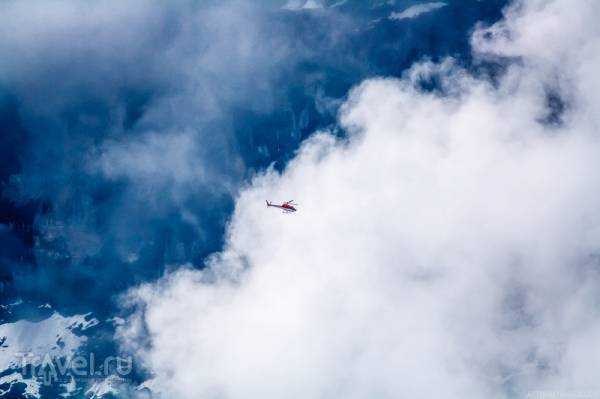
German climbers Willy Beck and Georg Löwinger were the first to attempt the climb, setting out on July 17, 1934. Unfortunately, they only reached 2,900 meters in two days, and after one of their members fell, they were forced to abandon their ascent. The unfortunate climbers were rescued through the panoramic windows of the railway tunnel.
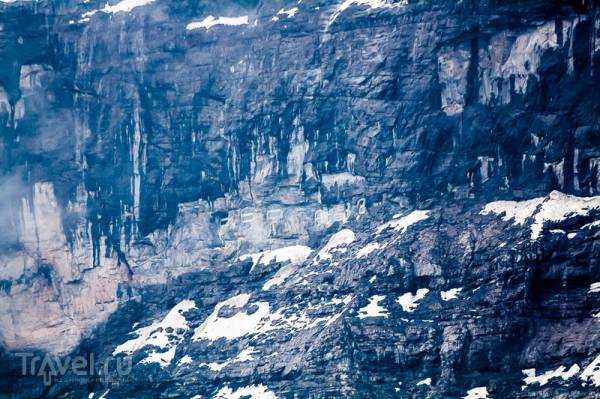
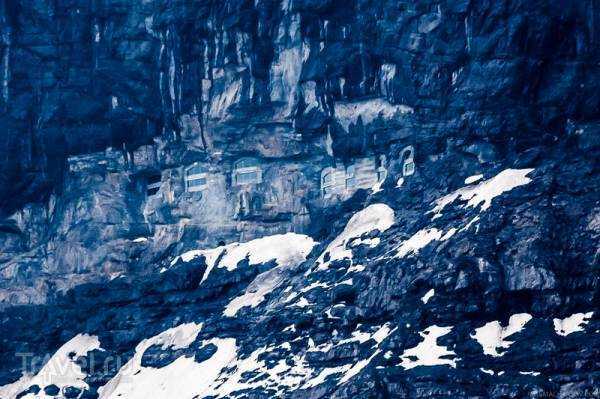
To better understand why the climbers took such a risk: in those years in pre-war Germany, taking the North Face meant roughly the same as the first space flight decades later. The pioneers would have achieved heroic glory. Deciding they had nothing to lose, on August 21, 1935, Bavarian climbers Karl Mehringer and Max Sedlmayer left their camp at the foot of the mountain and began their ascent. After three agonizing days of assault, the climbers disappeared from the sight of the numerous observers' telescopes in a severe snowstorm that engulfed the mountain. No one ever saw the climbers alive again.
The bodies of Meringer and Seidlmayer were discovered by plane only three weeks later at the top of the second ice field—this place later became known as the "Death Bivouac." The cannibal had begun his monstrous feast.
The next summit attempt didn't take place until the following year. A group of ten climbers from Austria and Germany set up camp at the foot of the Eiger. The athletes intended to finally outwit the recalcitrant Ogre. None of them imagined that everything would continue as if in a nightmare.
During a training climb, one of the climbers dies. The weather rapidly deteriorates. Ultimately, only two teams, consisting of Germans Andreas Hinterstoisser and Toni Kurz, and Austrians Eddy Rainer and Willi Angerer, decide to attempt the climb. During the extremely difficult climb, Angerer suffers a serious head injury from a rockfall, but continues the climb without showing any signs of it. It is also discovered that an avalanche has torn away their gear—a backpack with crampons—from the cliff face, which they had retrieved during the training climbs.
The climb continues for two more days, after which it becomes clear that Angerer's injury is very serious—he can no longer move independently, becoming an unbearable burden for his comrades. Cursing each other and their cruel fate, the athletes decide to turn back. Alas, the Cannibal had other plans... These tragic events formed the basis for the German film "Nordwand" (North Face), released in 2008.
The next few years brought only misfortune and death to those climbers who dared to climb the North Face.
The first successful ascent was made only at the end of July 1938. Then the summit was conquered by a German-Austrian group of climbers consisting of Heinrich Harrer, Anderl Heckmair, Fritz Kasparek and Ludwig Werg.
Nazi propaganda presented this as a symbol of Austria's annexation by Germany, which had taken place shortly before, on March 13, 1938. The climbers became national heroes of the Third Reich.
Over the years, climbers refined their techniques, and manufacturers improved their equipment. The number of people who have conquered the North Face has reached into the dozens. At the same time, the speed of ascents has also increased significantly: while the first successful ascent took several days, by 1974 the legendary Reinhold Messner set a speed record of 10 hours. The current record, set by Daniel Arnold in 2011, stands at 2 hours 28 minutes.
Nevertheless, even today, climbing the Eiger is considered a major achievement.
The names of the deceased climbers are inscribed on stones surrounding the artificial lake at the pass below the Eiger. A small museum is also located there.
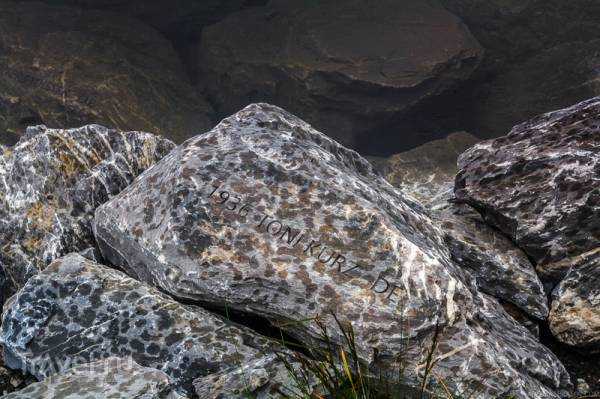
Nearby is the Kleine Scheidegg train station (elevation 2,061 m), a traditional stop for tourists en route to the Jungfrau summit. Here you can dine in a restaurant or café and buy souvenirs (slightly more expensive than down in Wengen).
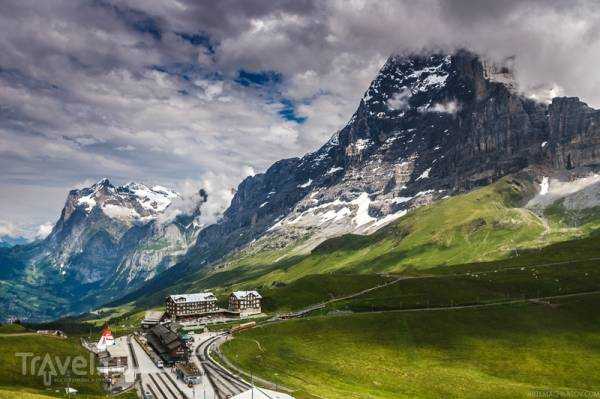
Kleine Scheidegg is home to expensive hotels, the very ones from whose balconies wealthy bourgeois and journalists watched the pioneering climbers through binoculars and telescopes.
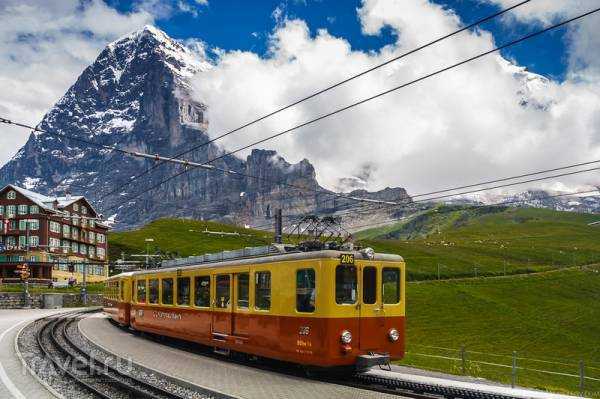
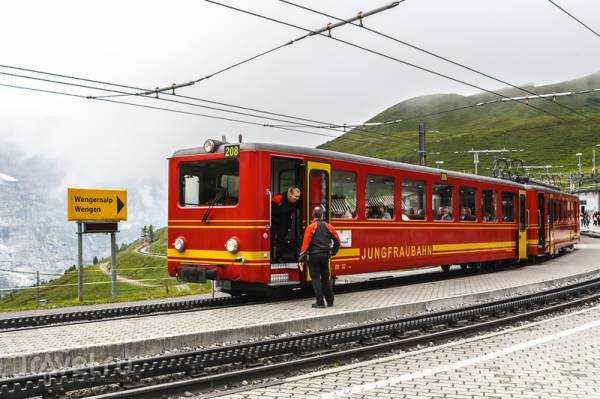
These vintage trains date back to the 1940s and 1950s. Surprisingly, they still carry tourists reliably.
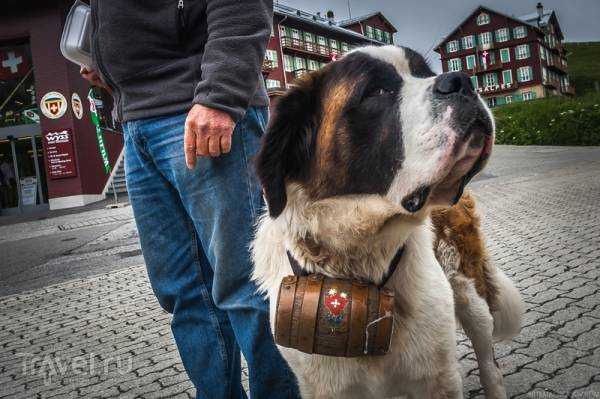
A ticket to the "Top of Europe" for a dog over 30 cm tall costs half the adult fare, or approximately 80 euros. But that's no reason to deny your pet the pleasure of exploring the mountains! It's also possible, however, that the dog is an avalanche service dog—for them, the train ride is completely free.
Kleine Scheidegg can be reached via two train lines: from Wengen and from Grindelwald. To continue further, you need to transfer to the Jungfraubahn railway.
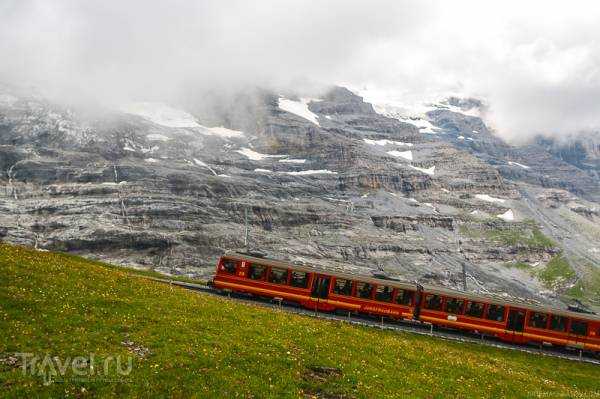
The traditional two-rail track is being replaced by a three-rail track, adding a central rack rail. This is necessary because the inclination of the Jungfraubahn line's tracks reaches 25 degrees in some places.
The railway tracks climb steeply up the mountain. The next station, Eigergletscher, is located at an altitude of 2,343 meters.

After this, the train enters a tunnel bored through the Eiger. Incredibly, this seven-kilometer-long tunnel was built over 100 years ago! This was only possible thanks to innovative technical solutions for its time, such as electrically powered jackhammers. Explosives were also used extensively. Construction of the tunnel and railway took 16 years and was completed in 1912.
The tunnel houses the Eigerwend station. Here, panoramic windows cut into the rock face offer views of the cold and deadly North Face at an altitude of 2,865 meters.
The next station, Eismeer, is located at the end of the tunnel at an altitude of 3,160 m.
Source: travel.ru