






Why do tourists switch to other agencies, and how can we keep them coming back? These questions have long been a concern for retailers. Share your thoughts with the portal. TRN sales expert Artur Privin shared:

In the previous article I talked about key performance indicators so that we could speak the same language.
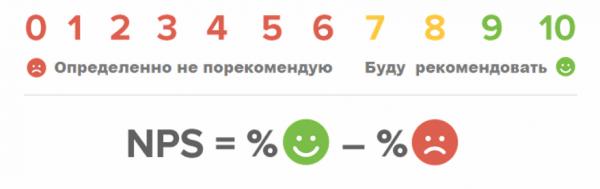
Today we'll talk about how well you satisfy your customers. NPS (net promoter score) is a customer loyalty index based on dividing customers into three groups based on their level of trust in your brand. It's the primary measure of how well you're doing your job. It's directly related to the final KPI starting with the letter "F," "purchase frequency."
Before discussing possible methods for boosting this metric within an existing customer base, let's first understand churn and the reasons why customers leave and don't return. After all, you can attract 30% new customers every year, but will your company grow if 50% don't return?
There are 3 categories of clients:

Promoters (rate 9-10 out of 10). We are happy with you and are ready to recommend.

Neutrals (rate 7-8 out of 10). Satisfied, indifferent. Not willing to recommend.

Critics (rate 0-6 out of 10). Dissatisfied with you. Will never recommend.
NPS formula = % promoters - % detractors.
What to do with all this?
Recipe:
1. Start collecting feedback right now if you haven't already.
All decent CRMs should have a feedback recording feature. Still not using a CRM? That's too bad. No, that's just awful.
2. After receiving feedback, ask your customers 3 simple questions:
A) We sincerely strive to ensure that every tourist is as satisfied as possible with our services. On a scale of 1 to 10, how highly would you recommend our company to your friends and colleagues as a travel agency for organizing their vacations?
B) Why such an assessment?
B) (If the score is not 10)
What can we do to get you to give us a 10 on our next survey?
3. Identify the main reasons why your customers are dissatisfied. Conduct an analysis, address any issues, and consult with all employees.
And here it's also important to be able to share responsibility for service. For example, our tourists sometimes have their flights significantly delayed from morning to evening, losing an entire day, but they still give us a 10 because we always try to manage their expectations. The same applies to choosing a partner, hotel, and destination. Remember, we're selling expectations and a service that can't be tangibly experienced at the time of purchase.
4. Learn to admit your mistakes and work on them. Period.
By the way, just yesterday, at my initiative, U-on implemented a refinement to the 10-point ranking system. Now calculating NPS is even easier. Implement it.
Unfortunately, in Russian practice, there is no consolidated data on the loyalty of large companies, and NPS as a loyalty assessment method is far from universally applied. Therefore, I will provide an example of NPS scores for large global companies, which, in my opinion, should be strived for: "Amazon" +61%, "Apple" +89%, "Toyota" +77%.
I wonder, if our Russian tour operators started calculating NPS, which company would be the leader?

What to read on the topic of increasing the loyalty index:
- Customers for Life (Carl Sewell, Paul Brown).
- True Loyalty (Fred Reichheld and Rob Markey).
Tell us in the comments whether you solicit feedback from your clients. Do you work with feedback? Do you know your NPS score?
Source: trn-news.ru