





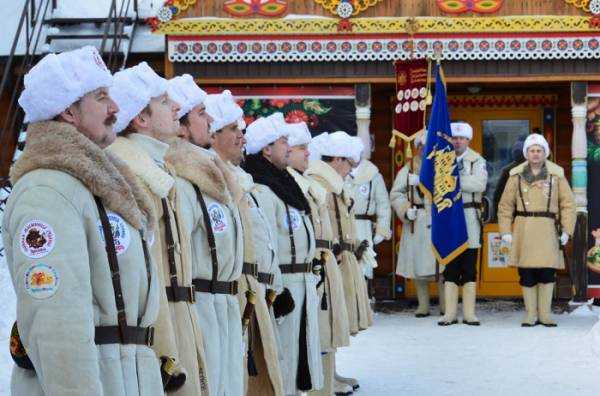
Last Sunday, the country's main Maslenitsa celebration began in Yaroslavl. Remarkably, this status is not reserved for a capital city celebration, but rather a regional event. Let's explore the reasons for this distinction.

Firstly, it is in the capital of the “Golden Ring of Russia” The Residence of the Empress of the Main Maslenitsa of the country is located here, for which the People's Artist of the RSFSR Nadezhda Babkina was chosen.
If the "Empress" is unable to attend the opening of the festive week, Lady Maslenitsa will take her place. The Guards Regiment, the main hostess of the Yaroslavl celebrations, remains unwavering. Once you've seen the regiment's procession, you'll want to come to Yaroslavl again and again to march to the beat of drums alongside the guards in their white sheepskin coats bearing special patches—the emblems of Maslenitsa, which are designed annually specifically for this event. Each Maslenitsa year is unique in its meaning.
Secondly, the uniqueness of each year's Maslenitsa celebration is marked by records. In 2017, two such records were set and recorded in Yaroslavl: the largest pancake pie and the largest number of handshakes during the "High Five" flash mob. This year will be no exception: on the final day of the Maslenitsa celebrations, a new record will be set—for the tallest samovar.
Thirdly, Yaroslavl Maslenitsa is famous for its reenactments of historical rituals. In 2018, on the opening day, the event organizers reenacted the ancient ritual of "stolby," in which a participant would "freeze" in place for a while, allowing the audience to examine each participant. Stolby are an element of carnival, albeit in a different form. In the traditional sense, carnival participants move around, while the spectators remain in their places; in "stolby," it's the exact opposite.
It's worth noting that historically, Maslenitsa in Yaroslavl was celebrated for eight days: from Sunday to Sunday. The founder of the country's vibrant Maslenitsa festivities was Fyodor Volkov, a resident of Yaroslavl and the founder of the first Russian theater. In 1763, during Maslenitsa week, he directed a multi-day grand masquerade in honor of the coronation of Empress Catherine II.
Fourth, Yaroslavl Maslenitsa represents a blend of historical rituals and modern trends. One of the main attractions this year was the Street Food Festival, where guests could enjoy not only the main dish—blini—but also delicious dishes from various international cuisines. Incidentally, the Street Food Festival will be held daily as part of the "Bright Maslenitsa" festival program.
The vibrant nature of the event is reflected not only in the carnival processions, stylized street art areas, competition for the most beautiful Maslenitsa doll, and rides on the Maslenitsa train, but also in the festival symbols—yellow scarves, cupholder stickers, and mirrors for blowing sunbeams—all of which the organizers give to each participant.
It's worth noting that as part of the "Bright Maslenitsa" festival in the Yaroslavl region, in addition to the Maslenitsa week of festivities in Yaroslavl, festive events will be held in the following cities and districts of the region:
February 11–18, Myshkinsky District, Martynovo village — “Maslenitsa has been oiled!”, “Maslenitsa has arrived!”;
February 17-18, Pereslavl-Zalessky - "Maslenitsa: Battle of the Seasons";
February 18, Rostov the Great - "By the Pike's Command";
February 18, Gavrilov-Yam - "Maslenitsa in the "Coachman's Country";
February 18, Uglich - "Wide Maslenitsa in Uglich".
Detailed information can be found on the website of the Yaroslavl Region Department of Tourism: http://visityaroslavia.ru/ru/.
The author of the photo is Evgeny Ivanov (Yaroslavl).
Source: trn-news.ru