





Last weekend, Fisherman's Day was celebrated at the Koprino Bay Park Hotel in the Yaroslavl Region. The event included fishing and fish soup-making competitions, as well as the grand opening of new facilities in the Yaroslavskoye tourist cluster. seaside" - the Rybinsk Sea Museum and the Driving Range golf course.

Fisherman's Day is becoming a tradition in the Yaroslavl coastal region—it's been held there for the second year. Valery Kholodov, Deputy Chairman of the Regional Government and Chairman of the Yaroslavl Region Fisheries Council, opened the event on behalf of Dmitry Mironov, Governor of the Yaroslavl Region, greeting all participants gathered at the Koprino Bay Park Hotel. "This is a historic holiday, and fishing in the Yaroslavl region has a long history," noted Kholodov. "It's no coincidence that fish are depicted on the coats of arms of the two largest cities in the region after Yaroslavl—Rybinsk and Pereslavl-Zalessky. A fisherman is not just a profession; he is the meaning of life. A fisherman is a brave, courageous, and courageous person. And our Rybinsk Sea allows us to be brave and to brave the elements. We hold our holiday to promote the fishing profession and attract investment." “I congratulate everyone on Fisherman’s Day, I wish you all health and good fishing luck!”
Evgeny Katz, Director of the Department for Regulation of Fisheries and Aquaculture at the Russian Ministry of Agriculture, and Nina Vanyukova, Deputy Head of the Moscow-Oka Territorial Administration of the Federal Agency for Fisheries, also welcomed the participants and guests of the event.
Tatyana Smirnova, head of the Rybinsk district of the region, particularly noted the participation of Yaroslavskoye Vzmorye: "I would like to thank the festival organizing team, the government of the Yaroslavl region, as well as the management of the Yaroslavskoye Vzmorye project and the Koprino Bay Park Hotel for their active participation in organizing this event. Thanks to their initiative, we are here today to relax and recharge our batteries."
The best fisherman and the most delicious fish soup
Peter the Great announced the humorous opening of Fisherman's Day, reading out his decree: "I command: cut a window to Europe in this glorious place, and call this noble undertaking the Yaroslavl seashore! And consider Sunday in July a Russian holiday, known as 'Fisherman's Day'! From now on and forever, the Yaroslavl seashore is the fishing powerhouse of the Russian state!"
Participants in the unique Olympics at the festival were wished "neither tail nor scales": a fishing competition was held there. Three different types of fishing were on display. According to Irina Lebedeva, chair of the Yaroslavl branch of the Fishermen's Union and a second-category judge, fishermen competed in fishing with a rod, a spinning rod, and a fitter. Fifteen teams—44 participants from seven districts of the region, ranging from amateurs to masters of sport—participated in the competition. The head of the Oktyabrskoye rural settlement in the Rybinsky District also fished. Winners were determined by the weight of the fish caught. The Yaroslavl team received the cup.
This time, the competition was a cultural and mass event, but next year, plans are to transform it into a sporting event, holding the Russian Fishing Cup as part of Fisherman's Day.
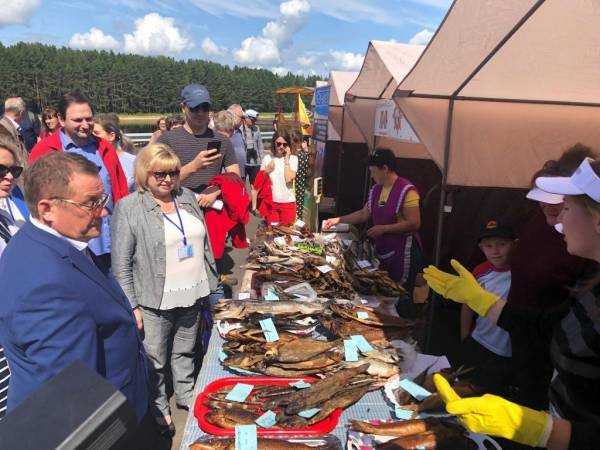
Nearby, the fragrant aromas of smoked and dried fish were already attracting guests at the stalls. "We're Breitov girls, we'll never be lost!" the vendors urged customers with ditties. Fishermen from various parts of the Yaroslavl region surprised festival guests with a huge variety of goods: flounder and smelt, pike and bream, mackerel and pink salmon, and other seafood.
And in the cauldrons, ukha (fish soup) bubbled—the participants of the culinary competition treated guests to this dish, prepared according to their own recipes. Teams from Yaroslavl, Rybinsk and the Rybinsk district, and the cities of Breytovo, Nekouz, Pereslavl-Zalessky, Poshekhonsky, and Uglichsky districts participated. Grigory Mosin, a renowned chef and TV cooking show host, also judged the intricacies of the ukha and shared his experience. The winner was the team from the "Baguette, Pate, and Yellow Blanket" cafe from Yaroslavl.
Guests enjoyed a fishing and craft fair, a fish market (a fish auction), a flyboard show on the water, boat rides, contests, and a concert. The Tygydym village—an ethno-museum of the Russian village—always opens new sites and activities, and vacationers had a great time there too: this time, the Tygydym hosts invited guests to fish in the pond and also demonstrated a new feature: a cinema barn where you can watch movies on a big screen while lounging in the hayloft.
„"Next year, we want to hold the Russian Fishing Cup as part of Fisherman's Day. This will enhance the prestige of this work and this holiday, and will also give competitors the opportunity to achieve a new sporting rank," Valery Kholodov shared his impressions of the event with journalists. "Every year, the event grows in scale. Today, we'll also try ukha (fish soup). People need to be taught the culture of eating fish. It's not very popular among young people right now, but fish is a healthy food. The goal of our event is to popularize the fishing profession and fish cuisine. The management of the Koprino Bay Park Hotel understands this, and in general, they have a significant philanthropic and educational mission. For example, today, a golf course opened here, allowing schoolchildren from across the Yaroslavl region to learn golf for free, as well as a local history museum. Such attractions are important, and the complex is developing dynamically."
"I hope that other high-quality investors will start to join us."
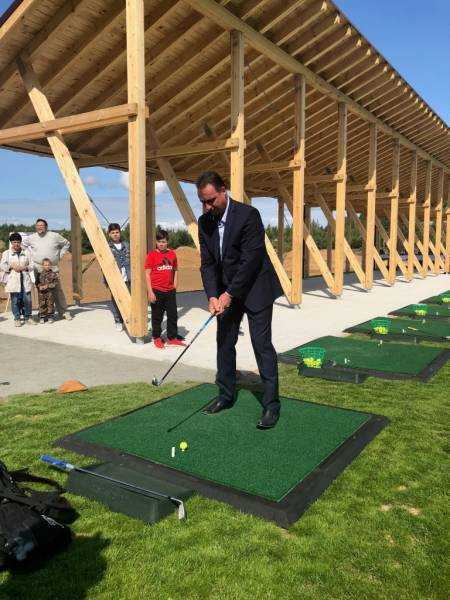
The golf course that opened at the Yaroslavskoye Vzmorye Driving Range is a 4.5-hectare long-distance practice course, one of the largest in Russia. As part of the second phase, construction of a 9-hole short-game course will be completed in the fall of 2019, along with the groundbreaking of the clubhouse. The final stage will be the construction of an 18-hole course, which will become a magnet for both golf enthusiasts in the Yaroslavl region and tourists interested in the sport. Geokam Golf is the general developer of the project. The company also built the Zavidovo resort golf course, which became Russia's first prestigious PGA golf course, and has also contributed to the construction of such popular courses as Forest Hills, Raevo, Gorki, and Mill Creek.
"I'm celebrating today with all the guests and participants of the 2019 Fisherman's Day Festival. Today marks the opening of the first stage of the golf course!" said Tatyana Smirnova, head of the Rybinsk Municipal District of the Yaroslavl Region, at the opening of the Driving Range golf course—the first stage of the Yaroslavskoye Vzmorye resort's golf complex. "I want to thank the management of Yaroslavskoye Vzmorye and the entire team that worked on this project. This is the first venue in the region where golf enthusiasts can practice, and future champions of the Yaroslavl Region will start here."
Vice President of the Russian Golf Association, Alexander Kochetkov, congratulated the participants on the opening of the golf course and noted that it is perhaps the most peaceful sport: "Golf has no age or physical limitations. And it's the only game in the world where there are no opponents. In golf, there are two opponents—you and the golf course. It's an exciting and fair game. I'm glad that the people of Yaroslavl will now be able to play golf."
Alexander Sedukhin, head of the Yaroslavl Region Golf Federation, shared his memories of dreaming about a golf club in the Yaroslavl Region 12 years ago, and now it's happening: "The work involved in creating this resort complex and this golf course defies imagination. It's always easy to implement projects when resources are unlimited. This is a different story: people want to create not just a commercially viable project, but also a comfortable environment for families with children and friends, a place for socializing, relaxing, and playing sports. We wish them success, and we hope that the course will be completed within the next five years, and that Yaroslavl boys will also be part of the Russian national golf team. The boys who live in the surrounding villages, in Rybinsk and Yaroslavl—they need this beautiful story, and it's also important for us to have such iconic facilities as Yaroslavskoye Vzmorye and the golf club in the region."
"We've opened the first phase of a large golf course, which is half of our Golf Academy. The second phase will launch next year, and the main 18-hole course will be built in parallel," said Alexander Puchkov, the project's general developer. "Our idea is for the course to grow alongside the players. We understand that professionals will come here only for the exotic experience, but we're focused on children, beginner golfers, residents of our village, and our guests. Here you can hone your skills. And then it's on to the big golf circuit."
Alexander Kochetkov struck the symbolic first shot at the golf course's opening. Then, Russia's top golfers, Alexey Popov and Georgy Ivashin, members of the Russian national golf team, held a golf master class for everyone.
"I'm incredibly happy! This is one of the first moments when a facility created by people we've enticed has opened on the Yaroslavskoye Vzmorye property. This isn't our investment, it's the investment of those who recognized our territory as worthy and suitable for implementing their ideas," shared Dmitry Rodionov, General Director of the Yaroslavskoye Vzmorye resort. "And I hope that this first large-scale result will kickstart the development of the Yaroslavskoye Vzmorye collective project, and that other high-quality, sensible investors with aligned goals will join us."
A careful attitude towards history is a tradition of the Yaroslavl Seaside
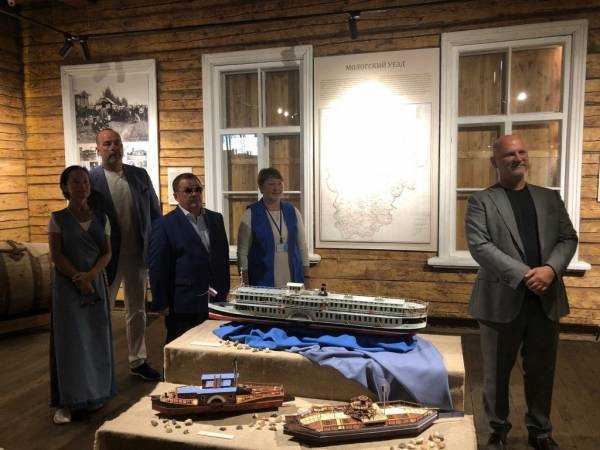
As part of Fisherman's Day, another attraction at the Yaroslavskoye Vzmorye resort was opened: the Rybinsk Sea Museum. Its creation began in 2017 at the initiative of the Yaroslavskoye Vzmorye management and is dedicated to the history of one of the largest reservoirs. Representatives of the regional and Rybinsk district administrations, as well as other official guests, also attended the opening. According to Anatoly Klopov, director of the Rybinsk Sea Museum, the exhibition is dedicated to the reservoir's origins and its flooding, and tells the story of settlements that were lost, including the city of Mologa and approximately 700 other towns and villages. Incidentally, these areas were once home to seas millions of years ago, so in a sense, the Rybinsk Sea is an artificial recreation of the seas that existed here in ancient times. "In the 19th and 20th centuries, Mologa reached the peak of its socioeconomic and cultural development. As a result of the construction of the Rybinsk Hydroelectric Power Plant, the labor of hundreds of thousands of people, including their land, was lost," Anatoly Klopov explained during a short museum tour and presentation. "Our exhibition features various household items from both peasant life and the Musin-Pushkin noble estates. The history of the village of Koprino is also explored in our museum. Koprino, too, was flooded, yet in the 19th and 20th centuries, it was one of the first centers of butter and cheese making in Russia." The museum also focuses on the history of the Rybinsk Sea, explaining the origins of this one of the world's largest reservoirs.
"The construction of such a huge natural site could not have been accomplished without expense and sacrifice. But they were not in vain, and the reservoir is an important site from both an ecological and social perspective," commented Sergey Cherkalin, director of the Rybinsk Museum, who also helped organize the Rybinsk Sea Museum exhibition.
Even the museum building is an unusual historical site! It's a former maternity hospital, moved here from the neighboring village of Pogorelka. The house, which had been saved from flooding in the Mologa region in the 1930s, was brought there in the 1930s. The management of the Yaroslavskoye Vzmorye Resort discovered this artifact and decided to preserve it. The building was moved to the resort grounds, with no idea yet what would become of it. But it quickly became clear that it was the right place for the Rybinsk Sea Museum.
"The Yaroslavl Seaside project is distinguished by this sensitive and thoughtful approach—the resort's management identifies ancient sites in neighboring towns and preserves them. The result is such unique projects," noted Tatyana Smirnova, head of the Rybinsk District.
Dmitry Rodionov appealed to those present to participate in the development of the museum's exhibition: "We see the results of the scientific work on the exhibition, but a museum is a living organism. I think the museum's management will welcome various ideas, suggestions, and exhibits. We hope the museum will become a hub for communication—a vibrant, businesslike, and joyful place. We will not only remember the past but also think about the future. This is another point of attraction at our resort."
As Dmitry Rodionov notes, discussions of the Rybinsk Sea often become skewed: sometimes they focus solely on the Mologa tragedy, sometimes on the environmental aspect. But the Rybinsk Reservoir is a major project, and it must be considered as a whole. "Yes, this is a massive human impact on nature, and such impacts are never simple," says Dmitry Rodionov. "But while we don't forget the downsides, we must also consider the positives. These include providing Moscow with electricity during the war and maintaining shipping. The idea of such a museum was in the air because I was troubled by the one-sided view of this history," says the director of Yaroslavskoye Vzmorye. "And we're not creating this museum as a collection of random exhibits. It's the realization of a concept developed by museum specialists, with a view to further development."
Enough strength and imagination!
The Yaroslavskoye Vzmorye resort is constantly developing, constantly generating new ideas and striving to implement them. For example, two weeks ago, a football stadium opened on the grounds of the Koprino Bay Park Hotel. It already hosted the first beach soccer competition, with the Yaroslavskoye Vzmorye team winning. "The idea to build a stadium came to us by chance: I suddenly discovered that the Rybinsk Municipal District team had won silver in the Russian Cup. It would be wrong not to build a stadium for them! The next major development stage for us will be the runway," says Dmitry Rodionov. "And over the next three years, we'll double the capacity of the Koprino Bay Park Hotel, making it well-suited for business and corporate events. We'll also be implementing sports and wellness programs. After that, the hotel portion of the Koprino Bay Park Hotel will become a fully functional complex, where you can stay for three days or a month, and leave completely healthy."
The Yaroslavl Seaside project is gaining momentum and popularity. "We always live in a state of anxiety—whether it worked or not, where we'll go next, whether we have the strength and imagination for the next step," says Dmitry Rodionov. "Today, that anxiety has subsided somewhat. And I believe that in 20 years, there will be a garden city here."
Source: trn-news.ru