





This story features the city's most abundant views, from the late Soviet era. It is within this backdrop that ordinary, everyday life in Yoshkar-Ola unfolds.
We'll begin our walk at Victory Park. This park is located somewhat away from the city center and is already home to residential high-rises and private housing.
The square itself was relatively recently brought into decent condition.

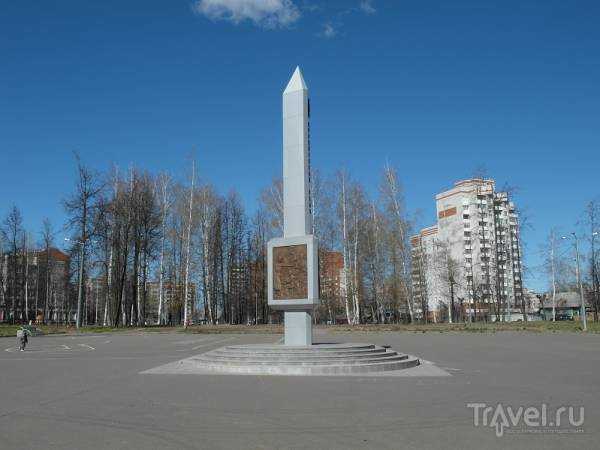
The park is located on a former cemetery, where soldiers who died in the hospital located there were buried during the war. Today, in addition to the monument to home front workers shown in the previous photo, several guns and a tank are located here.
A Yoshkar-Ola resident dozes on a bench in Victory Park. Apparently, he overdid it with the May Day celebrations the day before.
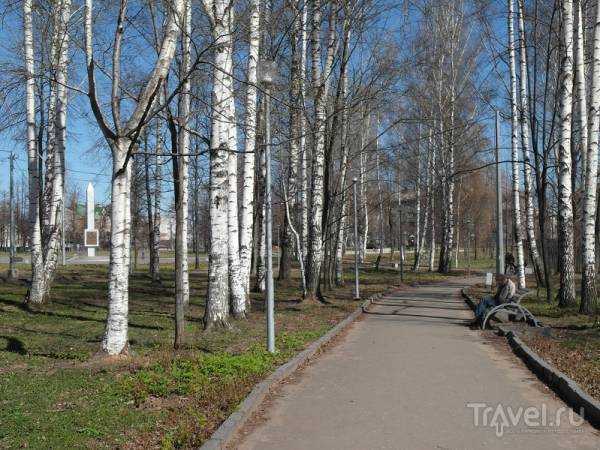
In early May, Yoshkar-Ola surprised me with an eerie amount of dust and sand everywhere. Even though it was quite warm outside, sleeping with the window open was impossible—the windowsill would be covered in sand the next morning. After walking around the city, the sand crunched in my teeth. And the worst part was the sand in my eyes with the slightest breeze. It's difficult to say what the cause is. Perhaps it's because the city is surrounded by pine forests, or perhaps because the snow melted late that year. Locals claimed it wasn't usually like this in their area, and this phenomenon was unusual for Yoshkar-Ola. However, recent photos from another city in the republic clearly showed the same layer of sand as here:
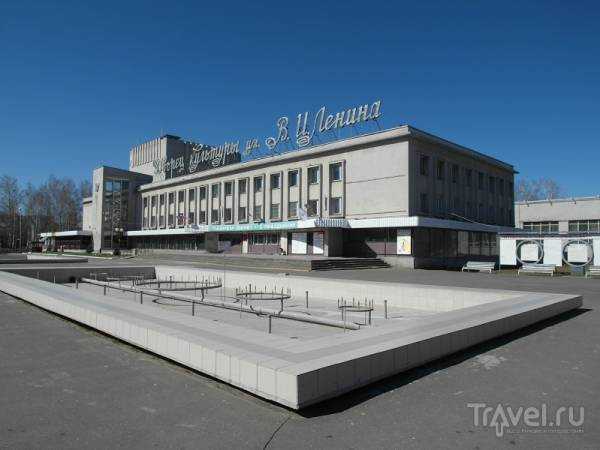
Behind the park is the large Victory Square, home to the Lenin Palace of Culture, built in 1977 as the Mari Machine-Building Plant's Palace of Culture:
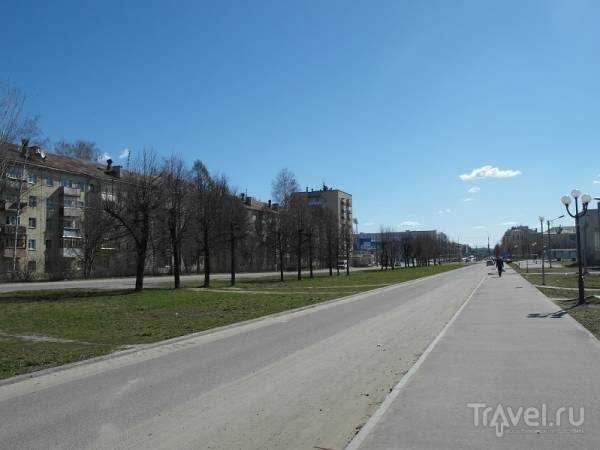
After Victory Square, the long Victory Boulevard begins, which will eventually lead us to the central Park of Culture and Recreation and the new Yoshkar-Ola district shown in the first part.
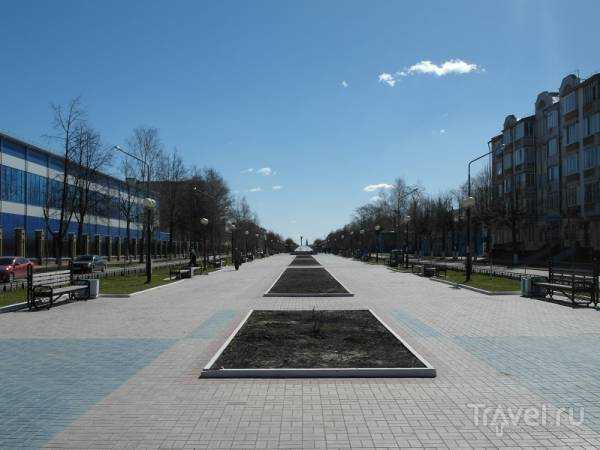
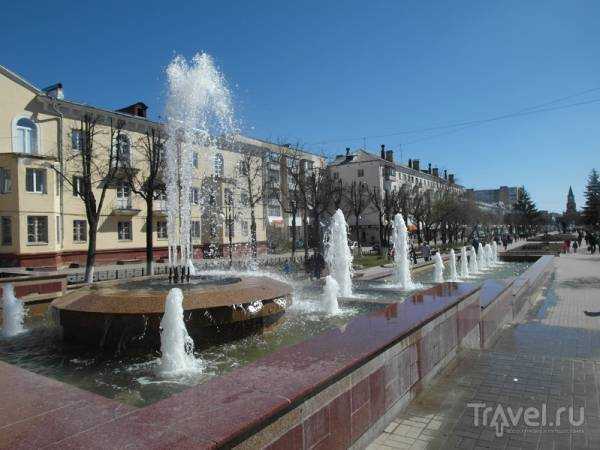
Victory Boulevard has been renovated along its entire length and brought into line with modern promenade and tourist requirements. Closer to the newly built center, the space becomes increasingly crowded: numerous sculptures, fountains, and vendors selling all sorts of Chinese toys and balloons.
At the far end of the boulevard from which we are walking, there is nothing left except paving slabs, benches, and a couple of fountains:
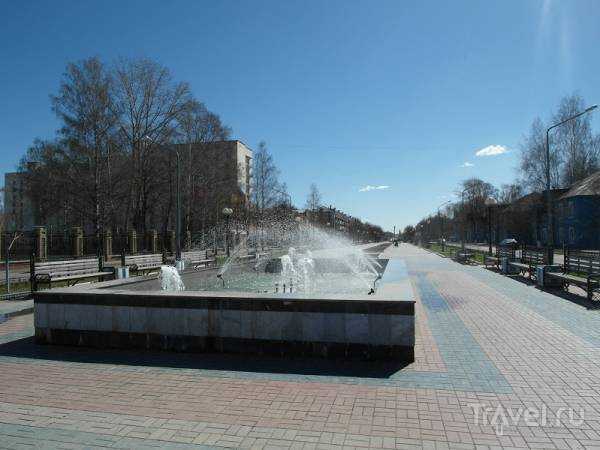
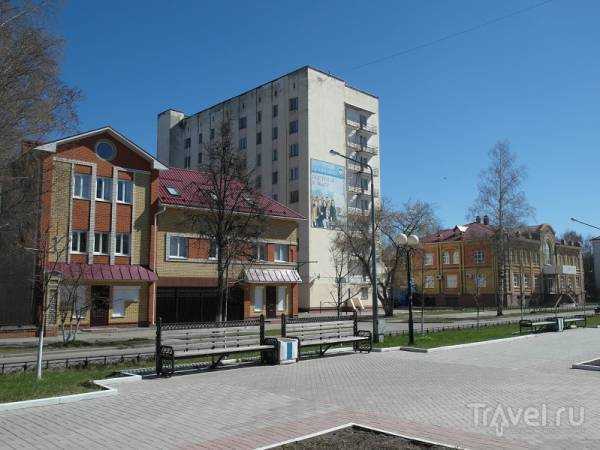
The buildings along the boulevard, by the way, represent the stages of the city's development. In the far part are obvious barracks (I'll show them in the next part, in keeping with the chosen concept). In the middle are Soviet high-rises. Towards the end, buildings from the Russian period begin to appear.
Somewhere in the middle of the boulevard there are several stalls selling souvenirs, including those with Mari themes.
The Mari emerged as one of the most recognizable and distinctive minority peoples of Russia. It's often much easier to confuse Tatars with Russians than Mari. Despite the city's significant ethnic Russian population, the republic's "nationality" is very clearly felt here, unlike, for example, Mordovia or Karelia.
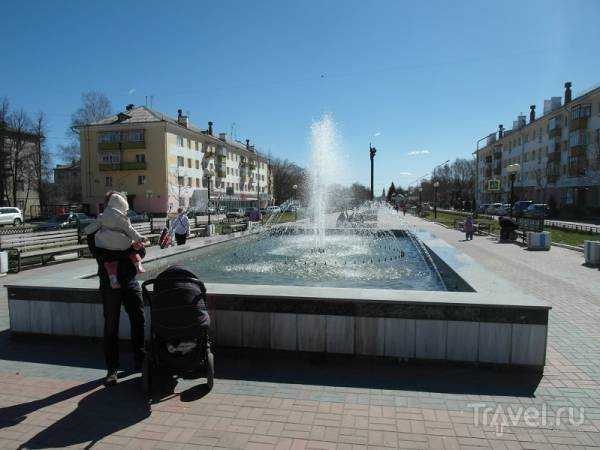
Somewhere halfway between Victory Park and the new center, the boulevard is interrupted by the Yoshkar-Ola Central Park of Culture and Leisure. After that, Victory Boulevard becomes Chavaina Boulevard. The park is clean and well-maintained, cozy, cheerful, and crowded. It was in the park, not the new center, that local residents spent their May holidays.
We are greeted by a monument to military glory from 1973. On the monument is a figure of a victorious soldier:
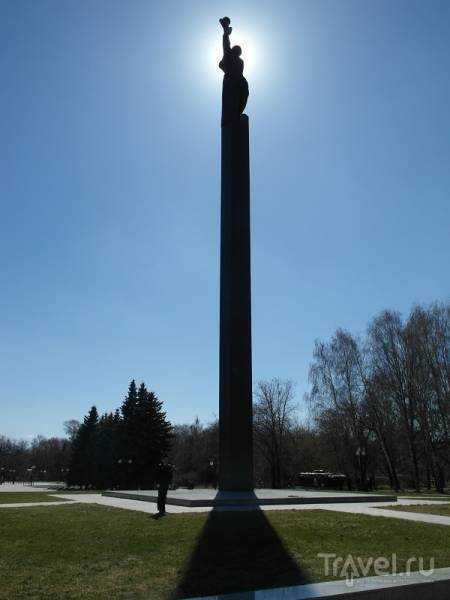
Before the war, there was a cemetery and forestry here. An arboretum was later established in their place. In June 1941, the city was preparing for the 20th anniversary celebrations of the MASSR. The opening of the Park of Culture and Recreation was scheduled for June 22. But the Great Patriotic War began on June 22, and the park was not opened until 1948.
Behind the monument is an eternal flame, at which an honor guard is posted:
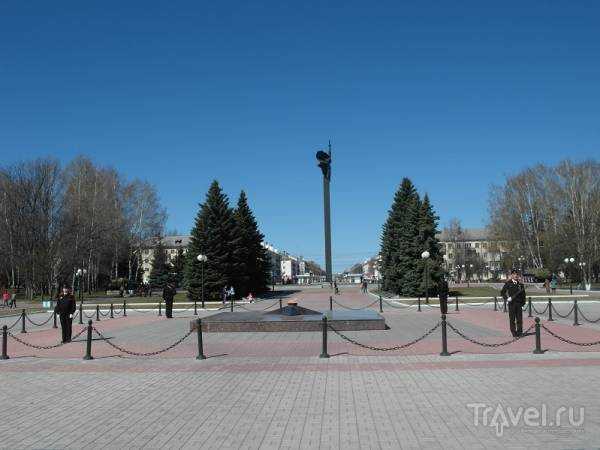
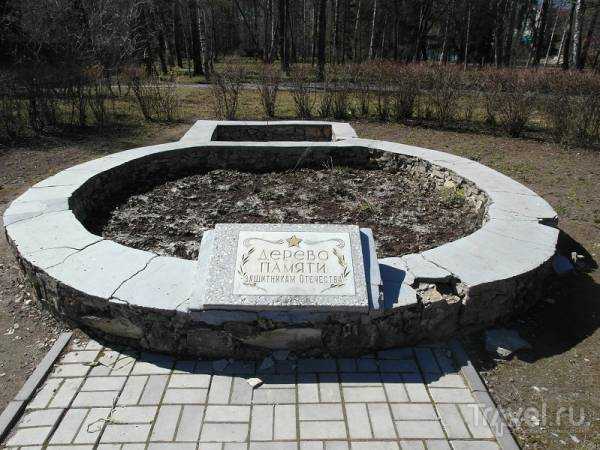
In addition to the eternal flame and the monument to military glory, the Central Park of Culture and Leisure (also known as the 30th Anniversary of the Komsomol Park) also houses monuments to the Afghan and Chechen wars, a monument to the Chernobyl victims, a monument to those who died in local wars, and a tree of remembrance for the defenders of the fatherland.
The last one was planted in 1995 for the 50th anniversary of Victory Day, but it died because its trunk split, and during a frost, ice formed between the trunks, breaking the tree apart. A new one was planted in its place, but we didn't see it either:
The Mari (also known as Cheremis) are a Finno-Ugric people, remarkably distinctive and unlike any other. Suffice it to say that after the capture of Kazan and the annexation of the Kazan Khanate to the Russian state, the Mari, unlike the Tatars, who merely aided them, resisted for another 30 years. This resistance resulted in fairly bloody wars, known as the Cheremis Wars. It was precisely to fortify the territory during these wars that Tsarevokokshaysk, which became today's Yoshkar-Ola, was founded. Ultimately, the uprising was quelled not so much by military force as by generous gifts and promises, although much blood was shed.
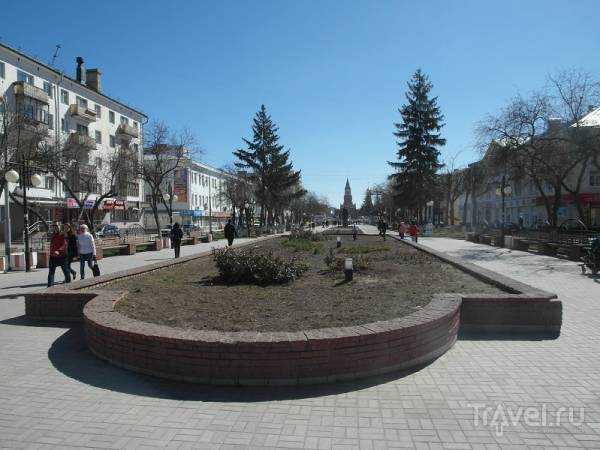
Beyond the Central Park of Culture and Leisure, the boulevard, which has changed its name from Pobeda to Chavaina, becomes more crowded, more inhabited, and more vibrant:
Another distinctive feature of the Mari is their religion. It is believed that some of them have officially converted to Orthodoxy. Nevertheless, the traditional Mari religion still has many adherents. It is largely polytheistic, based on Mari mythology, but modified by the influence of polytheism. The Mari religion is based on a belief in the forces of nature, which should be revered and respected. Prayers are held in special places—sacred groves, closed to outsiders. This is not some ostentatious exotica. Many of these still exist in today's Mari El, and they are used for their intended purpose. It is forbidden to cut down trees, smoke, swear, or lie in them.
This was precisely the sight that made my companions rub their eyes in bewilderment: the Spasskaya Tower of the Moscow Kremlin loomed on the horizon:
Even if some Mari are formally Orthodox, their national faith has become deeply ingrained in their way of life. Fundamentally, the Mari national religion has all the hallmarks of paganism, including animal sacrifices, and many call it paganism, though the Mari themselves dislike this.
You'll agree, nothing similar exists among other Finno-Ugric or neighboring Turkic peoples. In 2011, the Mari faith became the central theme of the travel magazine "GEO." The cover title was "The Last Pagans of Europe."
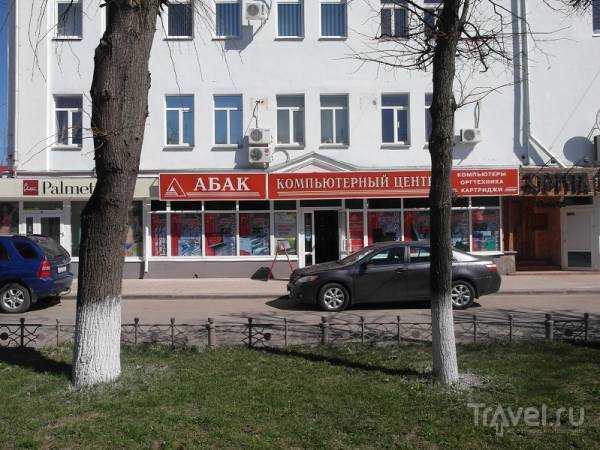
Inventive name for a computer store:
The Mari, like the Mordvins, are divided into two groups: the Mountain and the Meadow. The Mountain Mari live primarily on the right bank of the Volga, with the city of Kozmodemyansk as its capital. The Meadow Mari constitute the majority and live in the Volga-Vyatka interfluve.
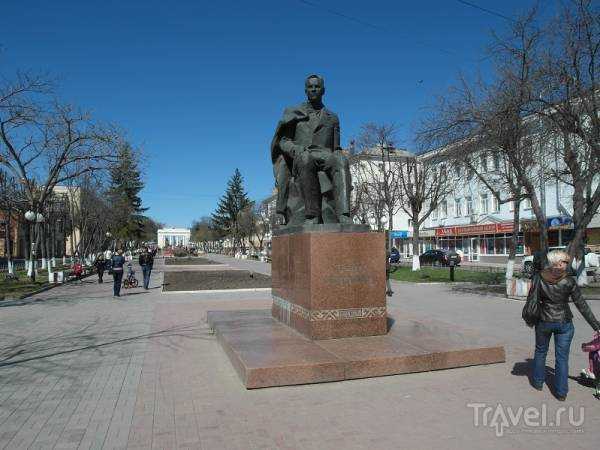
A monument to one of the most famous Mari people—the founder of Mari literature, poet and playwright Sergei Chavain—on the boulevard named after him:
The Mari people's unique relationship with nature stems from their religion. In the Mari hinterland, you marvel at how such a poor and sparsely populated republic manages to so carefully nurture nature. The roads are litter-free, the forests and rivers are clean, and white lichens are everywhere, testament to the exceptional purity of the Mari air. Nature is the second reason to visit Mari El.
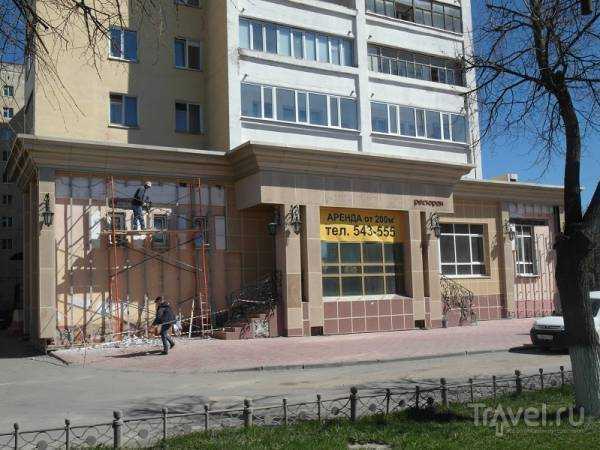
Shops, cafes, restaurants, and entertainment venues are appearing along the boulevard, in close proximity to the new center. Some are still under construction:
Mari El has at least three natural landmarks worth visiting: the Green Spring on Klenovaya Mountain, Lake Morskoy Glaz, and the lakes of the Mari Chodra Nature Reserve. More about them in Part Four.
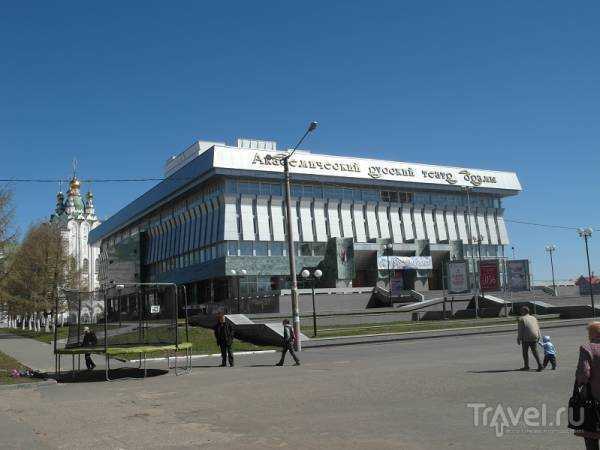
In the "new" Yoshkar-Ola, opposite the Bruges Embankment and the Spasskaya Tower, stands the renovated building of the G. Konstantinov Academic Russian Drama Theater. The theater has been operating in Yoshkar-Ola since 1919. It is named after its chief director, who led it for 30 years. In 1993, the theater initiated the creation of the International Association of Russian Theaters, headquartered in Yoshkar-Ola. Since then, it has hosted four Russian theater festivals:
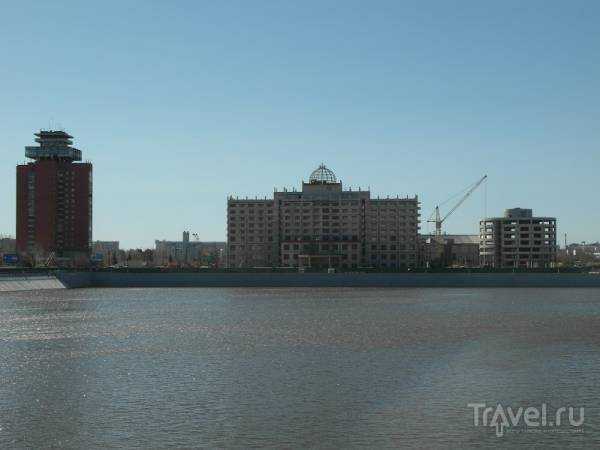
At the southern end of the Bruges embankment, beyond Kokshaga, an outpatient clinic complex is being built, which, by all appearances, will become yet another building in the "new" Yoshkar-Ola series. To its left is perhaps the most famous and most interesting building of the post-Stalin era under consideration—the so-called "Odekolon." It is also, incidentally, the tallest building in the city. The name was apparently given due to its resemblance to a familiar bottle of Soviet cologne from childhood. The building itself is residential, built in the 1980s and completed in 1992. The "roof" was supposed to house the "Seventh Heaven" restaurant, apparently modeled on the Ostankino TV Tower. However, upon completion of the building, a group of individuals broke into the premises and vandalized the cafe. There was insufficient money to restore it, and the space was supposedly converted into offices. This pogrom likely served precisely this purpose.
We entered Mari El from the Nizhny Novgorod region, across the new bridge over the Vetluga River. Thus, before reaching Yoshkar-Ola, we drove almost 300 kilometers across the republic. Besides the good roads and stunning scenery, we were surprised by the complete absence of cars. About 50 kilometers before the turnoff for Kozmodemyansk, we saw only two or three cars.
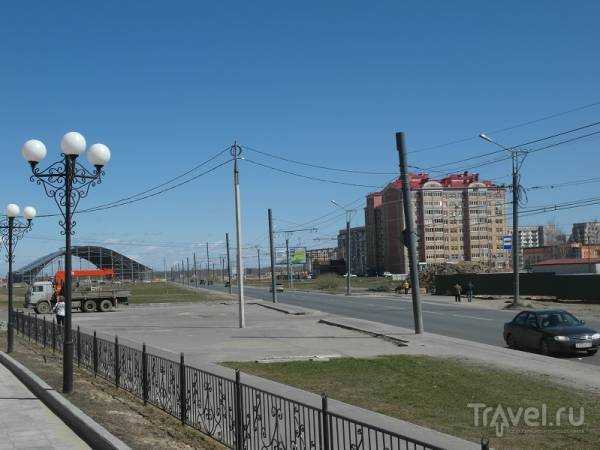
In the first part, I showed the houses of the Bruges embankment from the rear, but not what lies beyond them. I'll correct that. In this shot, the line of houses along the embankment is behind me. The fence and streetlights are part of this ensemble. The undulating roof on the left side of the frame is the under-construction indoor athletics arena with a football field. Opening is scheduled for December 2015.
They say banditry is rampant in the Mari outback, and it's best not to drive around the republic at night. I don't know how true that is. Luckily, we escaped, although we drove the last 200 kilometers to Yoshkar-Ola in the dark.
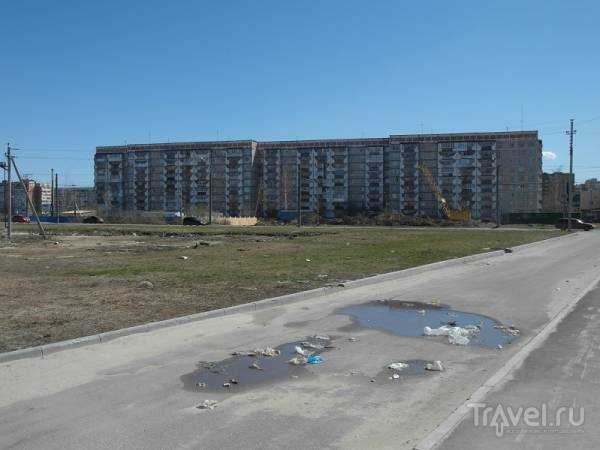
Same place. Behind me is the Bruges embankment. It's a shot just like that of a famous top blogger who takes similar photos all over the country:
Source: travel.ru