





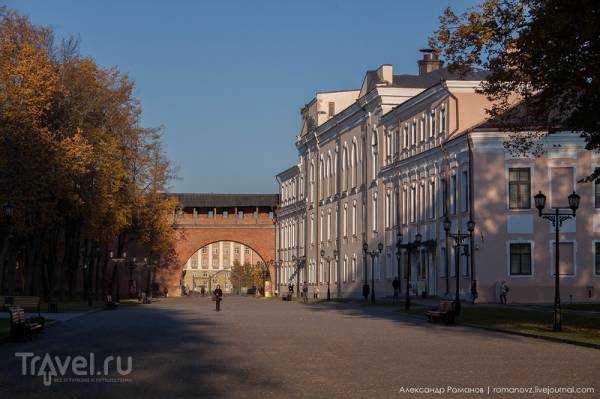

The Novgorod Detinets is one of the most interesting architectural ensembles in Russia. Although it has lost many of its ancient buildings, it no longer gives the impression of being an old city, many unique features have nevertheless been preserved.
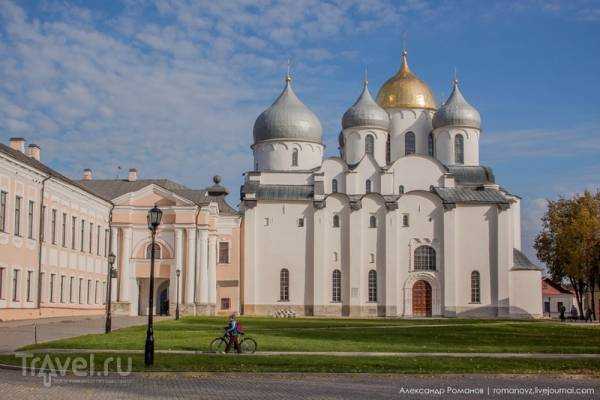
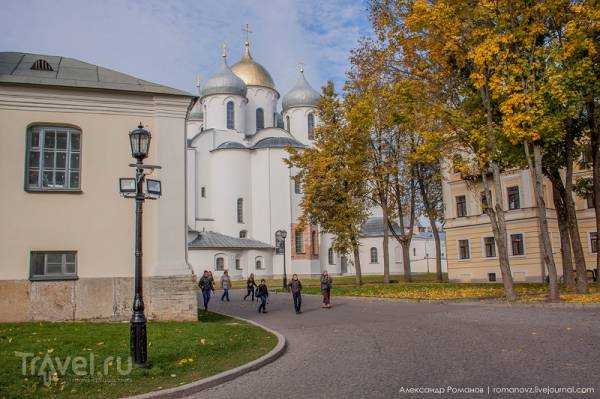
The oldest building in the citadel is Saint Sophia Cathedral. It is the oldest Old Russian cathedral in Russia, surpassed only by those in Kyiv and Chernigov. It is one of three Saint Sophia Cathedrals built in Rus'.
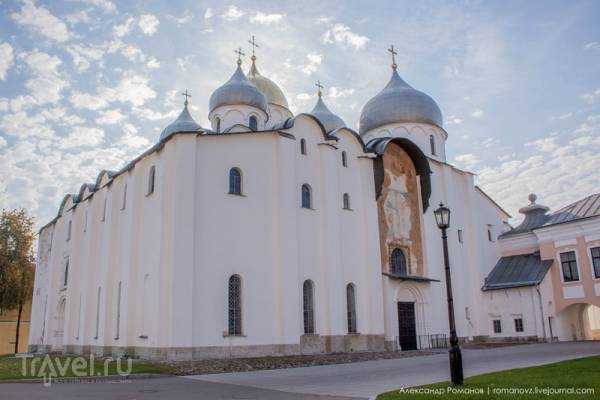
The enormous cathedral still retains Byzantine features. Of the three St. Sophia Cathedrals, only this one has retained its appearance almost unchanged. The cathedral in Polotsk was destroyed, but the one in Kyiv was rebuilt.
At the end of the 10th century, a wooden church dedicated to Sophia, the Wisdom of God, was built. It likely fell into disrepair over time, and in 1045, a new cathedral, this time of stone, was built on the same site. The cathedral took five years to build, and Greek artists were commissioned to paint the walls.
There's a legend about the image of the Savior in the dome: icon painters painted the Savior, as is customary, with a blessing hand, but the next day, the hand was clenched. They corrected the drawing, but the next day, the same thing happened again. This continued for three days, and on the fourth, they heard a voice. The voice said that in his clenched hand, he held the city, and if he unclenched it, it would be the end of the city. Unfortunately, during the war, a shell hit the dome, and this fresco no longer exists.
The cathedral inspired the city's residents so much that it immediately became incredibly iconic. They marched into battle bearing its name, the veche (public assembly) gathered in the square in front of the cathedral at the most important times (especially when the bishop was elected), and the city treasury was kept in the cathedral. Money from the treasury was drawn only on the most important occasions. Bishops, and sometimes princes and important citizens, were buried in St. Sophia Cathedral. This honor could be earned for special service to the city or for laying down one's life for the Novgorod Republic.
Of particular interest are the so-called Magdeburg Gates. There are two versions of their origin: one says that the gates, built in Magdeburg in 1153, were intended for the Polish city of Płock; the other says that they were taken away after the sack of Sigtuna, the then-largest Swedish city, by the Korelians and Novgorodians. The latter version is supported by Swedish chronicles, but the Novgorod chronicles contain no such information.
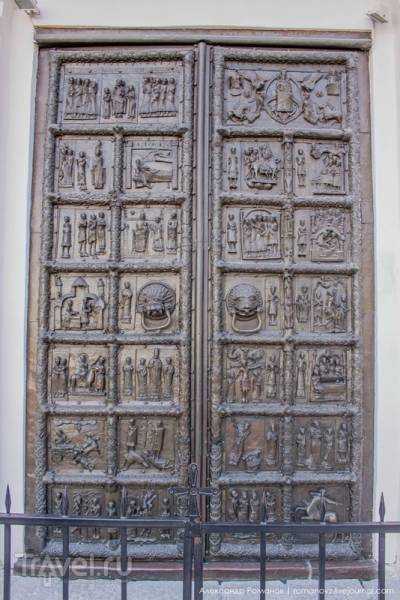
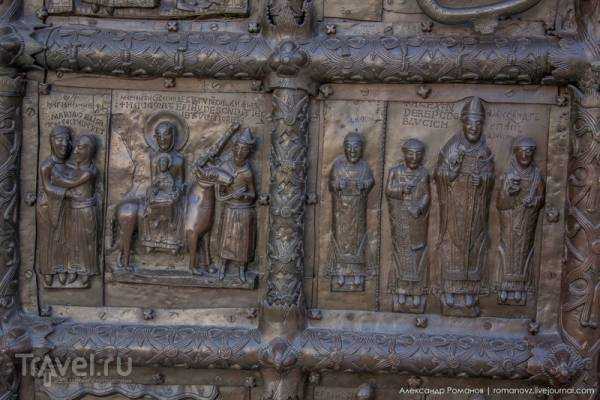
In any case, the gate is an artifact of Western Europe, and this can be confirmed only by looking at the texts – they are in Latin.
You can see particles of text in Church Slavonic, they are probably later.
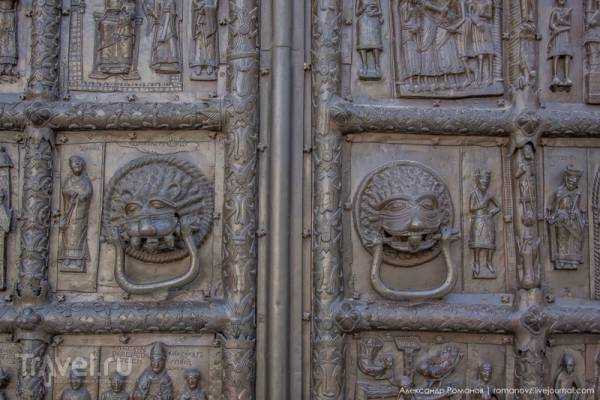
The handles are made in the form of lions' heads, with sinners in their mouths.
During the Swedish occupation of Novgorod in the 17th century, the Swedish king, believing the gates to be from Sigtuna, attempted to reclaim them. But Jacob de la Gardie (a Swedish military commander) refused to allow this to happen, lest a rebellion break out. Interestingly, the Swedes were initially even allies, fighting alongside the Polish-Lithuanian army on the side of Moscow.
Unfortunately, I wasn't able to take any photos inside the cathedral, as a local woman told me "the bishop doesn't bless." I didn't want to make a fuss, so I just took a look.
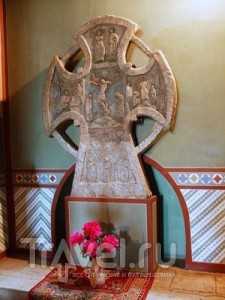
The cathedral's interior, despite the almost complete loss of its ancient frescoes, is quite fascinating. The chandelier hanging in the cathedral was made in Nuremberg and donated to the church by Boris Godunov. The central iconostasis features icons dating from the 12th to 16th centuries. Also inside the cathedral is the 14th-century Alexeisky Cross with the inscription, "In the year 68 (…) this cross was painted in Novgorod by the blessing and command of the God-loving, Most Reverend Archbishop Oleksii and placed for veneration by the faithful. May God grant many years, health, and salvation to His Grace Archbishop Oleksii, his children, and the entire world."
Alexeevsky Cross
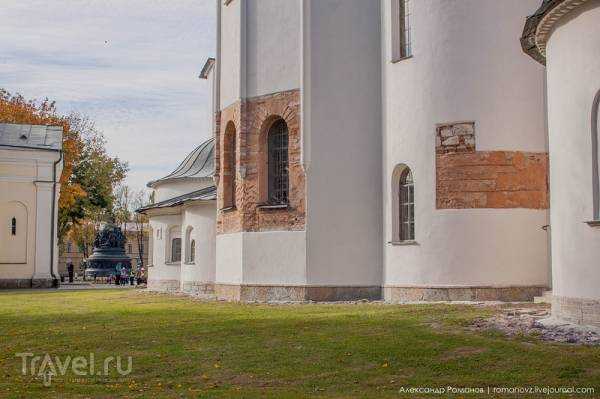
On the unplastered part of the cathedral's apse, a Byzantine plinth is visible.
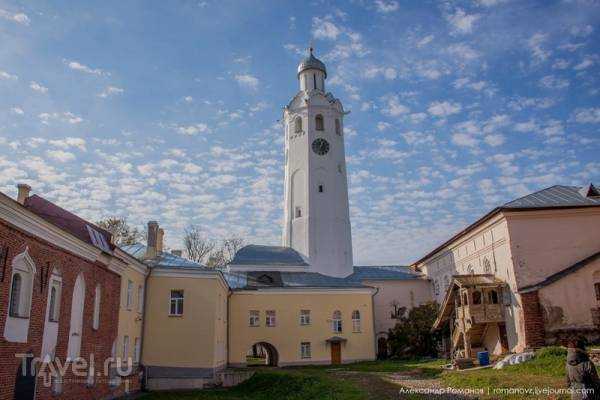
Opposite the cathedral is another dominant feature of the citadel – the clock tower.
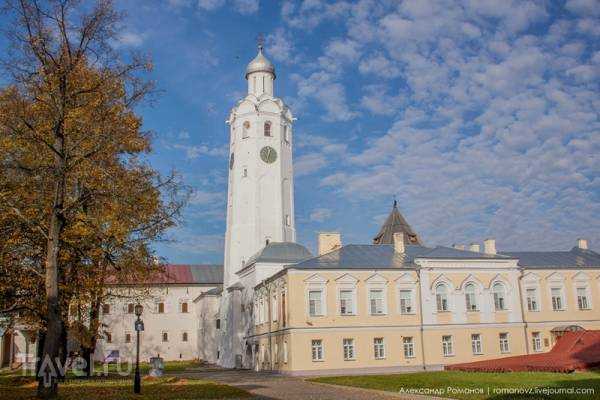
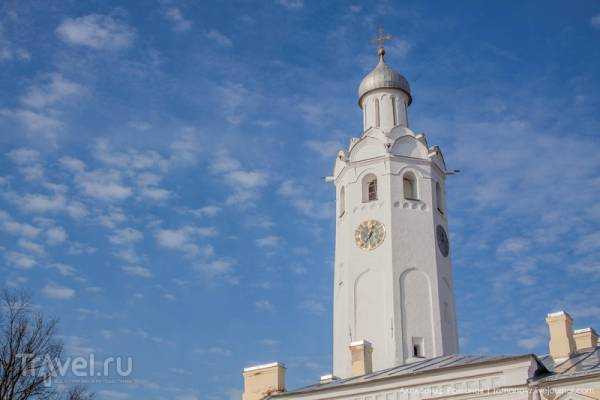
Built in the 17th century by order of Novgorod Metropolitan Joachim, it features four clock faces linked by a single mechanism.
On the right is the building of the Judicial and Spiritual Order, on the left is the Bishop's Chamber.
The Bishop's Chamber is a unique building in Russia. It is the oldest surviving Russian civil structure, built in the Hanseatic Gothic style.
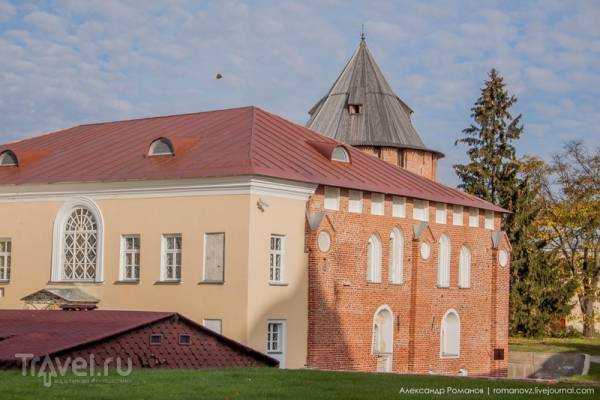
The chamber was built in 1443 with the help of German architects. Similar buildings were typical of Livonia or Prussia, but you wouldn't expect to see something like this in an old Russian city.
The bishop wielded great influence in Novgorod. After declaring independence from the Kievan Church, the people began to elect their own clergy. The bishop, or archbishop, was elected at a veche (assembly). All suburbs and volosts (districts) were subordinate to him. All matters—family, property, and trade—were subject to his judgment. All charitable institutions and hospices were under his jurisdiction. The bishop was the city's leading dignitary, commanding boyars and regiments of soldiers bearing his own banner. He also participated in dealings with foreign powers. He had an entire court in the Novgorod Detinets, a kind of internal fortress.
A diamond-shaped ornament, a characteristic feature of Hanseatic architecture. A medieval toilet is also visible here.
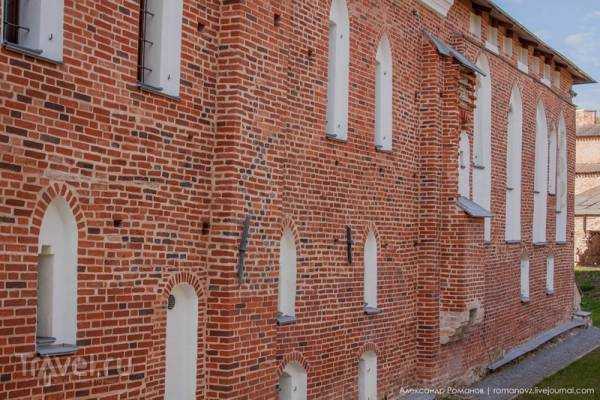
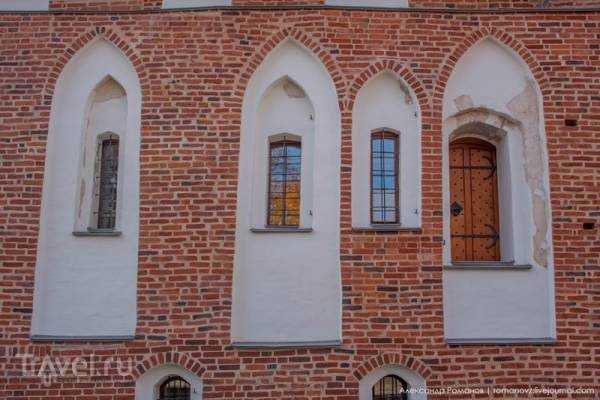
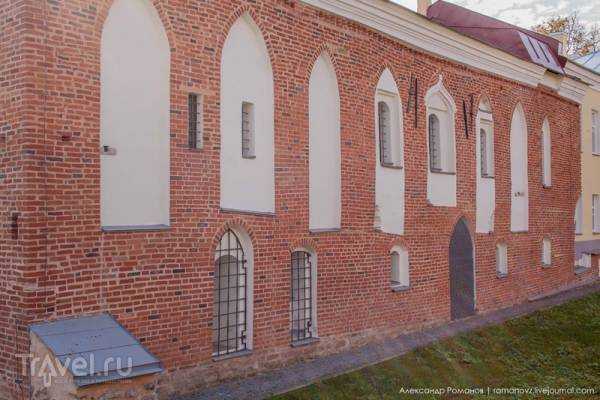
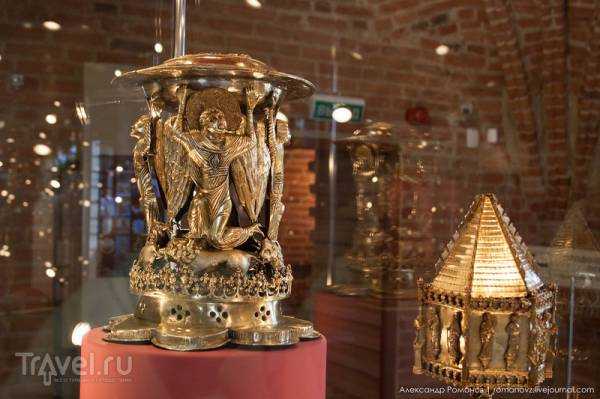
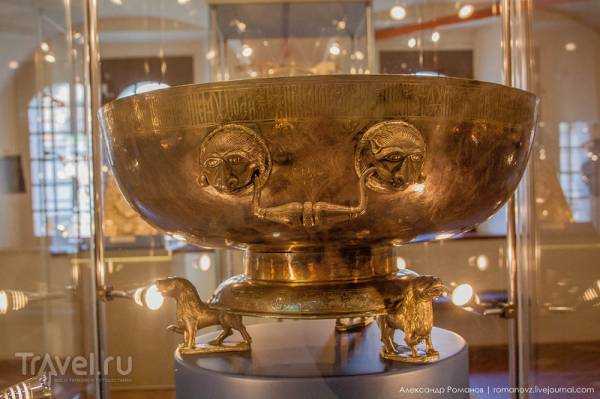
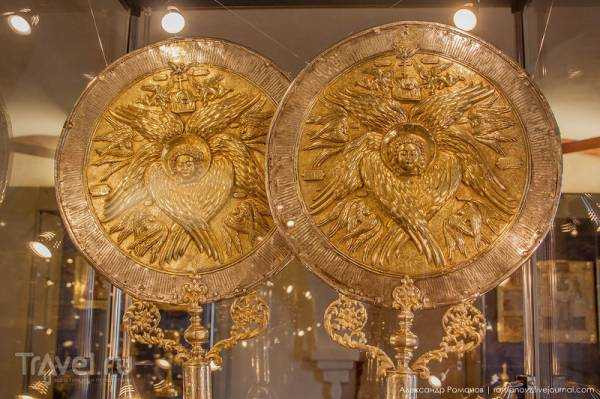
The chamber now houses a museum of ancient Russian and Russian jewelry art.
One of the exhibits is a model reconstruction of the chamber, where the lost crenellated façade is clearly visible.
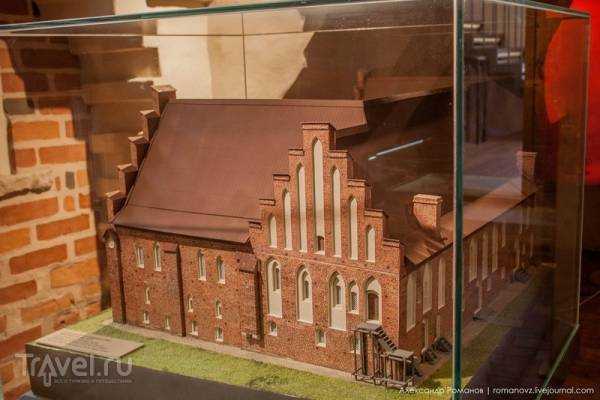
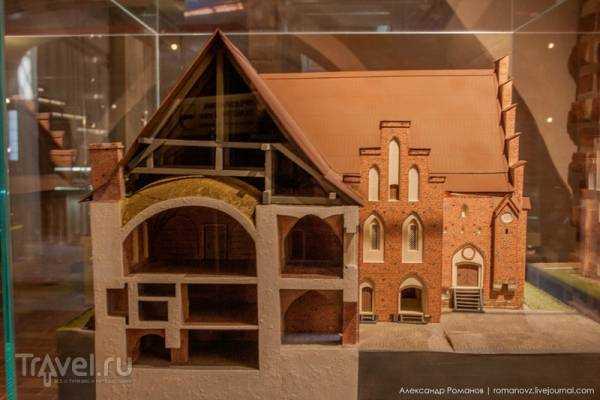
Let's go inside.
There are numerous traces of reconstructions and restorations.
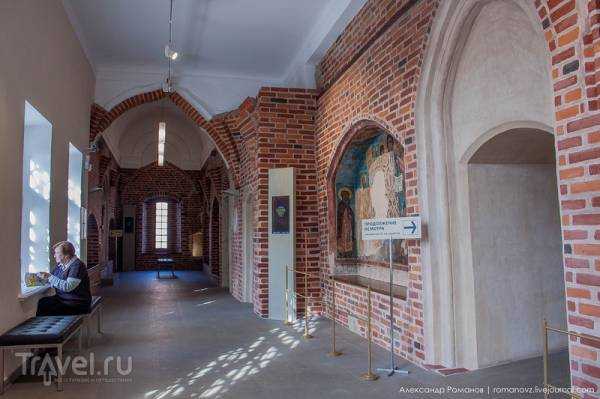
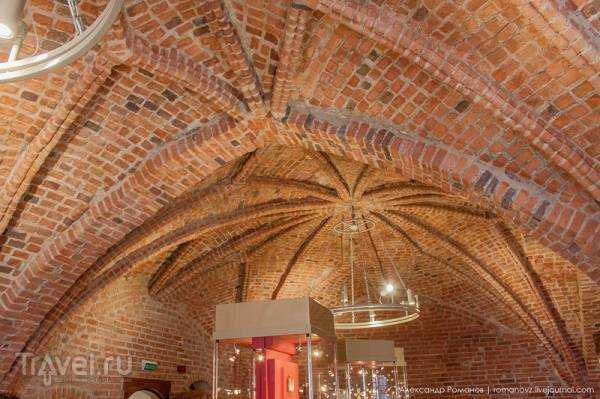
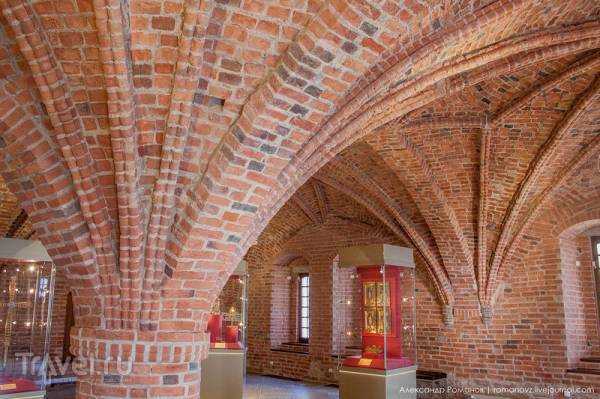
The most interesting place here is the main hall.
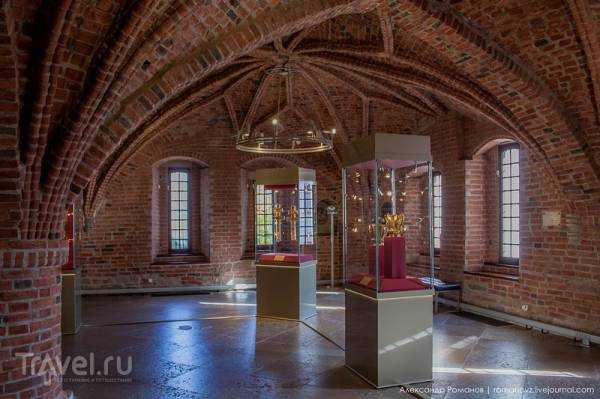
Real Gothic vaults.
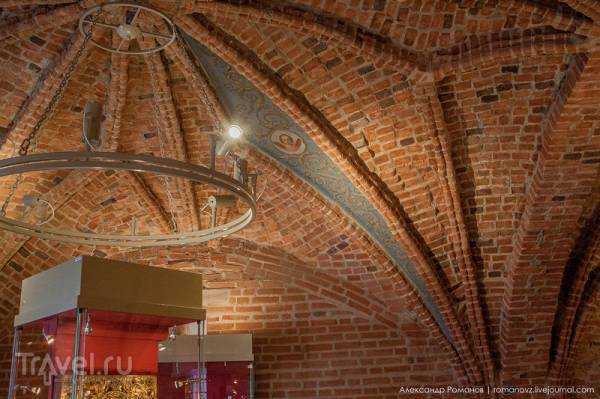
A piece of painting.
I'll post some museum church utensils.
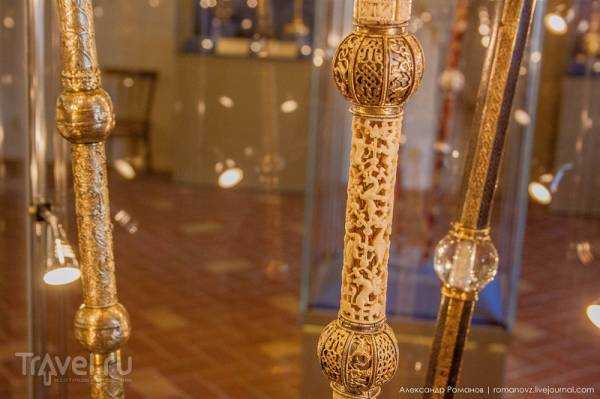
Wonderful carving on the staffs.
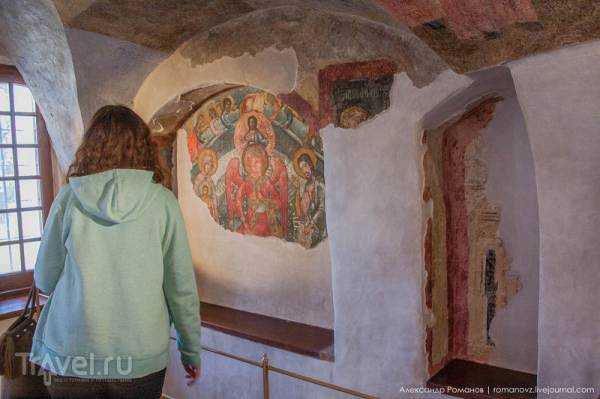
Few frescoes have survived.
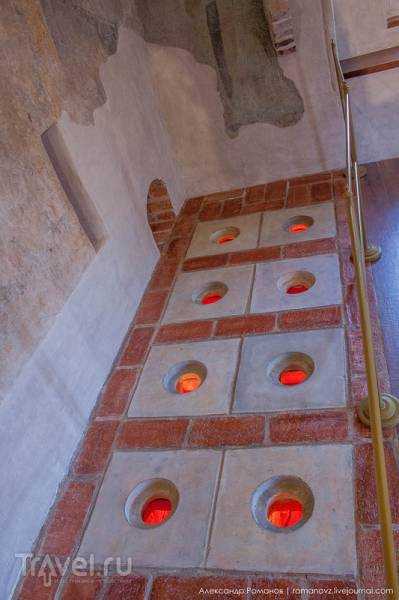
The building was very modern for its time; it even had a heating system.
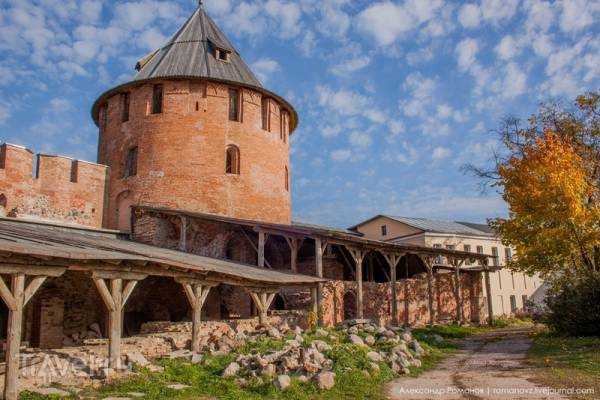
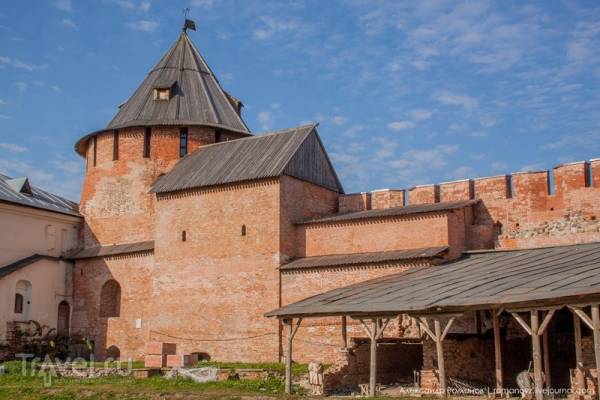
Next to the chamber, between the Metropolitan and Fyodorovskaya towers, are the ruins of the metropolitan courtyard.
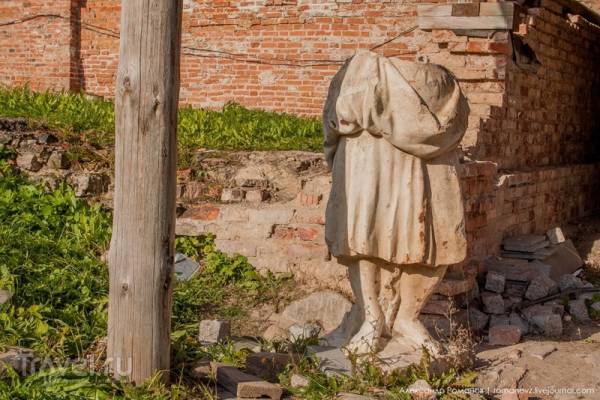
A fragment of some kind of statue.
A view from Saint Sophia Cathedral. A strange roof in the ground is visible here. It conceals the remains of the chamber of Vasily Kalika (a 14th-century archbishop).
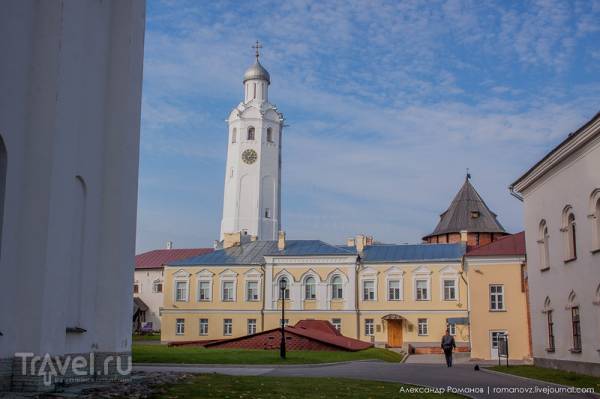
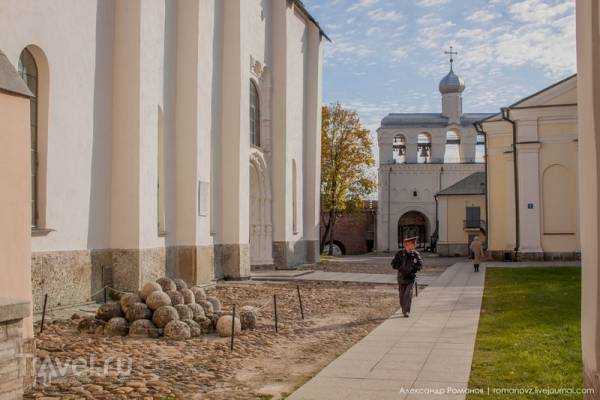
The bell tower of St. Sophia Cathedral is an architectural monument of the 15th-18th centuries in the Novgorod Detinets.
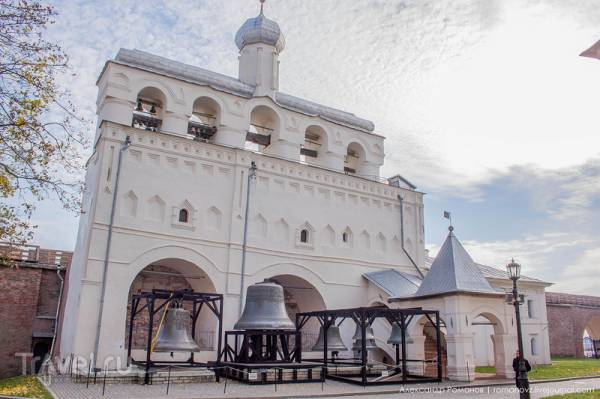
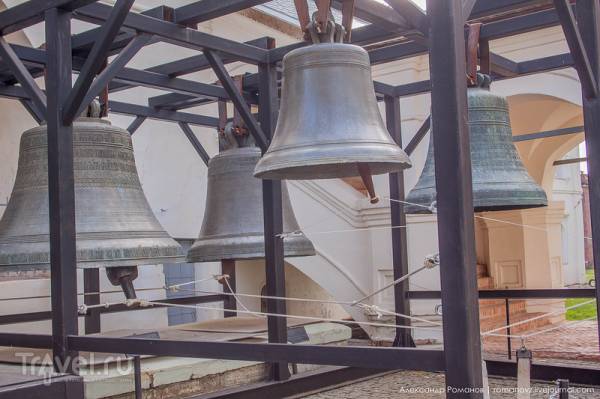
In front of her there is a small exhibition of old bells.
This unremarkable building is the Church of the Entry of the Lord into Jerusalem (1759). Unfortunately, it is decapitated. A fine example of Baroque.
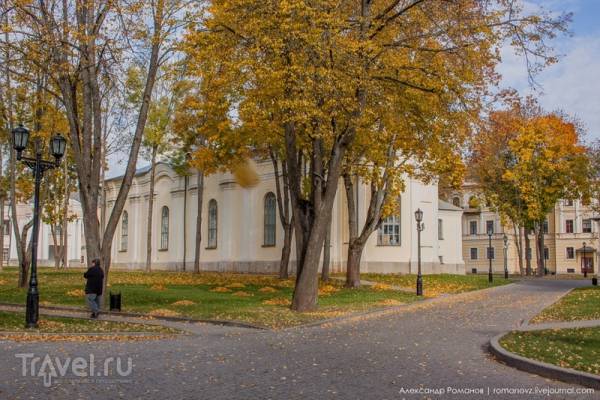

Few buildings remain in the northern part of the island, but I'll show you some interesting museum pieces and views from Kokuy. So, to avoid overcrowding this post, I've decided to split it into two.
Source: travel.ru