





During Sukkot, rangers are on duty on many trails. This is a great time to visit places where you might be afraid to leave your car due to the possibility of vandalism and theft.
This time we went again to our favorite Dead Sea gorge, Tze'elim. The Grand Canyon of the Dead Sea.

Just north of Masada, at about kilometer 231 on Route 90, we turn off toward the mountains following the "Nachal Tze'elim" sign—right next to the substation (an excellent landmark). Masada, proudly standing out from the rest of the mountain range, towers over the entire ridge.
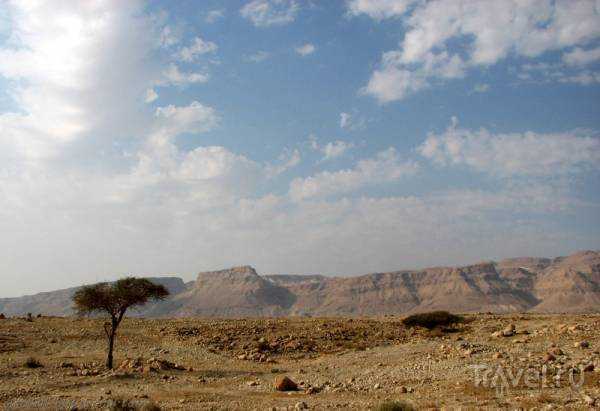
3.5 kilometers on a dirt road, and we reach the start of the route. Incidentally, the road there has now been repaired and widened. They've even sprinkled it with something to keep it dust-free. It's no longer like a washboard, and two cars can easily pass each other on it.

Before the start of the route there is a permitted camping area and a ranger post.
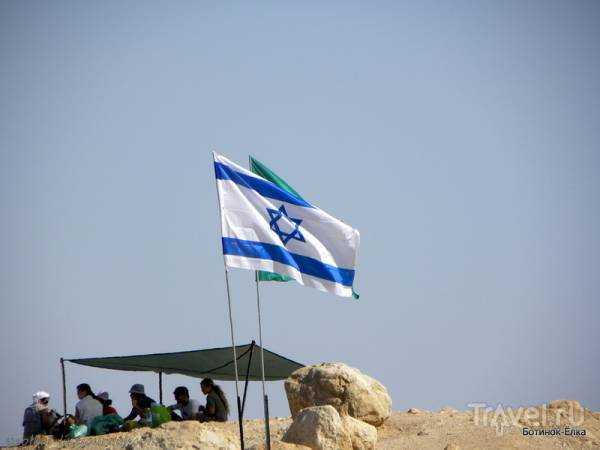
On weekdays, you can sometimes admire an air show like this: fighter jets roaring out of the gorge.

There are numerous trails around and through the Tze'elim Canyon, marked in all sorts of colors. They sometimes intersect, sometimes merge into each other, and sometimes branch off in different directions. Therefore, it's important to have a good map. We usually take the long, circular route. This time, with a geotracker, we found it to be 17 kilometers long.

The beauty of hiking in the Judean Desert, and elsewhere, is that with a good map, you can mix and match trails. This makes every hike through seemingly familiar places feel different and completely new.
I don't like crawling up long, drawn-out, loose climbs in the sun before I'm fully awake. Especially since that would involve climbing over huge boulders, and I'd have to be tired at the end of the day to overcome the rather challenging section.
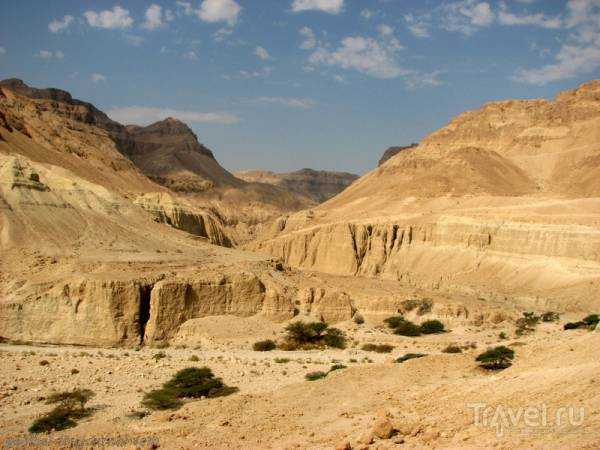
So this time, straight from the parking lot, right there at the Laila Khanyon, we drop sharply down into the stream bed. And then we head straight up the canyon bed, following the black markings.
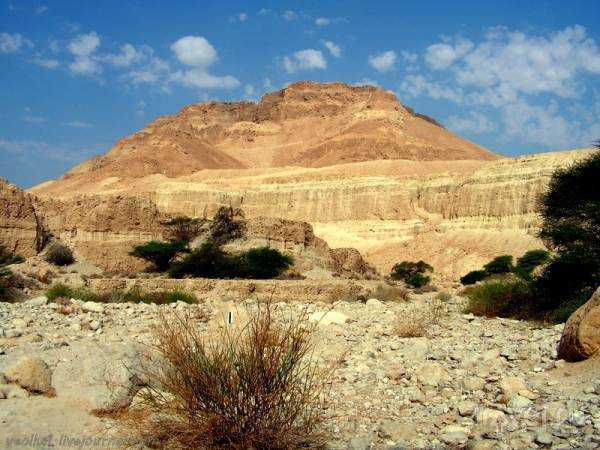
Depending on the rock through which the stream flows, its bed changes.

Sometimes these are smoothed sandstone walls, sometimes narrow gullies in the stone.

And imagination and shadow plays allow you to see new pictures and characters every time along the way.
Here is a young boy leaning against a rock, looking thoughtfully at the sky...

And here begins Gai Slaim (the gorge of rocks). A chaotic jumble of huge boulders and cliffs.
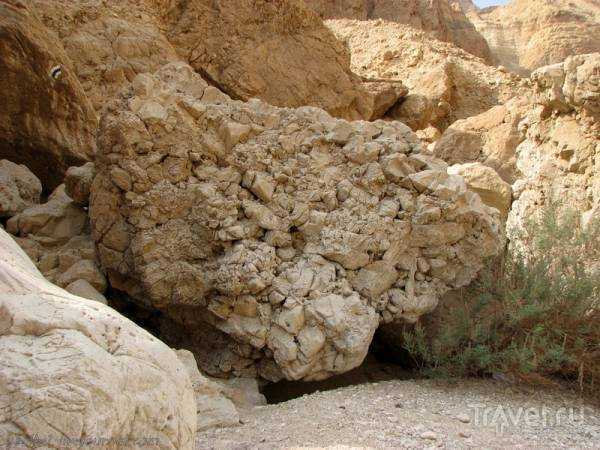
The rocks here are simply wonderful!
I wish I could have a cut like that on a piece of jewelry! (I took that photo a long time ago, but I already have a piece of jewelry with a similar stone, slightly smaller.)
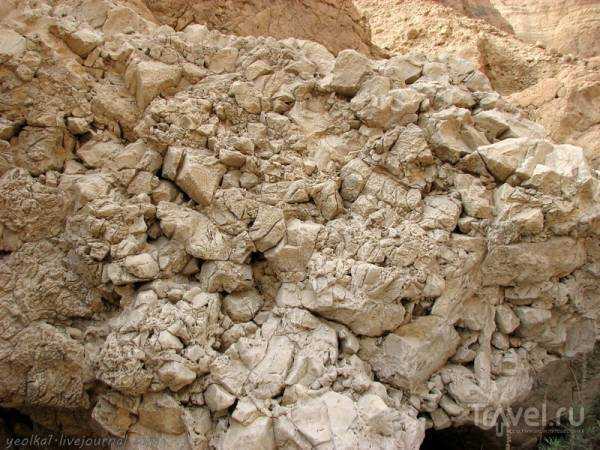
What is this scattering of clay shards?
And this is just dried-out clay in the riverbed.

Important reminder: When planning a route to the Dead Sea canyons, be sure to check the current weather forecast. Rain falling somewhere in Arad can cause instant and severe flooding in these gorges. We once saw dented and overturned cars attempting to drive along the Dead Sea road across the Tze'elim River, which had immediately swelled after a brief downpour.

This part of the gorge is completely littered with enormous boulders. It's called "the gorge of rocks" (gai slaim).
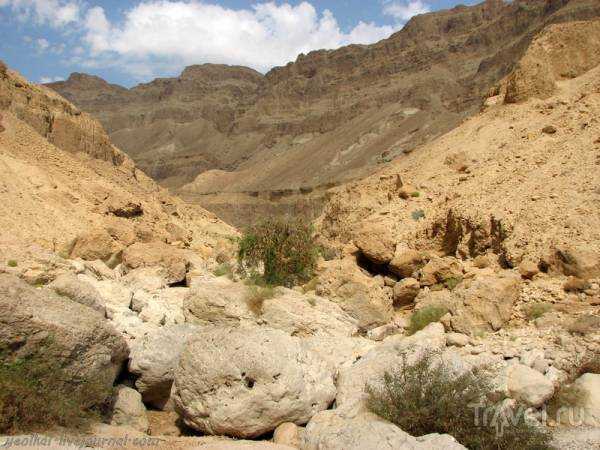
You have to constantly climb over them, through them, around them, squeeze between them, slide and crawl over them, jump from rock to rock.

If that's not your thing, there's an option to bypass it all at the top left, following the green markings. Incidentally, the green markings are the "dry" route when the river flows through the canyon.
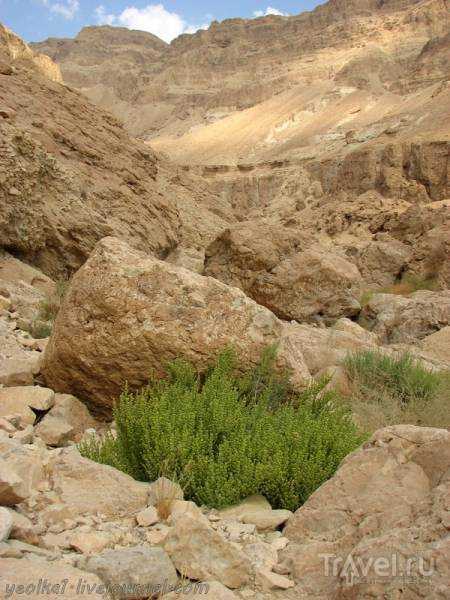
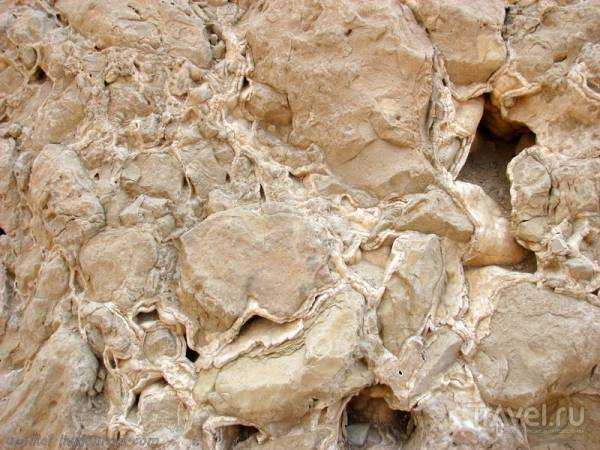
And again, a rock, surprising in its shape and texture. It looks as if it's been filled with some kind of silicone or paint. And there are many such rocks in this particular area.
All around, some crazy bushes are blooming—come to your senses, the desert is only supposed to bloom in spring!—filling the air with a rich, honey-like scent.

We follow the black markings, straight along the riverbed, making our way between the huge rock fragments that fill the entire gorge.
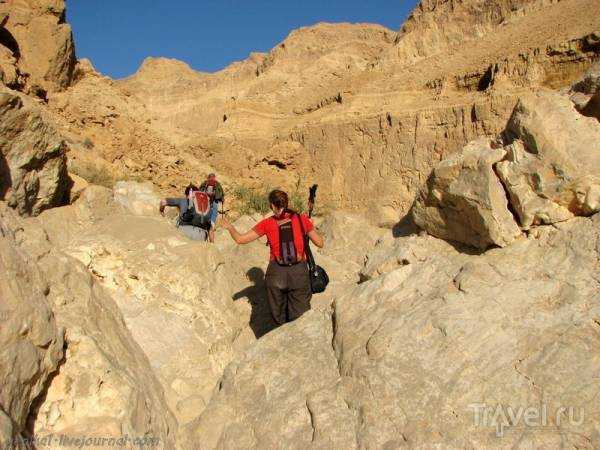
After some time, green markings come from above and merge with the black ones (become green).
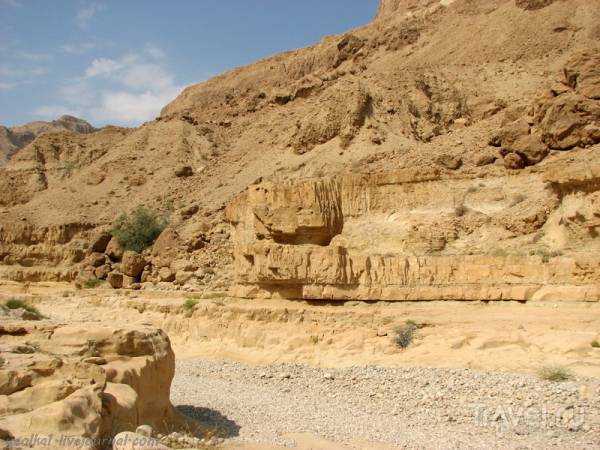
The gorge in this place is wide with a pebble bottom, like on the Black Sea beaches.

The green markings again run around, upwards.
And we continue our path along the black markings, right along the stream bed.
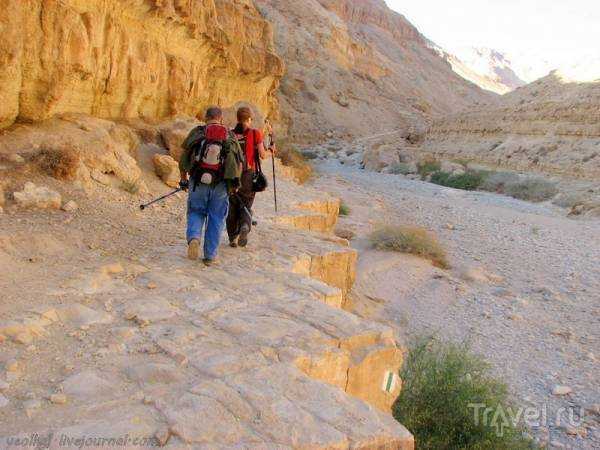
Ahead of us is Guy Bahak.
Source: travel.ru