


Jodhpur is the second largest city in the state of Rajasthan after Udaipur, located on the very edge of the Thar Desert.
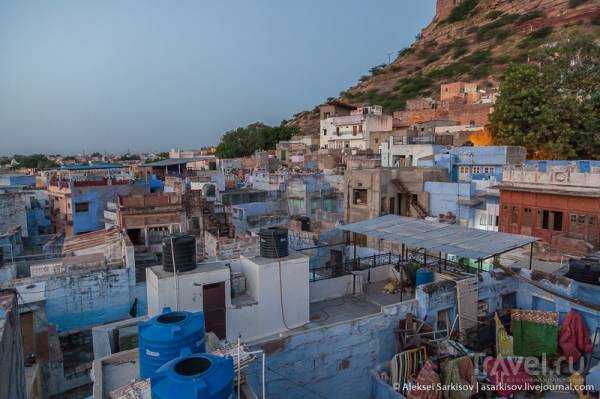
Early morning on the roof of Kesar Heritage Guesthouse.

Due to the heat and to save electricity, many people are sleeping on the roofs of their houses.



And here's a delicate detail—um, a public restroom... Open restrooms for peeing exist in Europe too. In India, this isn't a problem—any wall is already a restroom. But I've never seen an open restroom for (something more civilized) peeing in Jodhpur. And it's located on a narrow street with heavy pedestrian and tuk-tuk traffic. It's quite a sight, three Indians sitting there, doing their business in full view and chatting casually. I won't post a photo of the scene—for aesthetes only...


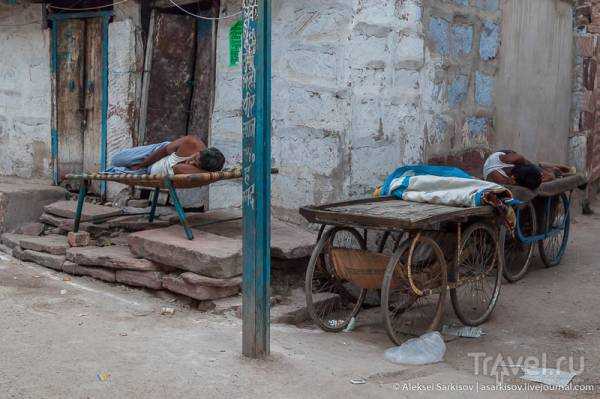
Sad milkman.

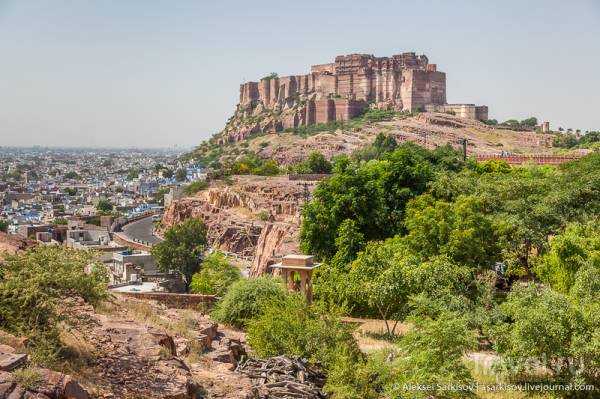
The city is very beautiful. On one side, there's a huge fort right above the city, and on the other, there are blue houses.


Jodhpur consists of the lower town and the enormous Mehrangarh Fort, which sits atop a hill and is surrounded by a 10-kilometer-long wall. Within the fort's walls are palaces, temples, and service buildings. In my opinion, it is the most impressive fort I've seen in India.


The city was named the blue city because a large number of houses, once owned by the high priests, the Brahmins, are painted this color.


On one of the walls of the fort you can see the imprints of women's hands - these are the palms of the wives and concubines who climbed onto the pyre with the maharaja - the sati ritual.
Sati is a funeral ritual tradition in Hinduism, according to which a widow is burned along with her deceased husband on a specially constructed funeral pyre. Today, this practice is rare and prohibited.
The name comes from the goddess Sati, who sacrificed herself, unable to bear the humiliation that her father Daksha inflicted on her chosen god Shiva.


Source: travel.ru