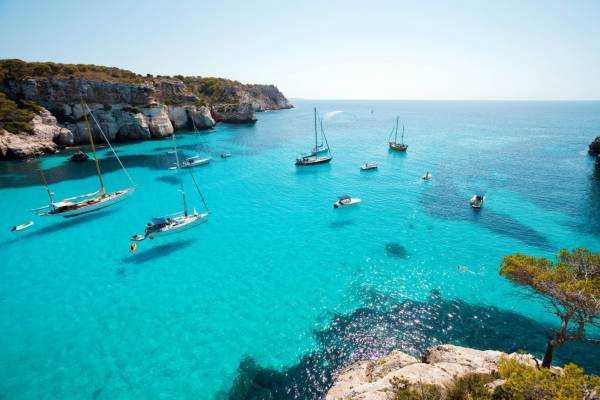


This photo looks the least like Cuba, doesn't it? And yet, it's truly Old Havana.
This part of the city looks quite attractive. Continuing my walk through the city, I come to the Plaza San Francisco d'Assisi, or San Francisco.

This is an old square, founded back in 1628, as far as I understand, to serve the nearby fleet. It was named after the Monastery of St. Francis of Assisi, built shortly before the square itself. The monastery in Cuba is, of course, no longer in use; its premises house a small museum of monastic art and a concert hall.

Opposite the monastery stands the former Havana Stock Exchange, opened in this pompous building in 1909. Today, it's an office building for international companies. Almost the same thing... ) But I wonder what was here, say, in the 1970s?

Contemporary art, potted trees, a nice fountain in the center, as if I were somewhere in Western Europe...

The square is completed by the passenger ship terminal building, with an elegant tower in the center. In fact, there are three such terminals here, but only one is more or less operational. Incidentally, before the revolution, this was the busiest place in Havana. Dozens of passenger lines connected Cuba with American and European ports.

In my opinion, this is the most comfortable square in Havana.

While a crowd of tourists waits for their turn in the museum-monastery,

I walk somewhere further, along the narrow streets of Old Havana.

Another beautiful square, the Old Square, is located nearby. However, when it appeared in 1559, it was called the New Square (Plaza Nueva).

What hasn’t happened here: executions, processions, festivals, and bullfights, which the wealthy nobility watched from comfortable balconies.

In the 18th century, a market was established here, and the square was immediately renamed Market Square.

In short, before the square transformed from new into old, it experienced a dozen different names and purposes over almost 450 years.

Today, it's a pleasant place to relax (there are small hotels and restaurants nearby, and there's even a planetarium opened in 2009), not without its amusing avant-garde art. However, I've never been able to figure out what this sculpture commemorates. Any ideas?

A little to the side, a whole railroad car sits modestly. And not just any railroad car, but a presidential one! The "Mambi" car was built in the US in 1900 and sent to Cuba for presidential use. It was a sort of residence on wheels, complete with a dining room for official receptions. The car's technical specifications were ahead of its time. It even had some sort of air conditioning. Now it's a small museum, unfortunately closed to the public (though perhaps it's open, and I was just unlucky).

I once again came out to the terminals known as the Sierra Maestra. In 1814, Havana's main customs office was located here. Two hundred years later, the main tenants are ruin and desolation.

The Cuban homes, on the other hand, do not inspire much intimacy, despite their proximity to the sea.

Amidst all this beauty stands the Cathedral of Our Lady of Kazan. Built in 2008 at the initiative of Fidel Castro, who, according to his memoirs, "proposed building a Russian Orthodox Church cathedral in the Cuban capital as a monument to Russian-Cuban friendship," the church is the only one in Havana, if not all of Cuba. It certainly looks like a gem against the backdrop of the devastation here.

Well, here's a picture for contrast.)

I must say that the heat here had tired me out considerably, and I decided to seek shelter, and at the same time have a nice lunch...

I turn towards the balmy waters of Havana Bay, the sight of which already makes me feel cooler.

Source: travel.ru