

If you're thinking we're going to talk about Beijing, I'll disappoint you, as I'll be talking about Taipei, which is indeed the capital of the Republic of China (not to be confused with the People's Republic of China). Simply put, today we're in the capital of Taiwan. So what kind of Republic is this, and what does it have to do with China? Without delving into the complex historical context, let's just say the Republic of China is a partially recognized state in East Asia, one of the (pay attention) founding members of the UN, and previously even served on the UN Security Council (in 1971, this seat was transferred to a representative of the PRC). It's funny how the authorities refer to the capital, Taipei, as "the temporary seat of the government of the Republic of China during the communist uprising." What the heck!
In short, the Republic of China (ROC) was founded in 1911 and controlled a significant portion of mainland China and even Mongolia (for a short period)! However, as a result of the civil war (1946-1950), the map of China changed significantly (I'd say blushed). The victorious communists, led by Mao Zedong, gained control of mainland China (the formation of the People's Republic of China with its capital in Beijing), while the defeated Generalissimo of the ROC, Chiang Kai-shek, took refuge on the island of Taiwan and established a temporary capital in Taipei. Until the 1970s, the ROC was recognized by most states and international organizations as the legitimate authority of all of China, which is why its representative occupied a seat on the UN Security Council. Over the years, the situation has shifted in China's favor, and today the ROC is recognized as an independent state by only 23 countries: Belize, Burkina Faso, Slvador, Gambia, Guatemala... You get the idea, right? Other countries formally recognize Taiwan as one of the administrative units of the PRC (like Hong Kong or Macau).
And yet, Taiwan (or ROK) is today the 20th largest economy in the world (GDP In 2013, it was 971 billion ($). Its highly developed technology industry plays a vital role in the global economy. And the standard of living in Taiwan is very high, far exceeding that of China (almost 10 times!) and Russia.
Like Red Square in Moscow, the city of Taipei begins for all visitors with the Chiang Kai-shek Memorial.
This is an architectural complex built in the traditional Chinese style in memory of the Generalissimo and former President of the Kyrgyz Republic. Between the iconic buildings is the vast Freedom Square.

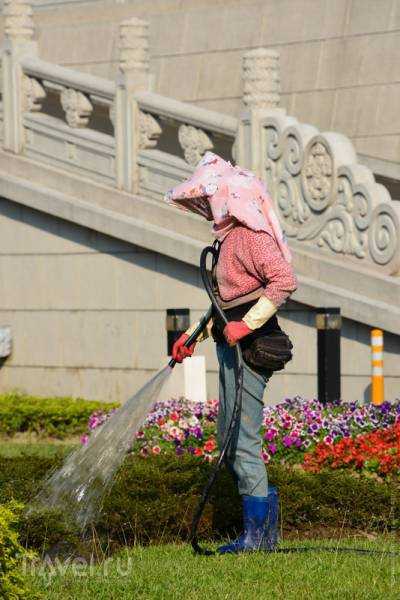
which today (November 5, 2014) is quite crowded. At first, I thought the square was being cleaned with the usual Chinese meticulousness.
However, upon closer inspection, I discovered something else: Dozens of far from young people were marking the area with multi-colored tape!?
Why? It seemed they were preparing for some important celebration. I started asking around, but as in all of China, few people spoke English. The foreigners shrugged in surprise.
Of the official holidays, the closest one is November 12, the birthday of the Chinese revolutionary Sun Yat-senPerhaps these preparations were somehow connected to the upcoming holiday. Still unsure, I began noticing other iconic landmarks around me, like the Taipei 101 tower, which I'd definitely get to.

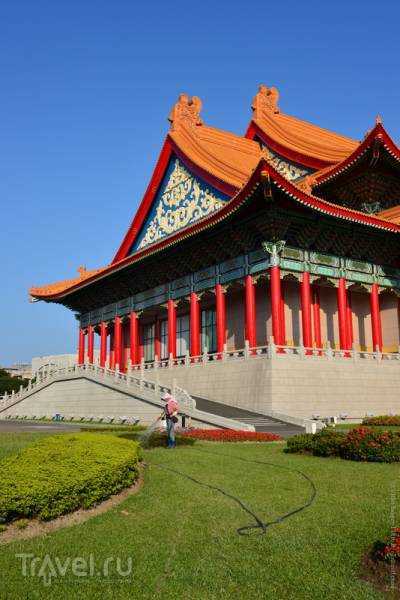
What else is here? Two seemingly symmetrical buildings built in the traditional Chinese style: the National Concert Hall (pictured) and the National Theatre (above),
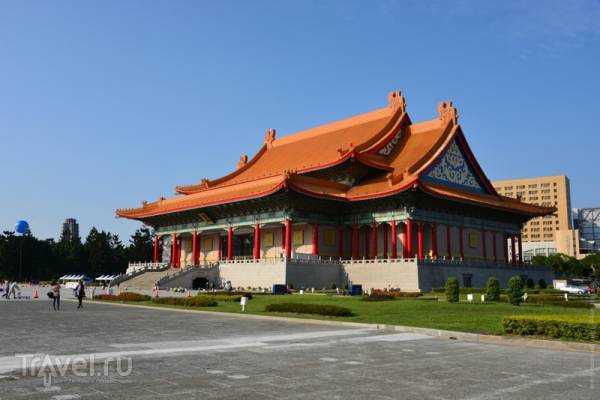
But the main attraction is, of course, the Memorial itself, which consists of several levels. The lower level houses a museum, a library, and so on.
89 steps (the years the Generalissimo lived) lead to the top level. From here, a magnificent view of the entire complex opens: Freedom Square, the theater to the left, the concert hall to the right, and a beautiful park all around.
At the top is a ceremonial hall, a huge statue of Chiang Kai-shek, Post No. 1, and hundreds of people eager to see their first president.
All around you can hear the hissing of tour guides and calls for silence and reverence...
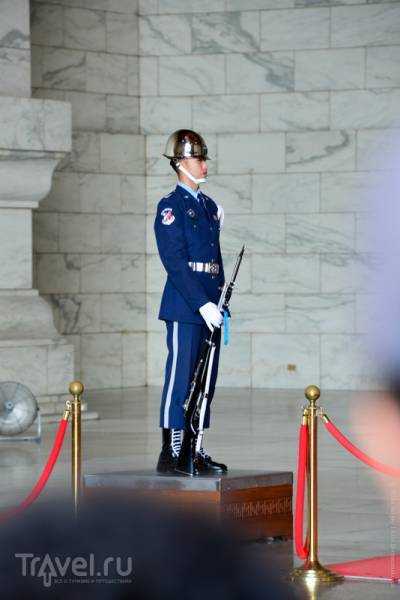
Tired of all this awe, I struggle through the crowd back to the exit, enjoying the city panoramas.

Well, that's another matter, it feels better.)
The building of the National Concert Hall certainly deserves special attention; so many colors, so many details, it would be hard to figure it all out… )
Chiang Kai-shek was a rather controversial figure in world politics. The fight against the communists escalated into a domestic so-called "White Terror," which claimed thousands of Taiwanese victims, subjecting them to torture, imprisonment, and even execution on suspicion of collaborating with the communists. Freedom of speech and the press were significantly restricted, censorship was instituted, and so on. And martial law, in effect for 38 years (1949 to 1987), allowed for the execution of violators without trial or investigation. In short, the generalissimo and president was, nonetheless, a dictator.
On the other hand, he was also a supporter of democratic social development (with some reservations, naturally), revived national culture, and placed great importance on national health. Despite anti-Christian sentiments in society, he remained a Christian, having been baptized in a Methodist Protestant church in 1927 and attending church services until the end of his days (imagine a Buddhist president of the Russian Federation). And it must be said that the Taiwanese revere their leader.
I went on to explore the city further. It reminded me of Los Angeles in some way: the same beautiful and comfortable streets, the far from cheap transportation, the palm trees, the buildings…
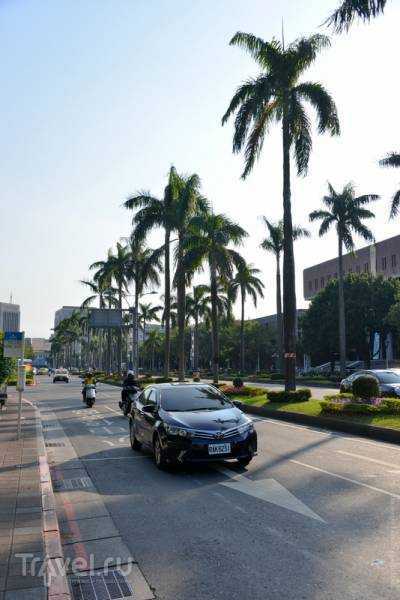
The infrastructure is noticeably well-equipped (smart traffic lights, etc.). Note the fun scooter parking area, complete with a living shelter from the rain.
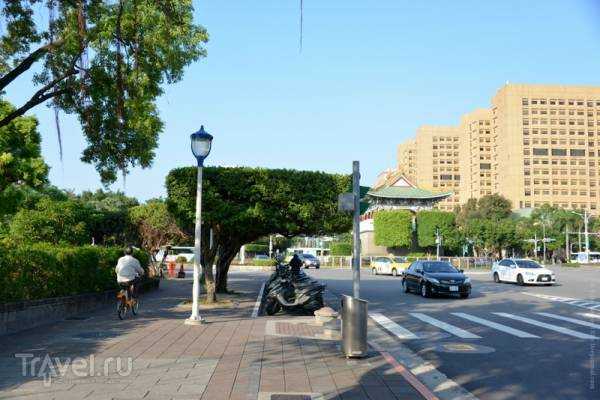
Well, look for yourself, it looks like Los Angeles, doesn't it? It's actually a little cleaner here, in my opinion.
Ancient Chinese gates, of which there are many throughout the city.
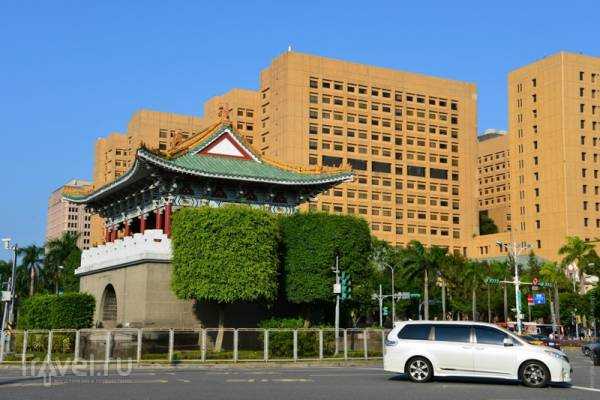
There is a very pleasant and leisurely atmosphere here.
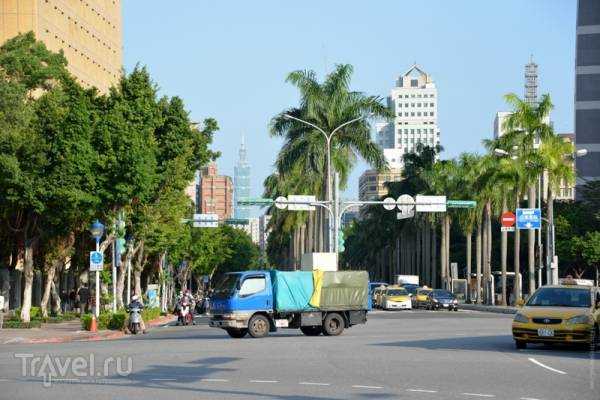
A remarkable object appeared ahead, similar to the Town Hall building,
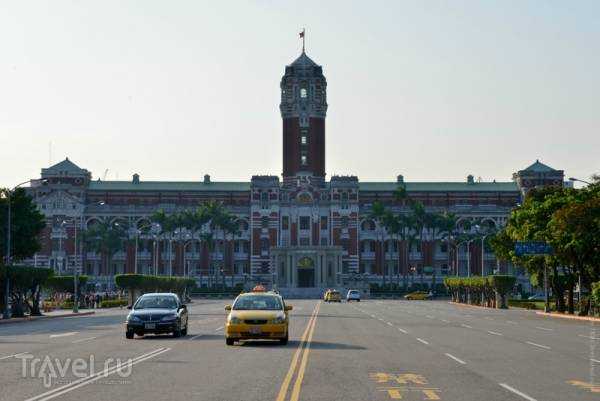
And judging by the number of special vehicles and security guards on the streets, both in uniform and civilian clothes, it looks like the government of the Republic of Kazakhstan lives here.
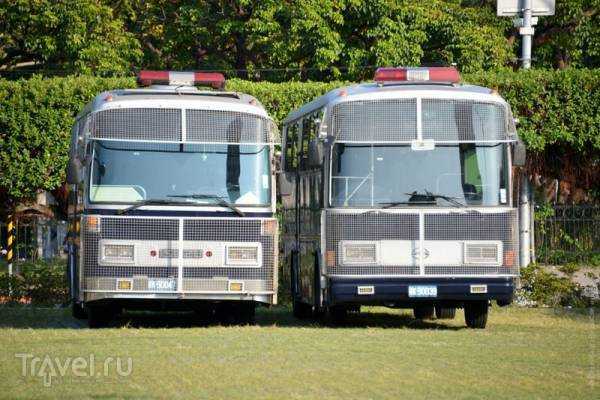
Well, that's right! The former palace of the island's governor-general, built between 1906 and 1919, now houses the Palace of the President of the Republic of China! Where's the concrete fence, the moats with lions and crocodiles? However, to be fair, I'll say that order is maintained here: Don't go there, don't stand there, don't photograph that... I wanted to photograph the plainclothes officers and the huge spools of barbed wire, apparently prepared just in case (provocations by the communists, apparently...). Yes, there are armored personnel carriers, too, but it's still the Presidential Palace.

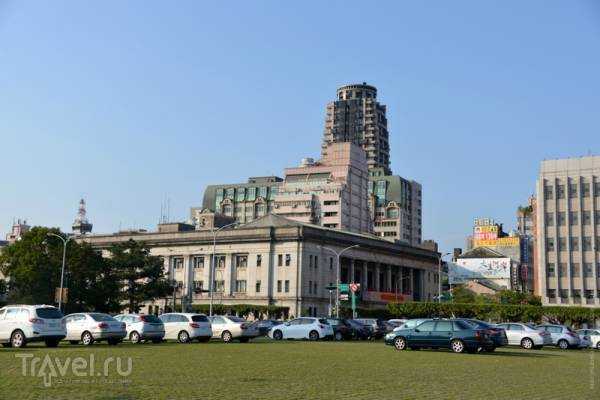
And this is apparently a parking lot for government employees, since it is located right opposite the palace. ) By the way, the nearest building is the State Bank of Taiwan.
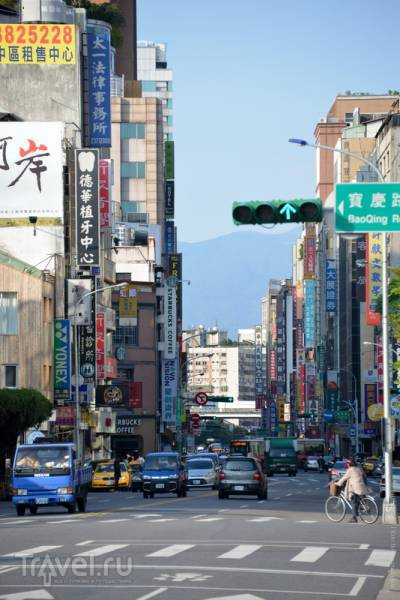
A traditional view of the streets of Taipei. Seems like a lot, huh?
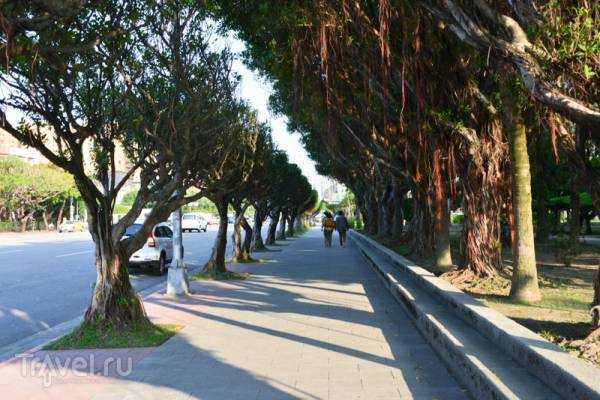
A pedestrian area in the center, pleasant shade. It's subtropical, after all, so it's a bit hot.
Not far from the Presidential Palace, there is an interesting and very contrasting park: "2/28 Peace Memorial Park".
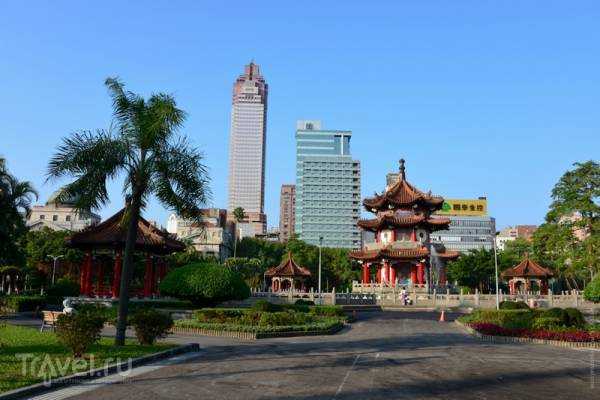
It is dedicated to the tragic events that began on February 28, 1947 (hence the title—2/28). That day, a full-scale uprising against corruption, government abuses, and the economic crisis erupted. Protesters occupied numerous government buildings, including the radio station from which broadcasts were made. However, they were unable to maintain control, and by the end of March, the uprising was brutally suppressed. According to various estimates, between 10,000 and 30,000 people died during the unrest!
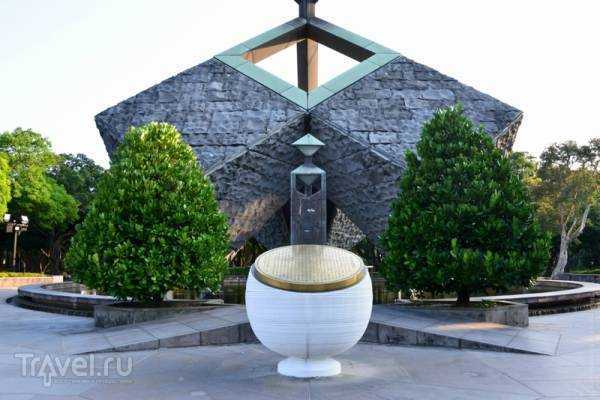
For many years, Taiwan hushed up these events, and it was only in 1995 that authorities publicly acknowledged the "228 Incident" as a tragic event. Since then, a period of active study of archival documents has begun, shedding light on the events of those days. Memorials and monuments have been erected across the country.
In addition to the objects dedicated to the events of "Incident 228," the park has many beautiful and cozy corners and gazebos.
In the center stands a magnificent temple, apparently built during the Japanese occupation (the park was originally laid out here in 1900)
The park houses two museums. One is dedicated to the 228 event, and the other is the National Taiwan Museum.
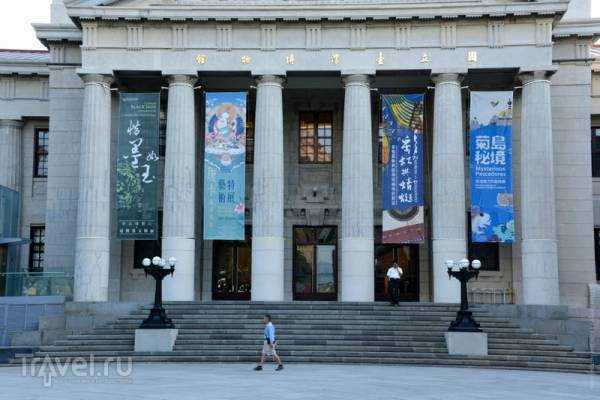
This is perhaps the main museum of the Republic of China, although it was opened long before Generalissimo Chiang Kai-shek came to Taiwan in 1908. But I will see its rich collection another time.
Let's continue exploring the city?
Moreover, marvelous city beauties open up ahead.
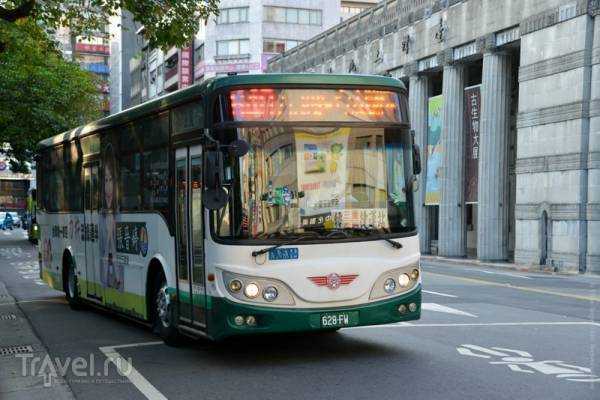
I'll just let the bus pass and cross the road.)
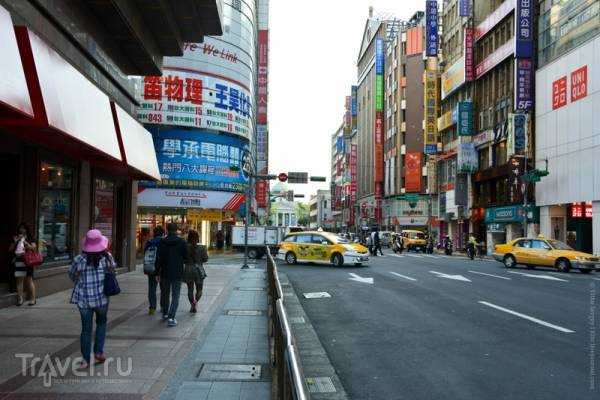
The abundance of advertising on the facades of buildings is certainly striking, surprising and even a little disappointing.
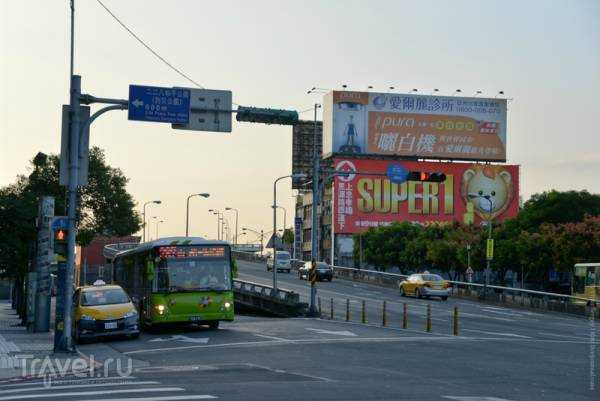
Look at the beauty, the symmetry in everything...
Or here, at the entrance to the overpass, SUPER)
Speaking of overpasses, there are hundreds, if not thousands, of them here. And some are built to bypass historical landmarks, like this Northern Gate.
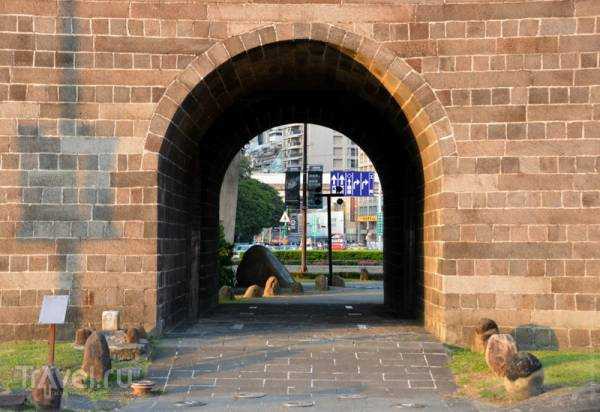
The city once ended here; now it is just part of a metropolis inhabited by something like 2.7 million people.
Source: travel.ru